
Use Digital Twins to Validate Logistics Designs Before Go-Live
The strongest case for digital twins in logistics is not visualization. It is validation: using a sufficiently credible model to test operating assumptions, failure modes, capacity constraints, control logic, and alternative designs before those…
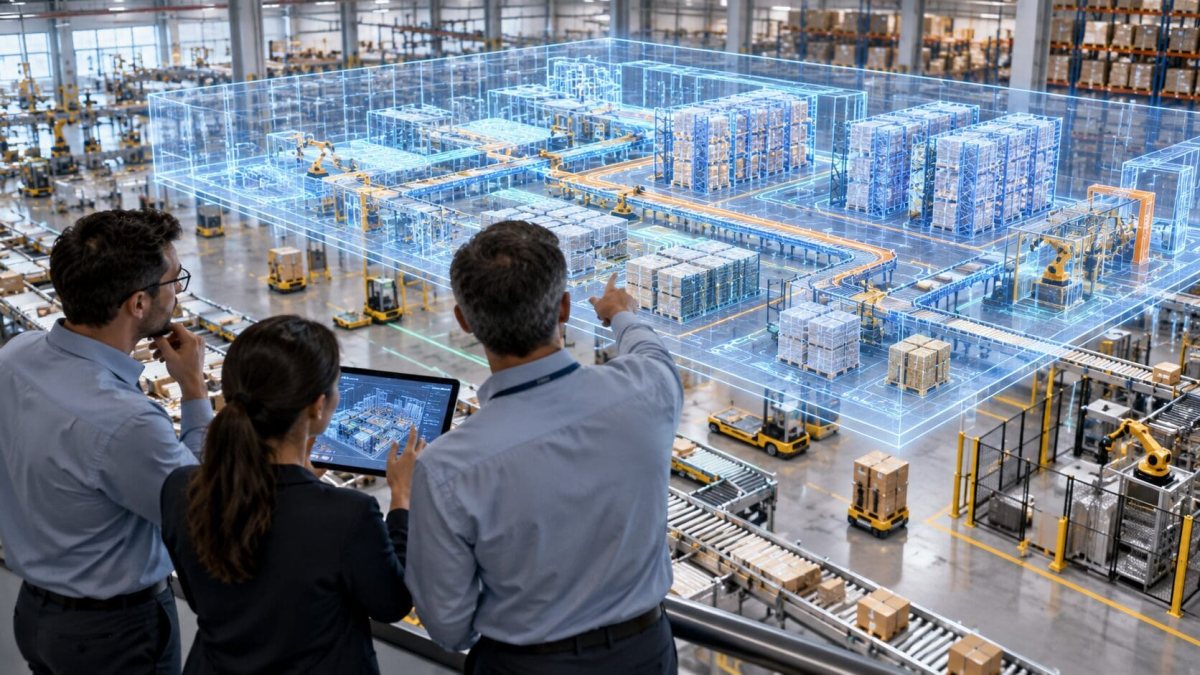
The strongest case for digital twins in logistics is not visualization. It is validation: using a sufficiently credible model to test operating assumptions, failure modes, capacity constraints, control logic, and alternative designs before those choices are exposed to a live network.
Many logistics decisions are still tested in the most expensive environment possible: the live operation. Change the network, policy, automation, or service model and then wait to see what the rest of the system does. Digital twins and simulation give us a better place to learn. A cyber-physical warehouse is exactly the kind of environment where simulation becomes valuable, because software, equipment, labor, inventory, and flow constraints interact before a design ever reaches production.
Digital twins and simulation offer a better option: test important choices before the physical system has to absorb them. The concept is especially useful when logistics is treated as an engineered system rather than a collection of independent projects.
The term digital twin is used broadly, sometimes too broadly. At its most useful, a logistics digital twin is a dynamic representation of relevant parts of the operating system that allows the organization to understand current conditions, evaluate scenarios, and estimate how transportation, warehousing, and fulfillment may respond to change.
This story was originally published by Logistics Viewpoints. Read the full story at Logistics Viewpoints →

Conversation