
‘Wars are won with logistics’ – EU military mobility faces transport test
The latest EU military mobility talks have brought a December deal closer, but questions remain over infrastructure bottlenecks and who pays civilian contractors supporting military movements. Round two of trilogue negotiations between the European…
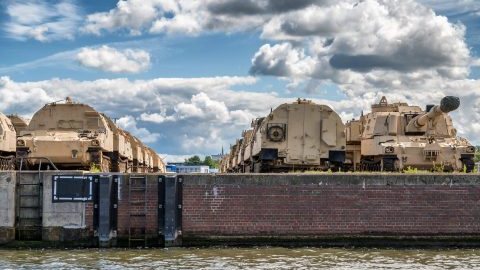
The latest EU military mobility talks have brought a December deal closer, but questions remain over infrastructure bottlenecks and who pays civilian contractors supporting military movements. Round two of trilogue negotiations between the European Parliament, the Council of the EU and the European Commission has kept the proposed regulations moving towards a potential deal.
The proposed rules aim to simplify permits, establish clearer deadlines and reduce conflicting national requirements. But moving a brigade of 5,000 personnel or a division of 15,000 requires transport networks capable of handling military vehicles, heavy equipment and large volumes of supplies.
Parliament’s co-rapporteurs Michał Szczerba and Roberts Zīle, representing its security and defence (SEDE) and transport and tourism (TRAN) committees respectively, said further technical meetings would precede the next round of talks on December 9, when they hope to reach an agreement.
“Wars are won with logistics,” said Szczerba, arguing that forces must reach the right place at the right time with ammunition, fuel and other supplies. He described the proposed system as a ‘military Schengen’, with simpler procedures, predictable permissions and interoperability with NATO.
This story was originally published by Project Cargo Journal. Read the full story at Project Cargo Journal →

Conversation