
Where Decision Intelligence Goes Next: From Recommendations to Governed Action
Where Decision Intelligence Goes Next: From Recommendations to Governed Action is the next logical stage of the category. Many platforms can already surface an insight or recommend an action.
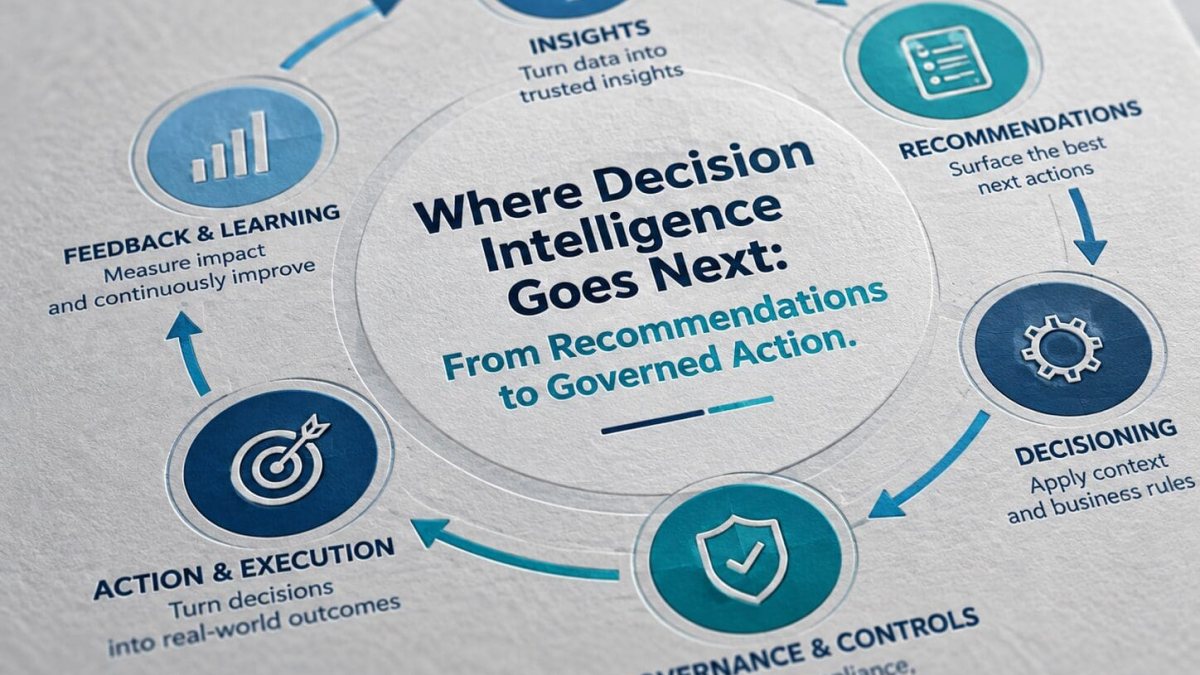
The next stage of Decision Intelligence is not simply better recommendations; it is governed action. Many platforms can already surface an insight or recommend a response, but the harder step is connecting that recommendation to explicit authority, executable workflow, and feedback so the organization can act faster without losing control.
Instead of generating a one-time answer, decision systems will increasingly monitor a class of decisions continuously, maintain the relevant context, and update the recommendation as state changes. That persistence is essential in supply chains because orders, inventory, capacity, risk, and execution status are always moving. The move from recommendation to governed action is the natural extension of Engineering the Decision Architecture, where context, authority, escalation, and execution are designed as one operating pathway.
ERP, planning, TMS, WMS, visibility, risk, and network platforms remain systems of record and execution; decision intelligence sits above and across them where context is assembled, tradeoffs are evaluated, actions are prioritized, and responses are coordinated. The architecture needs controlled mechanisms for a recommendation to become a transaction, workflow change, communication, or other physical-execution instruction.
Low-risk, frequent, reversible decisions can move first. Higher-value decisions may remain machine-recommended and human-approved. Novel or relationship-sensitive situations should escalate. The market will differentiate on how well providers encode these boundaries rather than on whether they use the word autonomous.
This story was originally published by Logistics Viewpoints. Read the full story at Logistics Viewpoints →


Conversation