Disclosure – Porgrama INtegração 5.0
Far beyond a technical term used in foreign trade, demurrage today represents one of the biggest financial impact factors for importers, exporters and the entire Brazilian logistics chain.
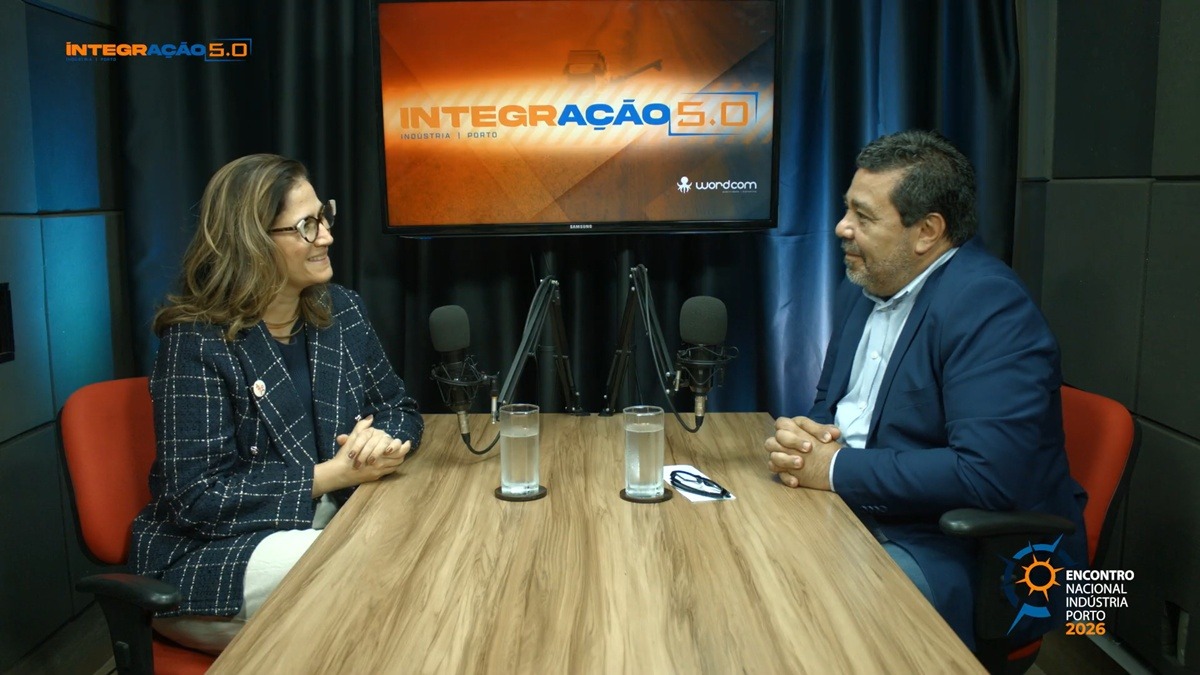
The topic was highlighted in the program Integration 5.0who received the lawyer Carolina Marquiolispecialist in Maritime and Port Law, to discuss the effects of container demurrage charges on the national economy and the challenges faced by users of the Brazilian port system.
Super Rectangle (728×90) – Position 17
According to data presented during the interview, a study by consultancy firm B Company shows that only the demurrage of ships generated an impact estimated at US$2.3 billion in 2024. However, Carolina highlights that this number represents only part of the problem.
When the subject is demurrage of containers, the financial dimension can be much greater.
According to the expert, Brazil moved more than 15 million TEUs recently. Considering a conservative estimate of charges per operation, costs can reach figures between US$10 billion and US$15 billion per yearmaking demurrage one of the largest financial liabilities in Brazilian foreign trade.
“The problem is that there are practically no consolidated statistics on demurrage of containersunlike what happens with the demurrage of ships”, he explained during the interview.
A compensatory charge
Carolina Marquioli explained that demurrage has a compensatory nature.
In practice, the shipowner stops using a certain container during the period in which it remains beyond the contractual term, known as free time and, therefore, charges financial compensation for the unavailability of that equipment.
According to the lawyer, this concept makes sense from an economic point of view. The problem, however, is the lack of clear criteria to establish the amount charged.
Today, in most contracts, the user simply adheres to the tables unilaterally defined by the shipowners, without knowing the methodology used to calculate these values.
“There is a lack of predictability and transparency. The user needs to know the basis used to define these charges”, he stated.
A stopped container can cost more than shipping
One of the points that caught the most attention during the interview was the confirmation that, in many cases, demurrage can exceed the value of sea freight itself.
According to Carolina, the recent increase in international freight is related to geopolitical factors, route changes, international conflicts, increased fuel costs and operational risk.
Demurrage charges continue to be calculated using tables whose methodology is not always known by the market.
For the expert, it would be more coherent if the limits of this charge were linked to the value of freight actually lost by the shipowner, making the system more transparent and predictable for everyone involved.
Shared inefficiency
Another aspect highlighted was that responsibility for demurrage cannot be attributed exclusively to terminals or shipowners.
Second Carolinathis is a set of factors that involves logistics operators, users, terminals, container depots and maritime carriers themselves.
Internal management problems, failures to control deadlines, delays in document release and operational bottlenecks end up contributing to containers remaining on the ground for longer, increasing demurrage charges.
Brazil still needs to evolve
When comparing the Brazilian scenario with large international port complexes, Carolina cited examples such as Singapore, Rotterdam and major Chinese ports.
According to her, these ports already operate with a high degree of automation, artificial intelligence, sensors, real-time data analysis and integrated systems capable of increasing the predictability of operations.
Meanwhile, the Brazil still faces important challenges in the digitalization of logistics processes.
“O Port of Santos represents approximately 30% of Brazilian movement. Improving its efficiency means improving a large part of national logistics”, he highlighted.
Technology as an ally
To reduce this scenario, the specialist believes that the adoption of artificial intelligence, integrated management platforms and data analysis will be decisive in the coming years.
Tools capable of monitoring deadlines, predicting delays and integrating information between shipownersterminals and logistics operators tend to reduce conflicts and minimize costs.
According to Carolina, the technology is already available on the market. The big challenge now is to expand its use and develop a culture based on planning, transparency and efficient management.
More than a legal discussion, demurrage has become an indicator of the country’s logistical efficiency. In an increasingly competitive global scenario, reducing invisible costs and increasing the predictability of operations will be fundamental to strengthening Brazilian foreign trade and increasing the competitiveness of national ports.