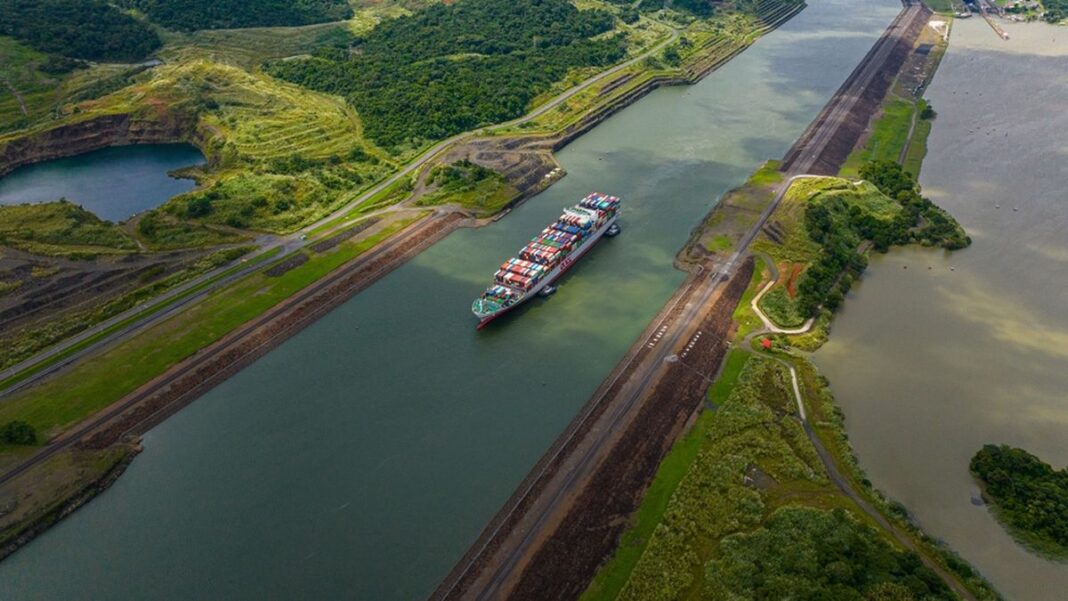


The Panama Canal Authority (ACP) has introduced further draft restrictions for vessels transiting its Neopanamax locks as it prepares for the potential impact of El Niño.
In an advisory issued on 1 July, the ACP said the maximum authorised draft in Tropical Fresh Water (TFW) will be reduced from 15.09 m (49.5 ft) to 14.94 m (49.0 ft) from 24 July, followed by a further reduction to 14.78 m (48.5 ft) from 15 August. The measures form part of the canal’s water management strategy in response to current and forecast water levels at Gatun Lake.
The latest restrictions follow an earlier reduction to 15.09 m that took effect on 1 July, after the ACP warned that a developing El Niño could affect the canal’s watershed during the second half of the year.
Importance of Gatun Lake
According to the ACP, it will continue to monitor Gatun Lake levels and hydrological forecasts closely, introducing further operational adjustments if required to ensure the safe, reliable and sustainable operation of the waterway.
The Panama Canal relies on freshwater from Gatun Lake to operate its lock system, making rainfall across the watershed essential for normal shipping operations. During the severe drought associated with the 2023–24 El Niño, the canal reduced vessel drafts and limited the number of daily transits, causing delays and disrupting global supply chains.
Water-saving measures were introduced at the locks in late 2025, while reservoir levels at Gatun and Alhajuela lakes have been managed to strengthen water reserves ahead of the expected climate event.
Every two to seven years
El Niño is a naturally occurring climate pattern characterised by unusually warm sea surface temperatures in the central and eastern tropical Pacific Ocean. According to the World Meteorological Organization (WMO) and the US National Oceanic and Atmospheric Administration (NOAA), it typically develops every two to seven years and can significantly alter global weather patterns. In Central America, it is generally associated with below-average rainfall, increasing the risk of drought and reducing water availability for the Panama Canal.
According to the WMO, El Niño conditions have already developed and are expected to strengthen rapidly between July and September 2026. Forecast models indicate a strong event that could peak during the Northern Hemisphere autumn and winter.