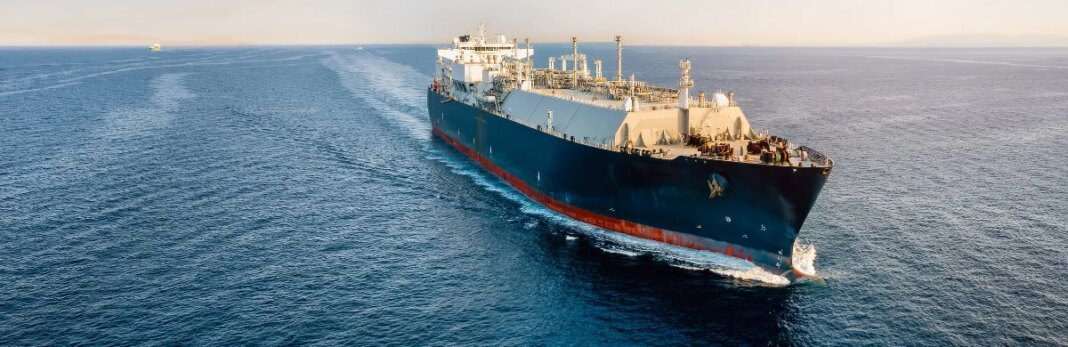

French technological containment specialist Gaztransport & Technigaz (GTT) has secured the green light from the UK-based classification society Lloyd’s Register (LR) for new NO96 elongation criteria, opening the door to more optimized liquefied natural gas (LNG) carrier (LNGC) structures, widening LNG ship design flexibility.
Lloyd’s Register has issued an approval in principle (AiP) to GTT for new elongation criteria applicable to LNG carrier hulls fitted with the NO96 cargo containment system, confirming that the revised criteria governing allowable hull deformation beneath the NO96 membrane and insulation system meet LR’s classification requirements and relevant international regulations.
The assessment covered operational, thermal and hull-induced loads to ensure continued structural integrity of the containment system. The revised elongation criteria, developed as part of the French player’s ongoing innovation program, are intended to give designers greater flexibility in hull structural design while maintaining established stress limits, fatigue margins and membrane performance.
Constantinos ChaelisGlobal Gas Segment Director at Lloyd’s Register, commented: “This approval is about giving confidence at an early stage. Our review confirmed that GTT’s updated NO96 elongation criteria remain within established safety margins while allowing designers greater flexibility. This kind of technical validation is essential as vessel designs become more optimised and structurally demanding.”
LR’s review included detailed structural and hydrodynamic analysis based on a representative LNG carrier design, examining compatibility across NO96 variants and alignment with applicable load cases and hull geometries. The updated criteria are said to enable more efficient structural optimization for NO96-equipped vessels, with potential benefits for lightship weight while maintaining safety and regulatory compliance.
François MichelCEO of GTT, emphasized: “Lloyd’s Register’s Approval in Principle confirms the technical robustness of the latest NO96 developments. These enhanced design criteria provide greater flexibility for ship designers while preserving the highest standards of safety and membrane integrity.”
According to Lloyd’s Register, NO96 not only remains one of the most widely used cargo containment systems in the LNG fleet, but is also relevant to complex, high-specification gas carriers and other marine vessel designs where structural assurance is critical.
This AiP comes weeks after LR gave the go-ahead for a 100% hydrogen-fuelled, spark-ignited marine engine developed by BeHydro, focusing on hydrogen-powered internal combustion engines.
Power Your Brand With Offshore Energy ⤵️
Take the spotlight and anchor your brand in the heart of the offshore world!
Join us for a bigger impact and amplify your presence at the core hub of the offshore energy community!