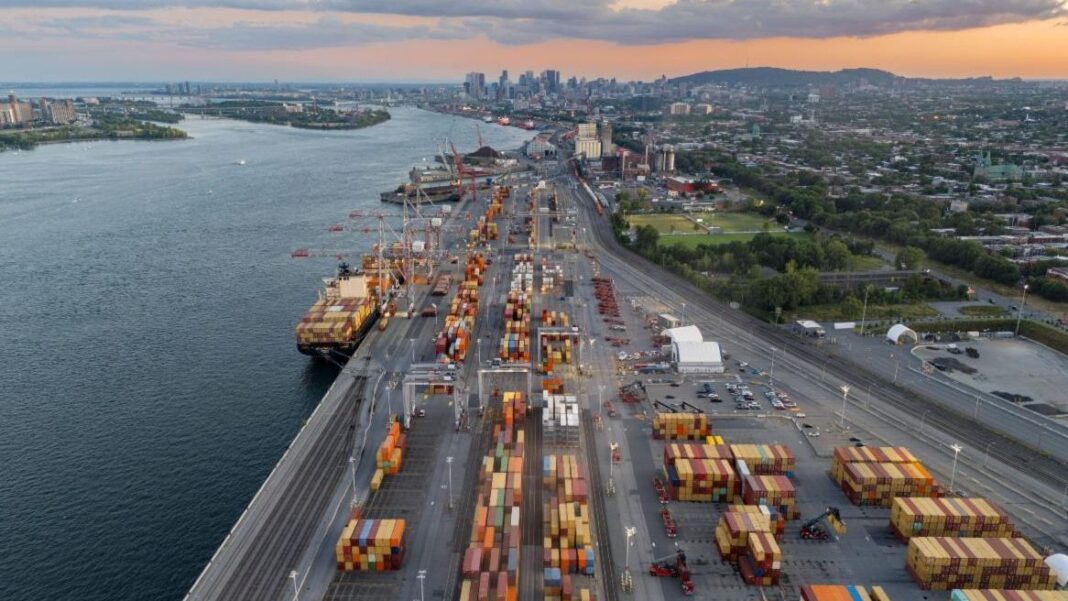

The Port of Montreal handled 17.7m tonnes of cargo during the first six months of 2026, an increase of 2% compared with the same period in 2025. The container traffic declined marginally.
Container traffic remained stable, reaching 789,855 TEU, representing a decline of 0.13% year-on-year. Imports increased by 2.48% to 397,100 TEU, while exports fell by 2.64% to 392,754 TEU. Key commodities included soybeans, containerised grain, manufactured goods, iron and steel, and forest products.
The port said trade continues to expand with emerging markets, particularly in Africa and Latin America, in line with Canada’s trade diversification strategy. Northern Europe remains its leading international market. Additionally, the launch of CMA CGM’s new CAGEMA service, directly connecting Montreal and Latin America, is supporting this trend.
Liquid bulk drives growth
Liquid bulk recorded the strongest growth in the first half of the year, reaching 6.74m tonnes, up 4% compared with 2025. In addition to higher crude oil volumes, ethanol volumes increased by 13%, reflecting rising demand for lower-carbon fuels.
Solid bulk volumes totalled 4.6m tonnes, an increase of 3%. Grain continued the positive trend that began in 2024, growing by 1.7%. The port attributed the result to strong harvests in Western Canada and efficient operations involving Bunge, CN, CPKC and the Port of Montreal’s rail teams. Rail traffic increased by 24% during the period.
Other commodities also recorded growth, including sugar, which rose by 26%, and road salt, which increased by 89% following a harsh winter.
Oversized cargo increases
The non-containerised cargo sector also had a strong start to the year, with volumes rising by 6%. The port said the first half of 2026 included several major shipments, including the arrival of a tunnel boring machine for the Montreal Metro’s Blue Line extension, battery energy storage units and wind turbine blades.
Outlook for H2 2026
The port expects the trends seen during the first half of the year to support continued growth in liquid and solid bulk volumes, driven particularly by strong grain market performance. “The container sector is expected to remain stable in the short term while continuing to evolve amid a longer-term structural shift, as many countries seek to diversify their trade relationships,” the Port of Montreal said.
Terminal reluctance
WorldCargo News reported in April 2026 that the Canada Infrastructure Bank (CIB) had approved a C$1.16 billion loan to the Montreal Port Authority, providing significant financial support for the development of the Contrecœur container terminal.
The C$1.575 billion (US$1.11 billion) expansion project has been planned for decades as the Port of Montreal moves closer to its capacity limits. Located around 40km north-east of Montreal, the Contrecœur facility is designed to handle up to 1.15m TEU annually. This represents around 60% of the port’s current capacity and is expected to help ease long-term constraints while supporting future container growth. The terminal will include two berths, a container yard and handling area, an intermodal rail yard, and supporting logistics infrastructure.
In September 2025, DP World signed a joint development agreement with the Montreal Port Authority to design, build and operate the landside components of the terminal. Once completed, Contrecœur will become DP World’s sixth terminal in Canada, joining facilities in Vancouver, Prince Rupert, Fraser Surrey, Nanaimo and Saint John.
Subscribe to gain access to all news
Already have a subscription? Log in.
Choose your subscription
Considering a corporate subscription? Contact us to find out more.
Or
Want to read this article for free?
You can read one free article per month. Enter your email and we’ll send you a free link to access the full article. No payment required.