
This audio is auto-generated. Please let us know if you have feedback.
Companies are moving away from traditional seasonal ocean shipping patterns, Port of Los Angeles Executive Director Gene Seroka said during a July 15 media briefing. Instead of waiting for “perfect conditions,” companies are now moving cargo whenever there is a favorable opening.
“In other words, retailers are making strategic decisions about when and how much to ship, balancing back-to-school and holiday demand against tariffs, rising fuel costs, and global uncertainty,” the port director said.
The port has logged strong volumes this year as retailers and manufacturers frontload cargo to hedge against ongoing supply chain uncertainty, prompting an early peak season.
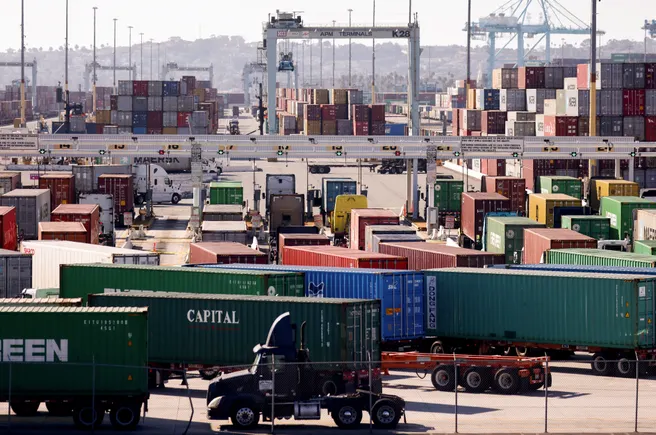
In June, imports drove the Port of Los Angeles to process over 1 million TEUs, marking the best June in the port’s 118-year history, Seroka said.
The Port of Long Beach also saw double-digit growth in June, processing nearly 780,000 TEUs, up 10.6% year over year, according to a July 14 report. On the imports side, TEUs were up 11% year over year to 387,025.
Data indicates July will be yet another strong monthwith cargo volumes at the Port of Los Angeles forecast to be above 900,000 TEUs, Seroka said.
The Port of Los Angeles: June By the numbers
1,002,734
Total processed TEUs, up 12% YoY
530,558
Loaded imports in TEUs, up 13% YoY
126,365
Loaded exports in TEUs, flat YoY
345,811
Empty container units in TEUs, up 17% YoY
However, the picture “gets a little harder to read” beyond July as companies adapt to changing conditions in real time, Seroka said. This is due to several factors, including trade policy and what happens with Section 122 tariffs set to expire July 24.
The Iran war also continues to have an ongoing impact on transportation costs, further churning uncertainty. Currently, fuel represents upwards of 30% of a vessel’s voyage cost, and adjustments in fuel surcharges from ocean carriers will come next, Seroka said.
“So, you’ll see a bump there, and then when prices go down, usually that surcharge remains elevated, and it lags for some time before it gets back to a price point that’s a little more reflective of what we see today in a snapshot in time,” the port director said.
Looking ahead, Seroka said that the port’s operations teams both on the import and export side will continue to run simulation exercises on scenarios like new tariffs and higher fuel prices. Teams will then reconvene to determine how to handle any new developments, he added.
“This is part of the reason why you saw the retail community advance shipments and inventories because they just don’t know what’s going to happen with any level of specificity after these Section 122s expire,” Seroka said.