
The benchmark diesel price used as the basis for most fuel surcharges rose this week by the second-largest amount since the start of the Iran war.
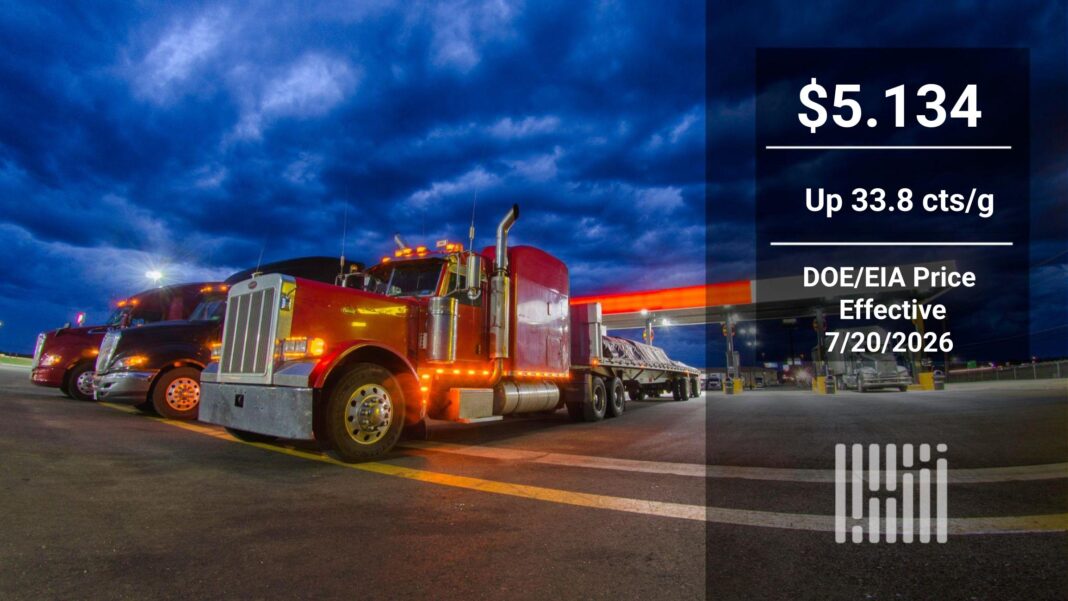
The Department of Energy/Energy Information Administration average retail diesel price climbed 33.8 cents/gallon to $5.134/g, published Tuesday but effective Monday.
The size of the increase is the second largest since the benchmark price rose 96.2 cts/g on March 9, the first time the DOE/EIA price measured a full week of market movement following the launch of military action against Iran by the U.S. and Israel on February 28/March 1.
With the benchmark price having moved up sharply two weeks in a row, it is now 55.6 cts/g more than where it stood just three weeks ago.
Retail prices, as they generally do, are reacting after the fact to increases in the price of ultra low sulfur diesel (ULSD) on the CME commodity exchange.
But they are likely only reflecting a part of the increases in that price just since the posting of the DOE/EIA price one week ago as the normal lag stays in place.
A $1 increase since July 2 is in sight
The pace of change in the futures market, if it continues, could end up adding $1/g in the price of ULSD on CME in the next few days.
ULSD’s low settlement in the recent cycle was $3.1822/g on July 2, not even three weeks ago. In the 11 settlements since then, ULSD has risen in seven of those days. While that doesn’t seem like much, the increases have been as high as just over 39 cts/g, 27 cts/g and 19 cts/g. By contrast, the biggest one-day decline was 8.59 cts/g.
The end result is that ULSD on CME settled Monday at $4.119/g, up 5.44 cts/g on the day and closing in a $1/gallon increase since that recent July 2 low. Monday’s settlement was the highest since May 19.
ULSD was slightly higher in trade Tuesday, up less than 2 cts/g at approximately 10:45 a.m. EDT.
With prices having climbed over the last two weeks as military action resumed, the bullish voices in the market who were on their heels about a month ago are becoming more prominent.
A new front
Adding to the market sentiment Tuesday were reports about possible Houthi attacks once again on Saudi Arabia and the Bab el-Mandeb strait on the southern end of the Red Sea. Those attacks could impact Saudi exports of oil out of Yanbu, which is the western terminus of the country’s east-west pipeline that has allowed the Kingdom to divert oil exports out of the Persian Gulf and the Strait of Hormuz and instead exit the country through the Yanbu port.
Look to the products
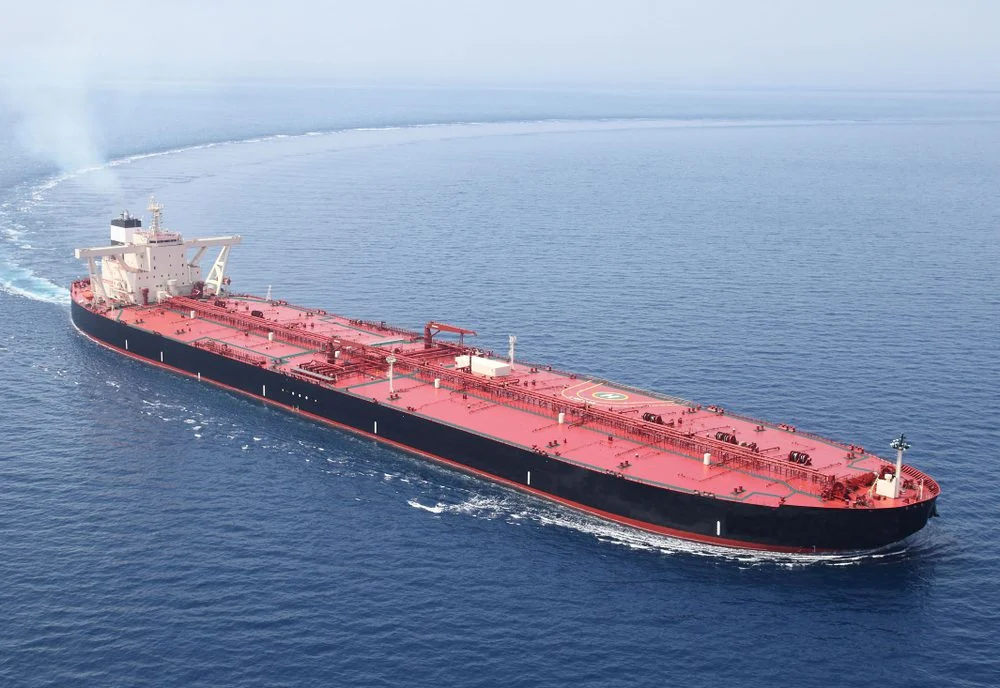
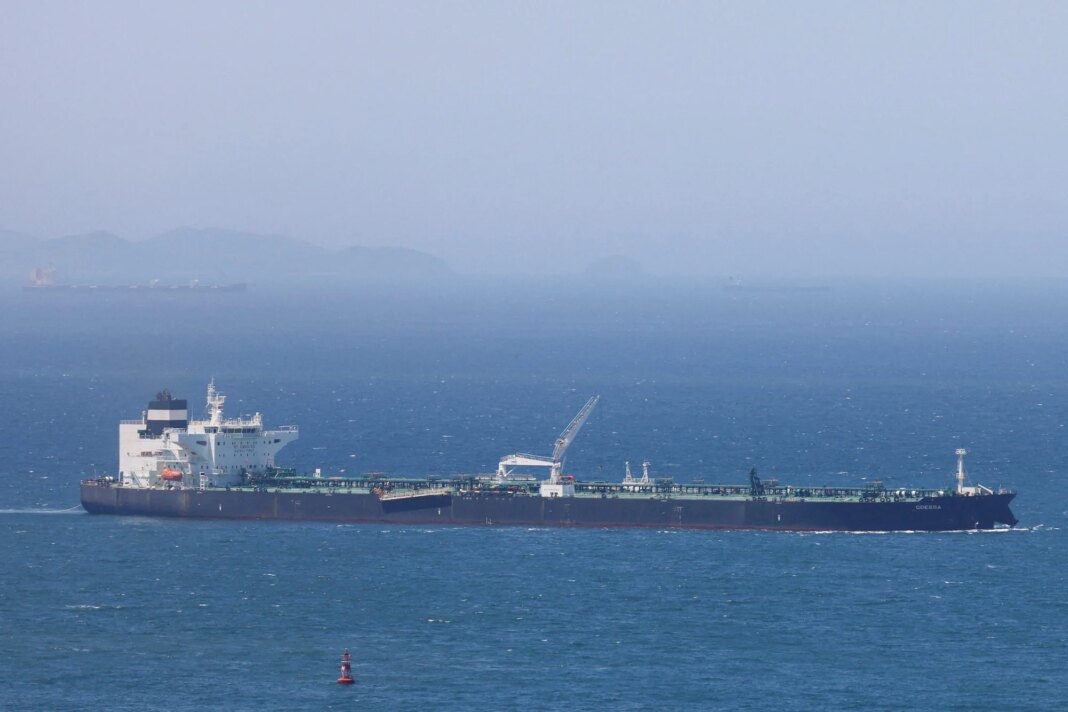
Matt Smith, the lead energy analyst at the Kpler consulting firm that is viewed as having some of the best insights into shipping patterns, said in a CNBC interview Monday that oil tanker exports out of the Strait of Hormuz have fallen to as little as ten ships total over the prior three days.
“And it’s mainly the Iranian stuff,” he said. “So for all intents and purposes the strait is basically closed. There may be an odd one that is managing to get through (without its transponder on) but essentially we’re ground to a halt here again.”
Both Smith and Jeff Currie, also in a CNBC interview, came back to the argument that has been one of the strongest for the bulls: the strength of product markets.
A comparison of the front month contract for Brent crude, the world’s benchmark, and ULSD has been either side of $2/gallon for the last several days. Just before the war began, it was less than $1/gallon.
Smith said in his CNBC interview that some of the lost crude production from countries in the Persian Gulf area shutting in production because they couldn’t export it has been offset by a loss of refining capacity in the region. That has resulted, he said, “in an absence of products from the market.”
Currie, the former head of commodity research at Goldman Sachs, has consistently been one of the most bullish voices about the impact of the war on oil markets, even when crude was plunging back to the $70 level. He has pointed to products markets to buttress his case.
The current product markets and their eye-popping spreads over crude, Currie said, “are telling you we don’t have an abundance out there. Crude oil prices are the noise. Product prices are the signals.”
The current crack spreads, Currie said, “have never been this high in my entire career of over three decades. That’s telling you it’s no longer a question of deficit. It is a question of shortage.”
More articles by John Kingston
Trump promise on military CDLs sounds similar to existing programs
Briefs in as sides gets read to rumble over non-domiciled CDLs
Unified Agenda at FMCSA spells out ambitious plans for coming year