
Logistics infrastructure is an important center of the economy, defining how much a country grows and competes in the world. In Brazil, to overcome dependence on roads and structural problems, the solution is to integrate airports, ports and export routes.
This union, in addition to facilitating transport, makes Brazilian industry stronger by combining large maritime transport capacity with the agility of air transport with high added value.
Super Rectangle (728×90) – Position 17
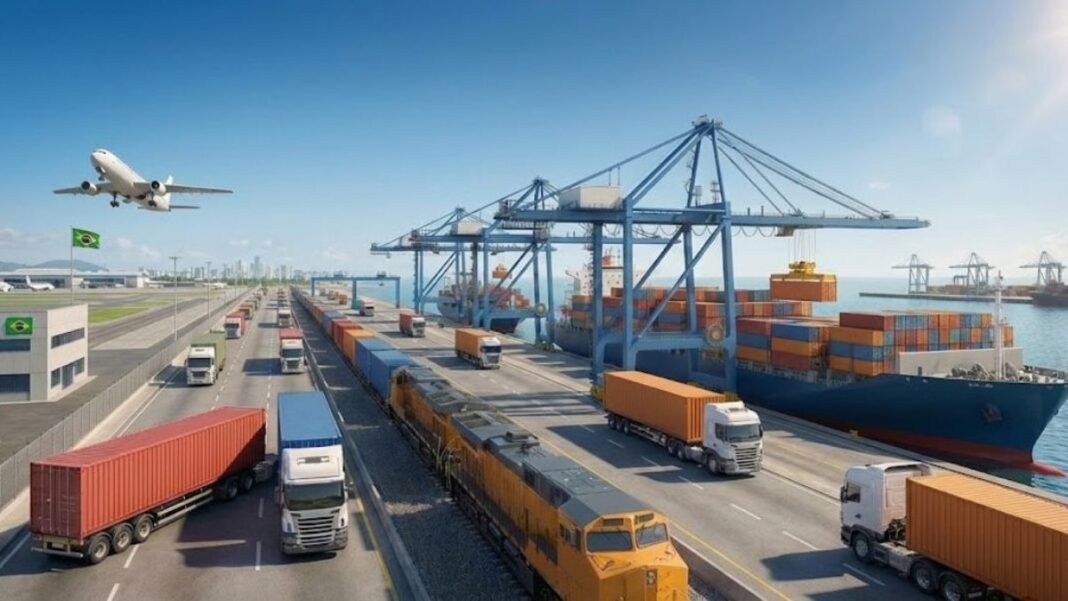
In this model, ports and airports work together. Ports focus on large volumes of goods, while airports ensure rapid delivery of technology and time-sensitive items. By intelligently connecting these means of transport with railways and highways, travel becomes faster and safer. This allows factories to run non-stop.
This integration also reduces costs and pollution, especially by using trains more. Being more efficient and ecological attracts foreign investors looking for sustainable businesses.
With a united transport network, Brazil is transformed. In a global scenario that demands sustainability, speed and resilience, the consolidation of this network of different modes transforms Brazil. The country is no longer just an exporter of raw materials to become a modern industrial power, agile and prepared for the global market.