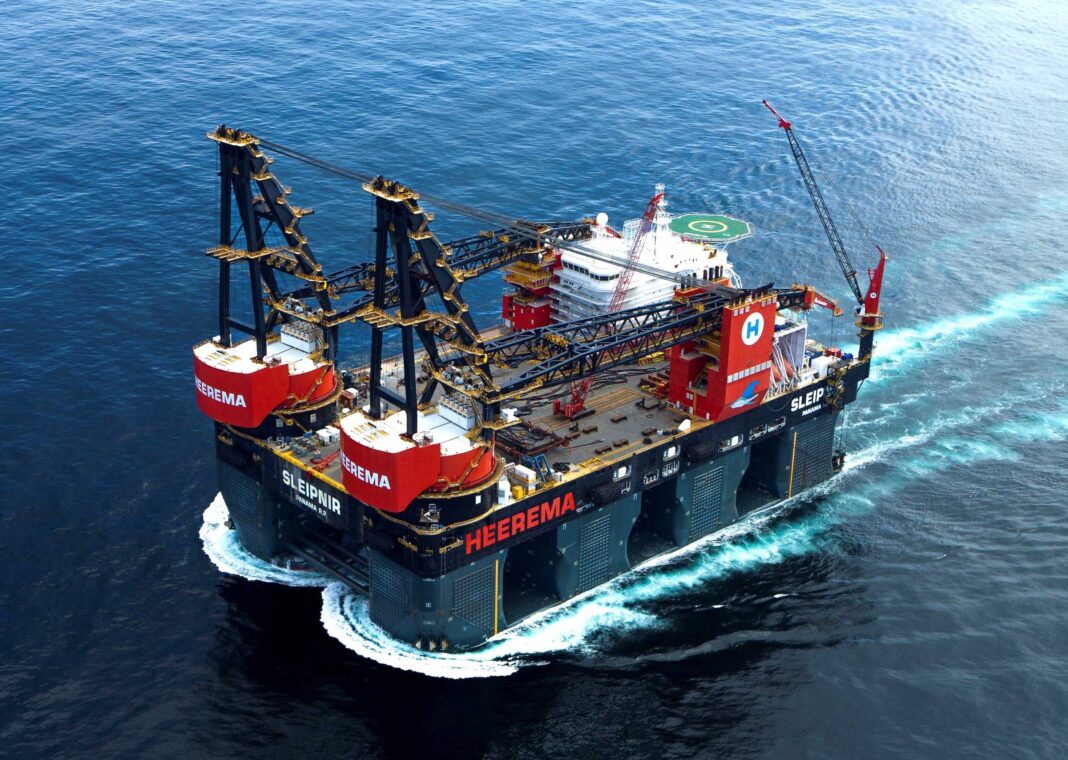

In July 2026 Heerema Marine Contractors has shortened the North Atlantic transit of its semi-submersible crane vessel Sleipnir by 2.5 days using a data-driven voyage optimization pilot with French ocean intelligence company Amphitrite.
The optimized crossing reduced the sailing distance by 240 nautical miles and cut CO₂ emissions by up to 18%, while maintaining higher average speeds without increasing fuel consumption.
The pilot combined Heerema’s offshore expertise with Amphitrite’s vessel-specific voyage optimisation platform, using five years of operational data supplied by Heerema to develop a model that predicts Sleipnir’s speed and power consumption under changing weather, wave and ocean current conditions.
Unlike generic weather routing, Amphitrite’s approach combines vessel-specific performance modelling with high-resolution ocean current, wave and weather intelligence.
Sleipnir, world’s largest semi-submersible crane vessels, was moving from Rotterdam to New York to install an offshore wind substation.
North Atlantic winter conditions put the vessel to the test, with rapidly changing winds, waves and ocean currents providing a demanding proving ground for the routing model.
Shortly after departure, the system identified the optimal sailing window to benefit from tidal currents in the English Channel.
As the crossing progressed, it recommended a more northerly route around a developing storm, allowing Sleipnir to make use of favourable tailwinds while remaining close to the great-circle route.
The return crossing demonstrated another advantage of dynamic voyage optimisation. Rather than following the shortest route, the model directed Sleipnir towards the Gulf Stream.
Although the vessel covered a greater distance, favourable currents increased its speed over ground to 14.6 knots, reducing the overall transit time despite the longer route.
Beyond the operational gains, the pilot also gave Heerema new insights into how Sleipnir performs during transit.