
When it comes to Asia-Europe logistics, rail freight has to compete with sea shipping, which is usually cheaper but has longer transit times. However, an upcoming project to start regular services across the Arctic Sea, led by Chinese Sea Legend Shipping, might make choosing the sea even more attractive, as transit times are slashed compared to the traditional route through the Indian Ocean.
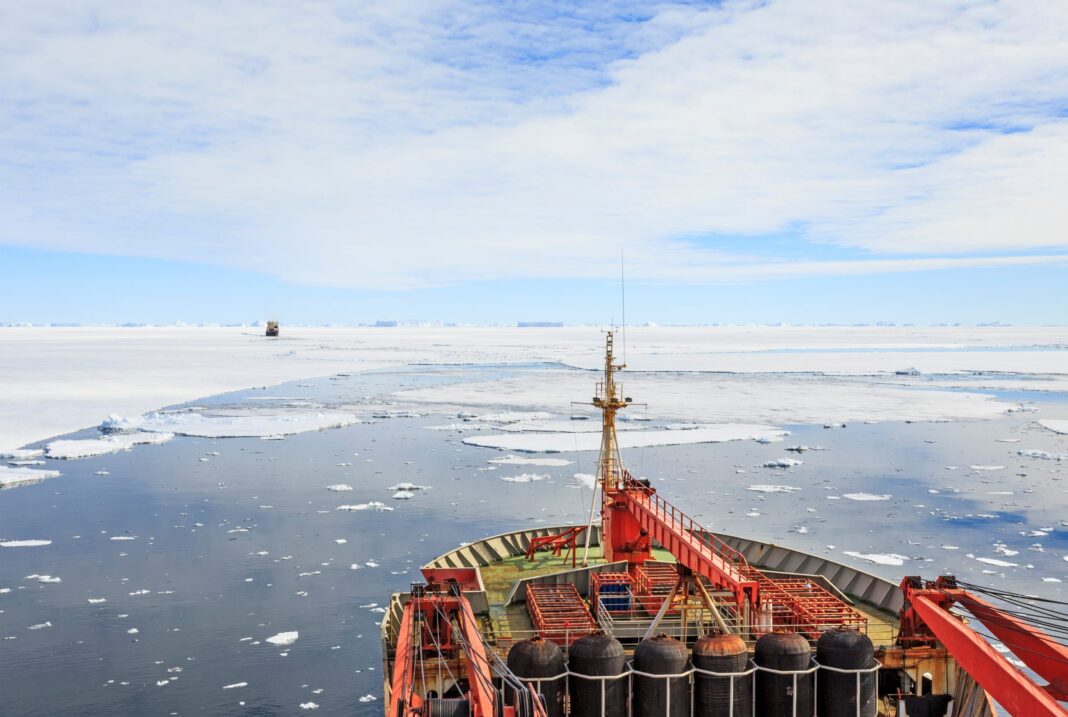
Regular connections between China and Europe via the so-called Northern Sea Route will start from mid-August and continue to late October, according to various media including Splash247. Having year-round services across this route is not possible as it is frozen for most of the year, but climate change has made it possible to navigate it in specific periods.
Sea Legend Shipping, a company headquartered in Singapore but strongly tied to China for decision making and port calls, will reportedly assign seven vessels to the Northern Sea Route. The first journey will be taken by Dubai Tower, which has a capacity of 1,740 TEUs. The other six have a capacity ranging from 1,528 to 4,890 TEUs. Despite being much lower than the capacity of current vessels crossing the Indian Ocean (over 24,000 TEUs), these vessels can still carry much more cargo than a freight train (up to 100 TEUs).
Similar transit times to rail
In other words, for at least four months a year, rail freight will have to compete with sea routes that can provide similar transit times but carry significantly more freight. Trains leaving China usually take between 12 and 22 days to reach Europe, depending on the destination, while ships crossing the Arctic can land at European ports in 20-22 days, according to media quoting Sea Legend Shipping.
In China, goods from Dalian, Qingdao, Shanghai, Taicang, Fuzhou and Nansha will be consolidated at the port of Ningbo-Zhoushan. From there, the ships will travel through the Arctic Sea and then continue to the UK’s largest port in Felixstowe, in southeastern England, and then continue to other important ports such as Rotterdam (NL), Wilhelmshaven (DE) and Gdynia (PL).
The launch of regular seasonal services along this ‘new’ route follows a pilot journey conducted last October, where the Sea Legend Shipping’s vessel Istanbul Bridge completed the Qingdao-Felixstowe journey in 18 days. Another advantage of the Northern Sea Route is that it would allow ships to bypass the Suez Canal, which has experienced instability over the past few years due to geopolitical complications in the Middle East.