
DISCLOSURE
Yara case raises alert about safety and traceability in the fertilizer logistics chain
Operation Lama de Ouro reveals vulnerabilities in internal controls and reinforces the need to expand cargo tracking mechanisms in a strategic sector for Brazilian agribusiness
Super Rectangle (728×90) – Position 17
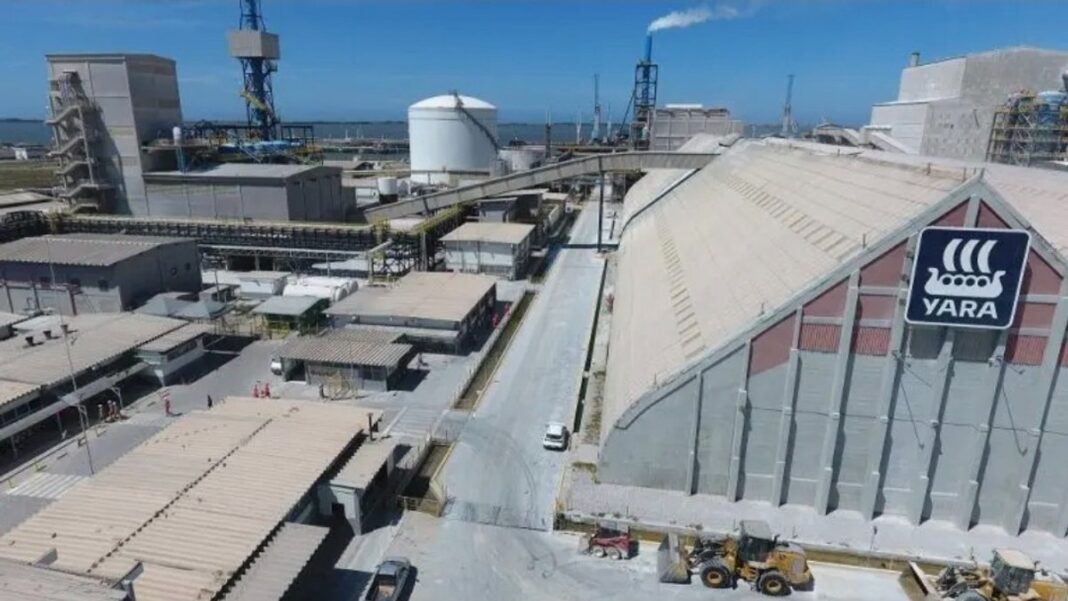
The case involving Yara Fertilizers, in Rio Grande (RS), goes far beyond a police investigation.
Operation Lama de Ouro, which led to the arrest of employees suspected of participating in a fertilizer diversion and adulteration scheme, exposes a challenge that deserves attention from the entire logistics chain: the security of cargo in industrial operations connected to foreign trade.
According to investigations by the Civil Police, the scheme caused an estimated loss of up to R$20 million to the company, with the irregular removal of fertilizers of high commercial value, subsequent adulteration with low-cost industrial waste and fraudulent marketing of the product.
The episode raises a strategic discussion for ports, terminals, logistics operators and industries: how to ensure that a cargo maintains its integrity from origin to final destination?
The vulnerability is in the internal links of the chain
The model identified by the researchers did not depend on a complex technological operation, but rather on taking advantage of flaws in control processes and the trust placed in professionals with privileged access to the facilities.
In large-scale logistics chains, especially those linked to agribusiness and international trade, cargo traceability is one of the main pillars of security.
Accurate monitoring of volumes, weighings, internal movements and shipments is essential to avoid losses, deviations and adulterations.
The case of Rio Grande demonstrates that even large industrial structures can be subject to risks when operational controls do not keep up with the complexity of the operation.
Rio Grande: a strategic point for the fertilizer sector
The choice of region is not a detail. Rio Grande is home to one of the main port complexes in southern Brazil and plays a strategic role in the movement of fertilizers used by agribusiness.
The chain involves several participants: manufacturers, warehouses, transporters, port operators, distributors and rural producers.
A failure at any stage can compromise the reliability of the entire process.
In addition to the financial impact on the company, fraud of this type can affect the quality of the product delivered to the market and generate consequences for producers who depend on inputs with adequate technical specifications.
Anonymous complaint shows challenge to internal controls
One of the points that draws attention in the case is that the investigation advanced after anonymous complaints about suspicious truck movements.
For logistics security experts, preventive mechanisms need to go beyond the subsequent identification of irregularities.
Frequent audits, monitoring systems, data integration, access control, electronic cargo checking and information crossing are increasingly important tools for reducing vulnerabilities.
Technology now makes it possible to monitor practically all stages of a logistics operation. The challenge is to transform these tools into effective prevention processes.
A warning for the entire port chain
Fraud involving fertilizers is not just a business problem.
They reach a strategic chain for the Brazilian economy, which depends on the efficiency and reliability of its supply systems.
The Yara case should serve as a warning for companies, terminals and operators to review their security protocols and strengthen the culture of control.
Cargo protection begins before arrival at the port and continues until the final destination. In a chain increasingly integrated into global trade, logistics security is no longer just an operational issue and has become a factor of competitiveness and trust.
Port Newspaper | Editorial
Analysis based on information disclosed about Operation Lama de Ouro, an investigation conducted by the Civil Police of Rio Grande do Sul involving the Yara Fertilizers unit in Rio Grande (RS). The text presents an analysis of the impacts and challenges of security in the port logistics chain.