
What Importers Should Watch After the Section 122 Tariff Sunsets
The Federal Circuit’s decision on June 11 to leave Section 122 global tariffs in place was a big procedural win for the administration. However; the surcharge expires on July 24 regardless of the final ruling, which will add further uncertainty to a tariff regime that has been marked by frequent and rapid changes over the last two years.
Read also: How to Tariff-Proof Your Supply Chain Before the Next Policy Shift
After the Supreme Court ruled in February that the Liberation Day tariffs were not authorized under the International Emergency Economic Powers Act (IEEPA), the administration invoked Section 122 of the Trade Act of 1974 to impose a 10 percent surcharge on imports. In May, the Court of International Trade invalidated the measure as applied to the plaintiffs before it but declined to issue a universal injunction. The Federal Circuit stayed the relief in June pending appeal. Under Section 122, however, the surcharge can only be in effect for a maximum of 150 days without congressional approval. Absent such an action, that period ends on July 24, when the tariffs will expire. The main question stakeholders now face is, what framework will be in place after that and whether it will bring predictability back to U.S. tariff policy.
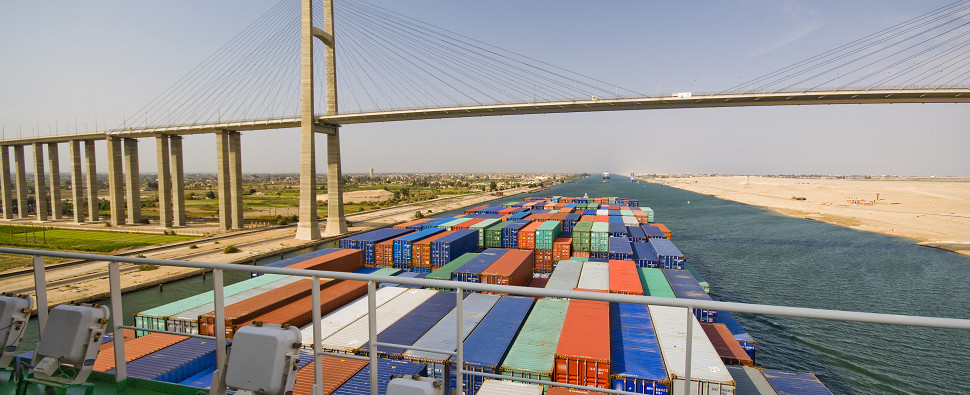
For importers, this uncertainty has direct implications for shipment timing, inventories, and contract pricing. The choice is whether to bring goods in now and pay the current surcharge, delay shipments in the hope that it expires, or build inventory in case another tariff replaces it. Some U.S. retailers have reportedly moved orders by four to six weeks to secure holiday inventory before the tariffs may change again. Orders that normally peak between July and September instead rose earlier than expected in May and June, which resulted in a tightening of the container space and higher shipping costs. The response to the anticipated tariffs in 2025 also showed a similar pattern when real imports rose at a 43 percent annual rate in the first quarter as businesses frontloaded their purchases, then fell sharply in April after many tariffs took effect.
The same uncertainty is also moving into contracts and customs compliance. Importers of record are generally responsible for paying duties; however, firms can allocate burden through contractual terms. Businesses have therefore been advised to review change-in-law, adjust prices, and renegotiate terms to determine who will bear any additional tariff costs. They are also being advised to review country-of-origin determinations, declared values, and supply-chain records as customs enforcement increases. The administration’s recent executive order directed Customs and Border Protection to raise bonding requirements for importers of record and collect more information about their ownership, assets, and expected import volumes. Moreover, for a large importer, a 10 percent surcharge can sometimes be spread across margins, inventory strategies, or internal financing. For smaller importers, the same uncertainty often must be handled through higher customer prices, delayed orders, or reduced investment. The Federal Reserve Survey responses published in 2026 found that 48 percent of small employer firms sourced at least some inputs from outside the United States. A large majority of the firms also reported year-over-year increases in the prices of those inputs. Among those firms, 76 percent passed at least some of the increase on to customers, while 60 percent absorbed part of it themselves. Of the responding firms, only 13 percent moved to domestic suppliers, and 8 percent changed foreign suppliers, which suggests that switching supply chains is not an immediate option for most firms. In this environment, uncertainty has tangible effects; it shapes pricing, inventory, contracts, and investment before the next policy framework is known.
The July 24 expiration is therefore the next policy cliff. Congress could extend the Section 122 surcharge, but absent that, the administration will need to rely on other trade authorities if it wants tariffs to continue. The most obvious alternatives are Sections 301 and 232. Both offer a possible longer-term path, but neither provides a simple replacement for a global surcharge. Section 301 may be the option that has been most developed. It allows the United States Trade Representative (USTR) to respond to an unreasonable or discriminatory foreign practice that burdens U.S. commerce. Unlike Section 122, however, it requires country-specific findings and an administrative process that includes consultations, public comments, and hearings. USTR has already completed findings in forced labor investigations involving 60 countries and proposed additional duties of either 10 or 12.5 percent on most products from those economies. Hearings on the proposed tariffs were held from July 7 through July 9. USTR is also conducting separate investigations into structural excess capacity involving 16 economies. These proceedings could preserve a broad tariff base, but the tariffs would rest on specific findings against specific countries rather than a single global measure.
Section 232 provides another path, although it is usually limited to specific products and national security concerns. The law requires an investigation, involves multiple federal agencies, and follows a statutory timetable before presidential action. Section 338 is also available when a foreign country is found to discriminate against U.S. commerce. It authorizes additional duties of up to 50 percent and can also completely exclude imports if the discrimination continues. Given the breadth of those remedies, however, Section 338 would be highly escalatory and legally as well as politically volatile. Taken together, these authorities point toward a possible patchwork of country and product specific tariffs in place of the current global surcharge.
After July 24, importers will need to look more closely at which tariffs apply to particular products and countries, especially as different measures begin to overlap. Product classification, country of origin, and the interaction between tariff programs will become more important to pricing and sourcing decisions. The post Section 122 landscape is likely to be more fragmented than the current regime with country-specific, sector-specific, and product-specific measures. Some of those measures may be more durable than the temporary surcharge. But from the standpoint of importers, challenges will remain if policy continues to change faster than supply chains can adjust. The real test of the next tariff framework will be whether it gives businesses enough stability to price, source, and plan beyond the next shipment.
Author Bio
Bhargav Prajapati is a Research Analyst at Capital Trade, Inc. in Washington, D.C., where he specializes in international trade litigation, trade remedies, and economic analysis supporting U.S. companies in antidumping, countervailing duty, sunset review, and safeguard proceedings before the U.S. International Trade Commission. His research focuses on the Indo-Pacific region, critical minerals, supply chain dynamics, and how artificial intelligence is reshaping comparative advantage and global economic power. He has appeared on Republic World and contributed analysis to outlets including The Diplomat, with prior research experience at the Brookings Institution’s 17 Rooms Program. Bhargav holds an M.A. in International Economic Relations with a specialization in econometrics and quantitative methods from American University.