
A boat may rise with the tide, but a rising tide does not necessarily lift every boat
Doric Weekly Market Insights
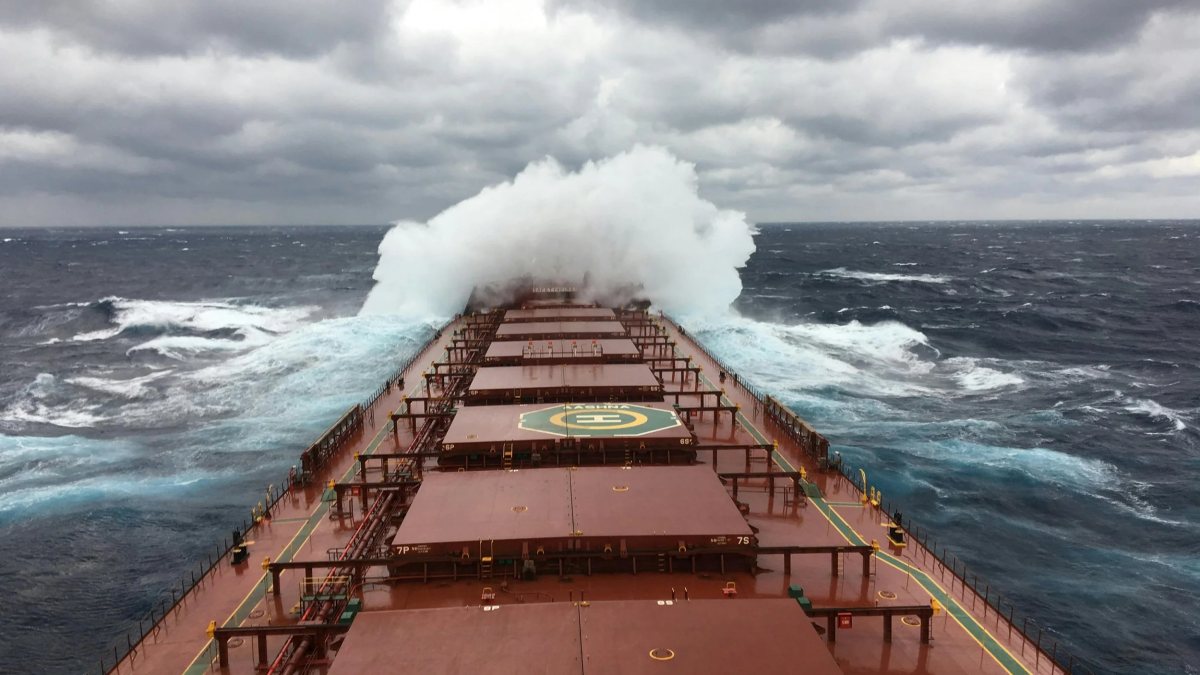
A boat may rise with the tide, but a rising tide does not necessarily lift every boat. The same asymmetry is increasingly apparent in global trade, where the expansion of international commerce is being driven by forces whose implications for the underlying industrial economy remain far from uniform. Artificial intelligence is catalysing an unprecedented investment cycle in digital infrastructure, reshaping trade flows and lifting headline growth projections, while geopolitical conflict is disrupting the supply of essential resources and raising production costs. The World Trade Organization’s October outlook captures this divergence: world merchandise trade volume is now projected to expand by 3.9 percent in 2026, more than twice the 1.9 percent forecast published in March. Yet this upward revision reflects, to a considerable extent, the exceptional momentum of technology-related trade rather than a commensurate acceleration across commodity-intensive industries. For dry bulk shipping, the composition of trade growth is therefore as important as its headline rate. The critical question is how much of the expansion in international commerce translates into incremental industrial production, physical resource consumption and seaborne commodity demand.
According to the WTO, trade in AI-enabling goods increased by 67 percent year-on-year in value terms during the first half of 2026. Accounting for 14.8 percent of global merchandise trade value, these products generated 47 percent of its growth over the period. Semiconductor shipments, servers, data-centre equipment and associated digital infrastructure have consequently emerged as disproportionately important contributors to international commerce. Against this backdrop, the WTO has raised its merchandise trade growth projections to 3.9 percent for 2026 and 4.1 percent for 2027, signalling considerable near-term momentum despite a challenging geopolitical environment.
This story was originally published by Breakwave Advisors. Read the full story at Breakwave Advisors →
Conversation