
ABB Powers Third Hybrid Washington State Ferry Newbuild
ABB has received Notice to Proceed from Washington State Ferries (WSF), the largest ferry operator in the United States, to supply and integrate the power and propulsion system for third hybrid-electric newbuild ferry. This…
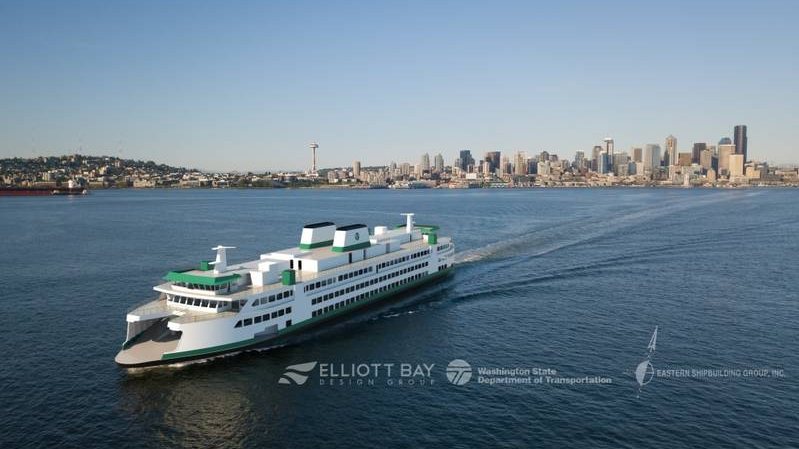
ABB has received Notice to Proceed from Washington State Ferries (WSF), the largest ferry operator in the United States, to supply and integrate the power and propulsion system for third hybrid-electric newbuild ferry. This expands ABB’s involvement in the program from two vessels to three and is part of WSF’s broader plan for up to 16 new hybrid electric ferries by 2040.
As with the first two vessels, ABB will equip Vessel 3 with an integrated hybrid-electric power and propulsion solution centered on Onboard DC Grid and PEMS Power and Energy Management System. With Onboard DC Grid maximizing power distribution efficiency and energy storage integration, PEMS continuously manages available power sources to optimize energy use for vessel operating conditions. This reduces reliance on diesel engines, thereby helping to reduce fuel consumption and emissions. The 13.2-megawatt-hour energy storage system integrated by ABB is designed to enable all-electric, zero-emissions operations on short routes and in port.
ABB’s scope of supply across the first three vessels also includes integrated marine automation, propulsion drives and motors, transformers, low-voltage systems, uninterruptible power supply systems, remote diagnostics, propulsion shafting, propellers, steering gear and rudders, in addition to engineering and commissioning support.
Washington State Ferries burns approximately 19 million gallons of diesel annually. Its electrification program targets emission reductions of 76 percent in carbon dioxide, 75 percent in sulfur oxides, 94 percent in nitrous oxides, and 90 percent in particulate matter by 2040 – and ultimately envisions an emission-free fleet by 2050.
This story was originally published by MarineLink. Read the full story at MarineLink →
Conversation