
Black Friday 2026: The Logistics Bill Arrives After Checkout
Black Friday sales are only part of the story. Parcel surcharges, fulfillment decisions and returns determine how much holiday revenue retailers keep.
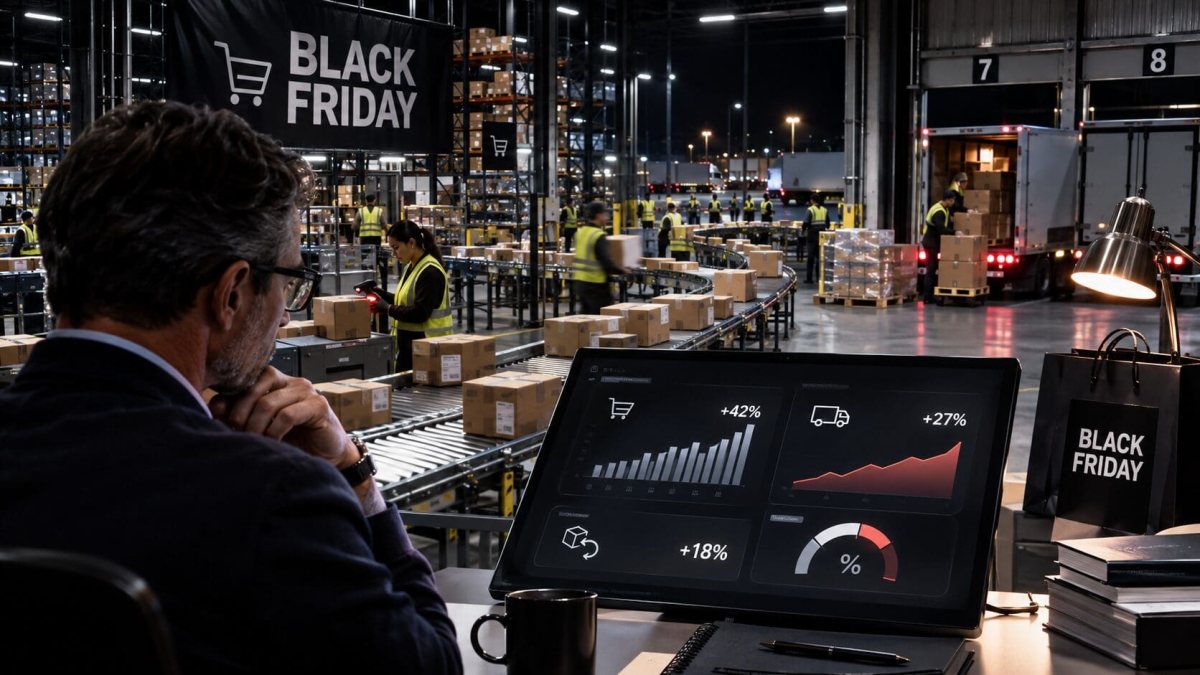
Black Friday has traditionally been measured by what consumers spend. Retailers report sales growth, analysts track transaction volumes, and the financial press compares this year’s numbers with last year’s records. But for logistics and supply chain executives, the more important question comes after the transaction: How much of that revenue will remain once the order has been fulfilled, delivered, and potentially returned?
The distinction matters particularly in 2026. According to Adobe's holiday shopping forecast, U.S. consumers are expected to spend $12.9 billion online on Black Friday, an increase of 9.2% from last year. Cyber Monday is projected to reach $15.1 billion, while online spending for the full November–December holiday season is expected to total $275.1 billion, up 6.7%. Meanwhile, the National Retail Federation forecasts $1.013 trillion in total holiday retail sales, representing 4.2% growth. The two forecasts cover different retail measures, but both point toward another substantial holiday selling season.
That should be encouraging news for retailers. It is also a reminder that transaction growth and profitable fulfillment are not necessarily the same thing. Every additional order creates obligations across warehousing, transportation, labor, customer service, and reverse logistics. When promotional discounts are already reducing product margins, the economics of fulfilling those obligations deserve considerably more attention.
Black Friday is no longer the beginning of the holiday shopping season. Promotional activity now extends through October, November, and December, with retailers using successive events to stimulate demand. Adobe expects U.S. online spending in October alone to reach $95.8 billion, an 8% year-over-year increase.
This story was originally published by Logistics Viewpoints. Read the full story at Logistics Viewpoints →


Conversation