
China’s Electric Airliner Signals a New Competition for Aerospace Supply Chains
COMAC’s battery-powered aircraft highlights how electrification, industrial policy, and regional logistics could reshape aviation. On November 14, China’s Commercial Aircraft Corporation (COMAC) completed the first piloted flight of its CE-25A, a 19-passenger, all-electric aircraft.…
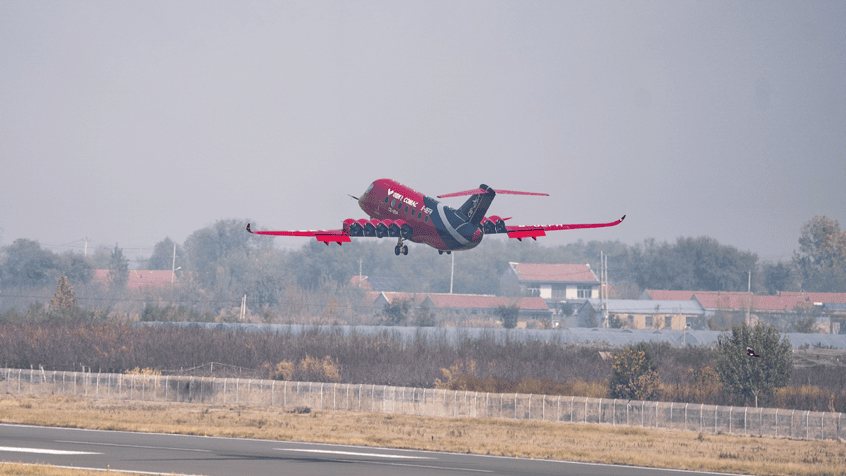
COMAC’s battery-powered aircraft highlights how electrification, industrial policy, and regional logistics could reshape aviation.
On November 14, China’s Commercial Aircraft Corporation (COMAC) completed the first piloted flight of its CE-25A, a 19-passenger, all-electric aircraft. The flight lasted just 16 minutes and 38 seconds, covering approximately 60 kilometers over Shandong Province. While the flight itself was relatively modest, the underlying technology and industrial implications deserve considerably more attention than the aircraft’s initial performance figures might suggest.
China is attempting to develop an aerospace manufacturing capability around technologies in which it already possesses significant industrial strength, particularly batteries, electric motors, and power electronics. At the same time, the United States is restricting access to certain aviation components that Chinese manufacturers have historically depended upon. The intersection of these developments raises an important question for the global supply chain: What happens when electrification begins changing not only how aircraft are powered, but who supplies the technologies that make them possible?
The answer has implications extending from aerospace manufacturing and industrial competitiveness to the development of regional logistics networks. More broadly, it illustrates how technological innovation can fundamentally alter established supply chain relationships, creating new competitive advantages while shifting dependencies to different suppliers, materials, and manufacturing capabilities.
This story was originally published by Logistics Viewpoints. Read the full story at Logistics Viewpoints →

Conversation