
Crawling to the Rescue: Tiny Robots Built to Inspect Nuclear Waste Pipes
How do you inspect underground pipes that carry contaminated waste from the inside out? It’s a question the Hanford Site in Washington state has faced as it works…
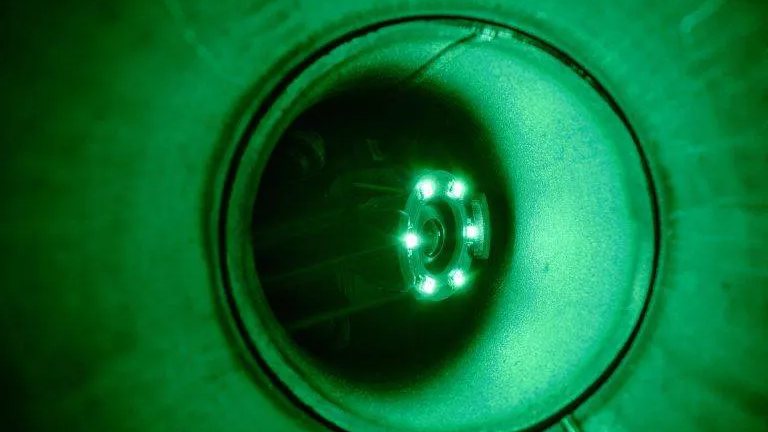
How do you inspect underground pipes that carry contaminated waste from the inside out? It’s a question the Hanford Site in Washington state has faced as it works to clean up the waste left by decades of nuclear production. With no easy solution, Hanford turned to the Sandia National Laboratories and their tiny robot, who have come to the rescue.
Hanford is a decommissioned nuclear production complex managed by the Department of Energy. Located on the Columbia River, it was established in 1943 as part of the Manhattan Project and housed the world’s first full-scale plutonium production reactor. The Plutonium produced at the site was used in the first atomic bomb.
What’s left at Hanford is radioactive waste that is housed in underground storage tanks, connected by a network of pipes. These pipes are designed to transfer waste from one tank to another, but the pipes are decades old and must be inspected to ensure they are in good condition.
The pipes are hard to access–they're underground, run hundreds of feet in various directions, are double-walled and measure as little as two inches in diameter. Digging up these pipes for a visual inspection isn’t realistic or cost-effective. It also can’t ensure that pipes aren’t corroding from the inside out.
This story was originally published by Offshore Engineer. Read the full story at Offshore Engineer →



Conversation