
Design Basis Agreement Reached for 150-Passenger NYC Hydrogen Ferry
A Design Basis Agreement (DBA) was secured by Incat Crowther in partnership with SWITCH Maritime from the United States Coast Guard for a proposed 150...
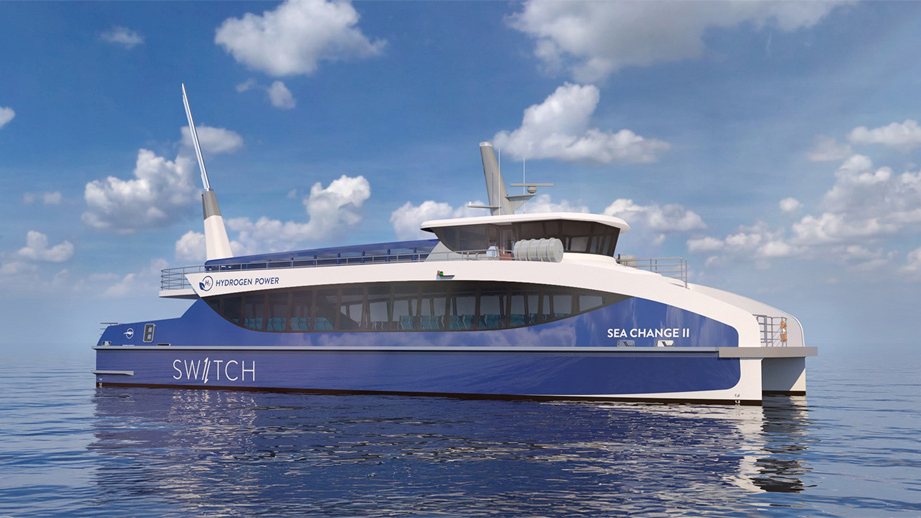
A Design Basis Agreement (DBA) was secured by Incat Crowther in partnership with SWITCH Maritime from the United States Coast Guard for a proposed 150-passenger hydrogen fuel cell-electric fast ferry platform designed to operate in New York City. The project is being called a “significant regulatory milestone,” as SWITCH, which pioneered the first hydrogen fuel cell-electric propulsion in the United States in 2024, looks to expand the commercial applications for the technology.
The companies highlighted the challenges, noting that the USCG Subchapter T regulation, the set of rules and standards that governs the design, construction, and operation of passenger vessels with a capacity of less than 150 passengers, does not currently include guidance or regulation written specifically for hydrogen fuel cell-electric propulsion and hydrogen storage. Switch, Incat Crowther, and the vessel project team worked directly with the USCG to build a regulatory framework that demonstrates sufficient equivalency in safety and risk mitigation. The International Maritime Organization (IMO) approved the Interim Guidelines for the Safety of Ships Using Hydrogen as Fuel in May 2026. These guidelines served as an important foundation for the DBA process, adding more structure while reducing time to approval.
Signing the DBA with the Coast Guard is a critical milestone in advancing the development of the SWITCH-150,” said Francisco Planells, Director of the Newbuild Program, Switch Maritime. “With the DBA in hand, Switch, our project team, and the USCG have a clear and defined framework that will inform vessel construction, commissioning, and ultimately operation.”
This story was originally published by The Maritime Executive. Read the full story at The Maritime Executive →
Conversation