
‘Europe has the ingredients to make rail freight a success, but requires implementation’
A study commissioned by the Community of European Railway and Infrastructure Companies (CER) has found that Europe has the ingredients to turn rail freight into…
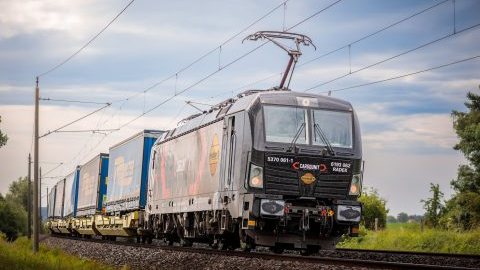
A study commissioned by the Community of European Railway and Infrastructure Companies (CER) has found that Europe has the ingredients to turn rail freight into a success story. It now needs to work with what it has to make the business reliable. Reliability is the core issue that rail freight has to reckon with now. It is the industry’s “central commercial weakness”, according to Brussels-based economic research and public policy consultancy Rel-I, Ecorys and transport economist Prof. Oliviero Baccelli, who conducted the study. Rail freight loses customers because it fails to deliver on key commitments.
The good news: rail freight does not need any new EU legislative initiatives to start implementing competitiveness measures. Europe has adopted the Capacity Regulation already. The TEN-T parameters and the associated permitting Directive (designed to streamline the approval of TEN-T infrastructure projects) are in force, and a new state aid framework took effect in March. Moreover, DAC has a published investment plan.
Apart from resolving some of the permitting Directive’s limitations, the primary constraint is implementation. In essence, Europe just needs to get to work to execute what it has agreed on.
The rail freight industry itself can implement a part of these measures on its own: coordination and communication, early piloting of Capacity Regulation rules, and standardised statistics or data formats. For example, the study says that about a third of ordered train paths never run, but there is no unified statistic confirming this number. This makes it difficult to resolve, since there is no clear uniform measurement.
This story was originally published by RailFreight.com. Read the full story at RailFreight.com →

Conversation