
Japan looks to Andhra Pradesh for a steady supply of rare earths
Japan has asked Andhra Pradesh to secure a reliable supply of rare earth minerals for Japanese industry as the two countries seek closer cooperation on critical minerals. Japanese Ambassador to India Keiichi Ono raised…
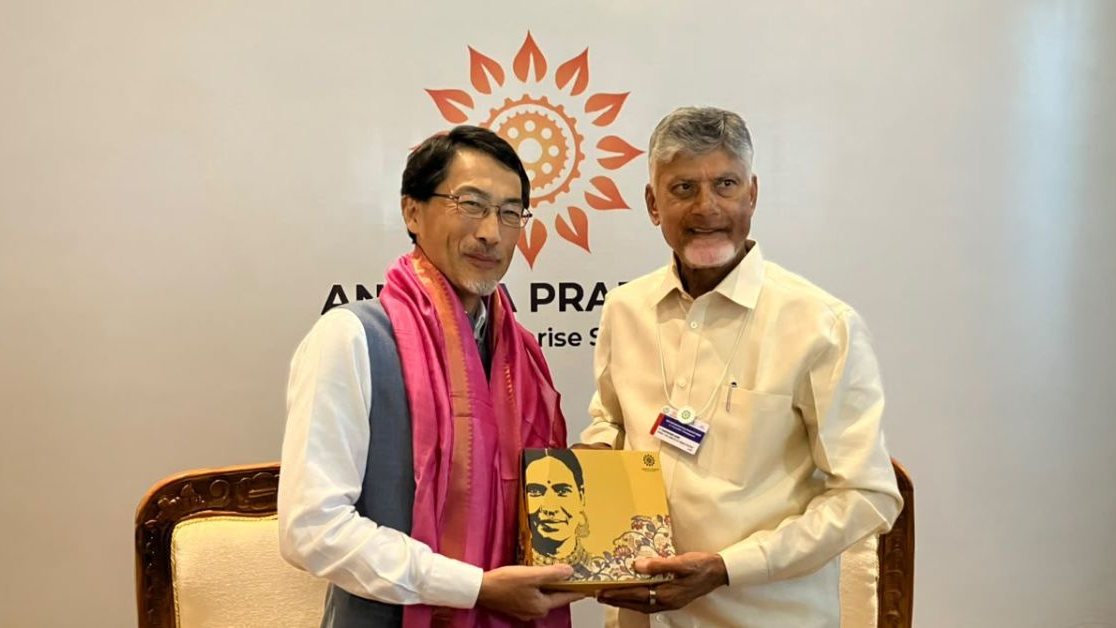
Japan has asked Andhra Pradesh to secure a reliable supply of rare earth minerals for Japanese industry as the two countries seek closer cooperation on critical minerals. Japanese Ambassador to India Keiichi Ono raised the request with Chief Minister N Chandrababu Naidu in Visakhapatnam on 11 November, ahead of the Confederation of Indian Industry (CII) Partnership Summit on 12 and 13 November. The state government’s account of the meeting gave no supply volumes, delivery timetable or commercial terms.
Andhra Pradesh holds nearly a quarter of India’s beach sand mineral resources, the second-largest share among the states, according to the Andhra Pradesh Mineral Development Corporation (APMDC). Its coastal deposits contain monazite, a source of rare earth elements, alongside ilmenite, rutile and zircon. Ilmenite and rutile are feedstocks for titanium products, while rare earths recovered from monazite can be processed into materials used in electronics and permanent magnets.
APMDC has secured approvals for 10 major beach sand deposits across coastal districts including Srikakulam, Vizianagaram, Visakhapatnam, Kakinada and Krishna. In July 2026, the state also reserved 12 square kilometres around three villages in inland Palnadu district for the Atomic Minerals Directorate for Exploration and Research to prospect for rare earth elements and associated critical minerals.
The Union Budget 2026–27 identified Andhra Pradesh, Kerala, Odisha and Tamil Nadu for dedicated rare earth corridors covering mining, processing, research and manufacturing. The corridors complement a ₹7,280-crore central scheme to establish 6,000 tonnes a year of integrated rare earth permanent magnet manufacturing capacity. These magnets are used in electric vehicle motors, wind turbines and electronics.
This story was originally published by Maritime Gateway. Read the full story at Maritime Gateway →

Conversation