
More cross-border, more semi-trailers: Combined Transport is changing
The Combined Transport (CT) association UIRR and the International Union of Railways (UIC) have published their 2026 CT sector report. Among many other findings, they…
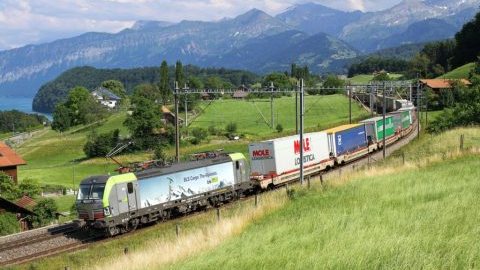
The Combined Transport (CT) association UIRR and the International Union of Railways (UIC) have published their 2026 CT sector report. Among many other findings, they highlight recent developments that are changing the profile of CT operations in Europe. New freight flows are growing faster than old ones. Continental CT is gaining in importance, growing by 30% between 2015 and 2025, UIRR and UIC say with reference to an SCI Verkehr study. Continental CT is defined as transport of swap bodies, semitrailers and lorries and is an upcoming form of intermodal rail operations. It usually takes place as part of intra-European transport chains. By contrast, maritime CT (transport of ISO containers, usually in intercontinental transport chains) grew by around 25% between 2015 and 2025.
The continental variant is growing faster, but that does not mean it has overtaken maritime CT. The latter accounted for 27% of the total rail freight performance in Europe in 2025. Meanwhile, the former was responsible for a share of 8%. Overall, European rail freight ran a total of 430 billion tonne-kilometres in 2025. Conventional rail freight accounted for only 66% of that figure, down from 74% in 2015.
The report attributes the relative success of continental CT to better terminal infrastructure and the introduction of new loading units. At the same time, the road sector is facing a growing shortage of drivers, which rail transportation can help alleviate. Moreover, semi-trailers used in CT demand fewer maintenance expenses compared to those used exclusively for road haulage.
This story was originally published by RailFreight.com. Read the full story at RailFreight.com →

Conversation