
On the lash
Automated container lashing to secure boxes can replace dangerous manual labour requirements on ship decks through mechanical, hydraulic, or structural systems. Dean Davison looks at the benefits and current developments
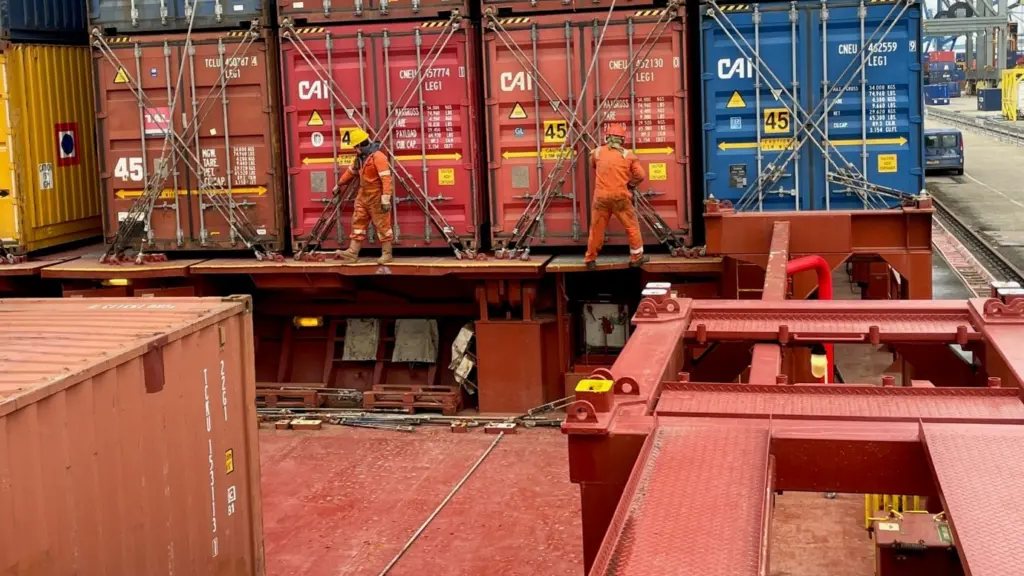
Automated container lashing to secure boxes can replace dangerous manual labour requirements on ship decks through mechanical, hydraulic, or structural systems. Dean Davison looks at the benefits and current developments
“Even in the most modern container terminals, twistlocks and stackers are still inserted into and removed from container corner castings manually. This persists even though manual lashing has long been recognised as one of the last majors, unresolved occupational safety risks in container handling,” states the TT Club.
The TT Club is certainly worth listening to here. Established in 1968 and with more than 1300 current members, including owners and operators, ports and terminals, and logistics companies, working across maritime, road, rail, and air, this organisation is an established independent provider of mutual insurance and related risk management services to the international transport and logistics industry, with a clear mission to “make the global transport and logistics industry safer, more secure and more sustainable.”
So, the view it offers on container lashing is important, especially relating to safety and the risks involved, as the following commentary proves: “Stevedores carrying out these tasks are required to work in the travel area of horizontal transport beneath gantry cranes and directly under suspended loads. These conditions repeatedly lead to serious injuries and, in some cases, fatalities. The combination of moving equipment, restricted visibility and heavy components creates an environment where the margin for error is extremely small.”
This story was originally published by Port Strategy. Read the full story at Port Strategy →



Conversation