
People, Process, and Technology Are No Longer Enough: Rethinking Supply Chain Management in the Age of AI
For decades, people, process, and technology have provided the foundation for enterprise transformation. The framework has endured because it captures something fundamental about how organizations operate. Technology provides capabilities, processes determine how work gets…
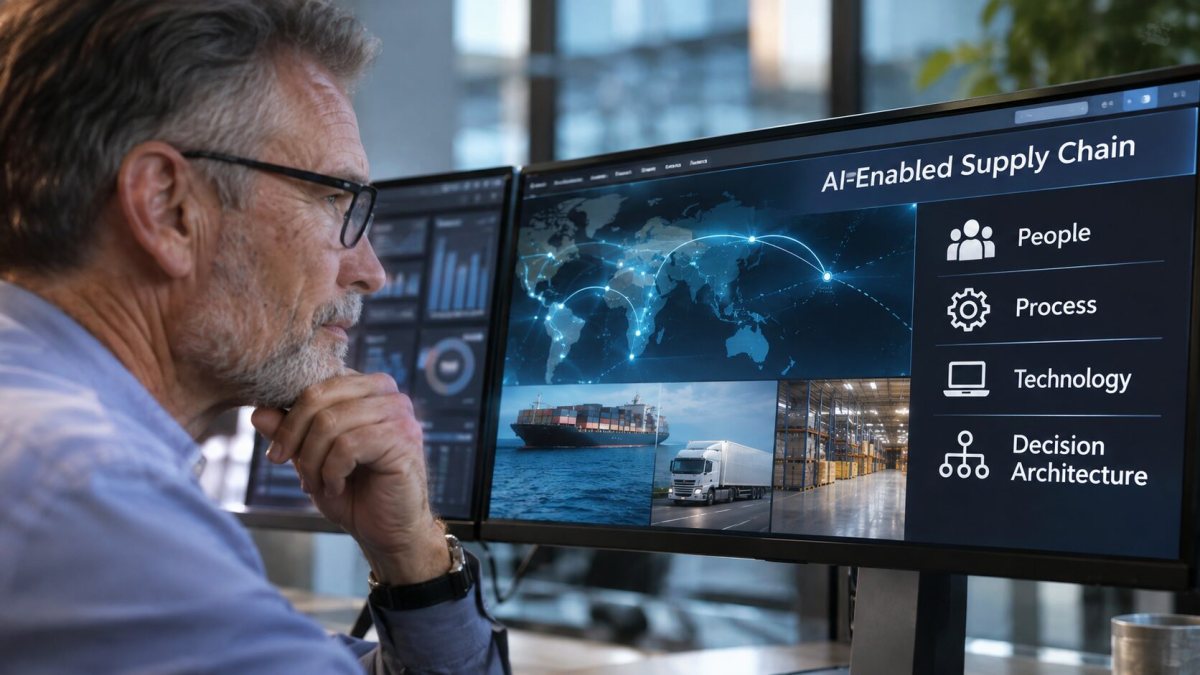
For decades, people, process, and technology have provided the foundation for enterprise transformation. The framework has endured because it captures something fundamental about how organizations operate. Technology provides capabilities, processes determine how work gets done, and people contribute the knowledge, judgment, and accountability necessary to make the entire system function. Supply chain executives have relied on this relationship to guide investments in enterprise software, automation, organizational restructuring, and operational improvement.
Artificial intelligence is beginning to challenge that framework, although perhaps not in the way many technology suppliers suggest. Machines have participated in supply chain decision-making for decades. Material requirements planning, advanced planning and scheduling, transportation optimization, and warehouse control systems have long generated recommendations and executed actions within predefined constraints. What is changing is the potential scope, adaptability, and authority of those decisions. AI systems are increasingly capable of interpreting changing conditions, evaluating alternatives, coordinating activities across applications, and initiating actions that previously required several layers of human intervention.
This introduces a management problem that traditional transformation frameworks do not fully address. When intelligent systems begin making interconnected operational decisions, who establishes their objectives, who determines the limits of their authority, and who remains accountable when the outcome is commercially or operationally unacceptable? These are not simply questions about software architecture or algorithmic performance. They concern the fundamental design of the enterprise operating model.
This story was originally published by Logistics Viewpoints. Read the full story at Logistics Viewpoints →

Conversation