
Rail freight does the heavy lifting for nuclear industry
Rail freight’s role in the UK’s nuclear industry extends well beyond the transportation of nuclear fuel and radioactive waste. It also provides the capacity to…
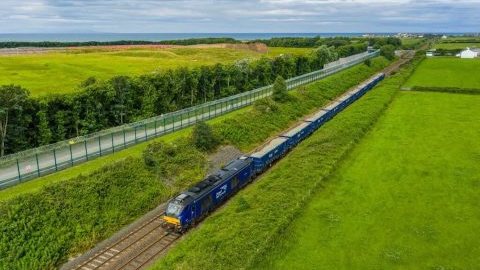
Rail freight’s role in the UK’s nuclear industry extends well beyond the transportation of nuclear fuel and radioactive waste. It also provides the capacity to move the enormous quantities of construction materials required for decommissioning, site maintenance and environmental protection. A recent campaign by Nuclear Transport Solutions (NTS), using its Direct Rail Services (DRS) division, demonstrated how rail can support some of the industry’s less conspicuous, but equally important, activities.
More than 330,000 tonnes of aggregate have been delivered by rail to the Low Level Waste (LLW) Repository in Cumbria, northwest England. The material was required for a major environmental protection project involving the replacement of a protective membrane over historic waste disposal trenches. The deliveries involved 365 trains and removed more than 17,000 truck journeys from local roads, according to the decommissioning authority.a
The deliveries formed part of the Southern Trench Interim Membrane (STIM) project, undertaken by Nuclear Waste Services (NWS) at its LLW Repository. The work involves replacing the protective membrane covering the site’s southern legacy disposal trenches. The membrane prevents rainwater from reaching the waste beneath it, protecting the surrounding environment and supporting the long-term management of the repository.
This story was originally published by RailFreight.com. Read the full story at RailFreight.com →
Conversation