
Singapore must look beyond the box to secure its logistics future
Dropping behind Shanghai and Ningbo-Zhoushan in the global container port rankings, and seeing Malaysia’s Port Klang and Port of Tanjung Pelepas nip at its heels should serve as a wake-up call for Singapore, in…
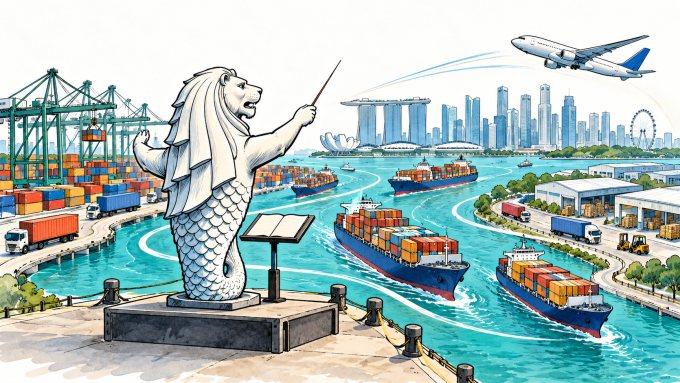
Dropping behind Shanghai and Ningbo-Zhoushan in the global container port rankings, and seeing Malaysia’s Port Klang and Port of Tanjung Pelepas nip at its heels should serve as a wake-up call for Singapore, in a changing competitive landscape for box trades
For Singapore, this is about more than losing a place in a league table. It is an existential question asking whether a nation built on maritime trade can adapt to a world where supply chain control matters as much as moving containers.
As Singapore spent years living off its geographical advantages, deepwater harbour and reputation for efficiency to guarantee continued dominance, its competitors have expanded their infrastructure, attracted manufacturing investment, and developed integrated logistics ecosystems. The danger now for Singapore is that it continues competing on volumes, while the market moves towards supply chain orchestration.
How do the two differ? A transit port moves containers; a supply chain orchestrator helps determine where goods are sourced, stored, distributed, and financed, allowing it to capture greater economic value, even if cargo physically passes through another country.
This story was originally published by The Loadstar. Read the full story at The Loadstar →


Conversation