
Study: Shipping Can Avoid Endangered-Species Habitat at Minimal Cost
In a study aimed at demonstrating that shipping can support marine conservation efforts without significantly increasing costs, researchers in the UK...
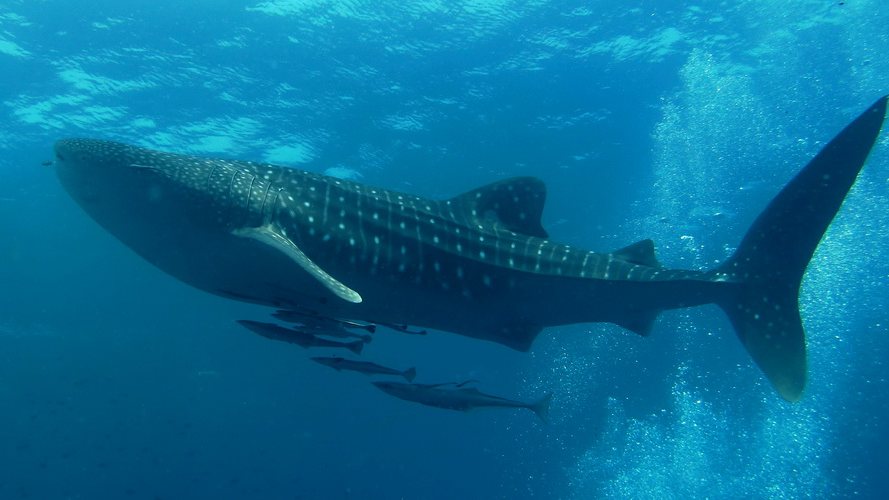
In a study aimed at demonstrating that shipping can support marine conservation efforts without significantly increasing costs, researchers in the UK found that rerouting vessels around whale shark aggregation sites added at most one percent to fuel consumption on voyages of more than six days. On voyages lasting more than 12 days, the penalty was smaller still, at less than 0.5 percent.
For shorter crossings, slowing down inside the aggregation areas was the more fuel-efficient option, limiting the extra fuel burn to less than one percent for slower ships while still reducing the risk of striking the endangered sharks.
In the study, University of Southampton researchers simulated eight port-to-port voyages for each of two vessel classes: a 336-meter crude oil tanker and a 366-meter container ship. Each voyage was run under three routing scenarios: a baseline optimized route, a 10-knot speed limit within core whale shark habitat, and complete avoidance of those areas. Across all routes, the change in fuel use ranged from a 0.13 percent decrease to a 9.65 percent increase, and most long-distance voyages saw increases of less than one percent.
To run the simulations, the team loaded maps of known whale shark aggregation sites into T-VOS (Theyr Voyage Optimization Solution), a routing tool used by commercial shipping operators. The results showed that speed reduction works best on short voyages, while steering clear of the areas entirely makes more sense on longer ones.
This story was originally published by The Maritime Executive. Read the full story at The Maritime Executive →

Conversation