
Tender-Assist Rigs: Southeast Asia’s Quiet Workhorses Head for Full Utilization
Often overshadowed by the towering jackup and ultra-deepwater floating rig fleets that dominate offshore headlines, tender-assist rigs are enjoying a resurgence in Southeast Asia. While they represent a relatively small niche of the global…
By Paul Ezekiel, Senior Offshore Rig Analyst, Westwood Global Energy Group November 5, 2026
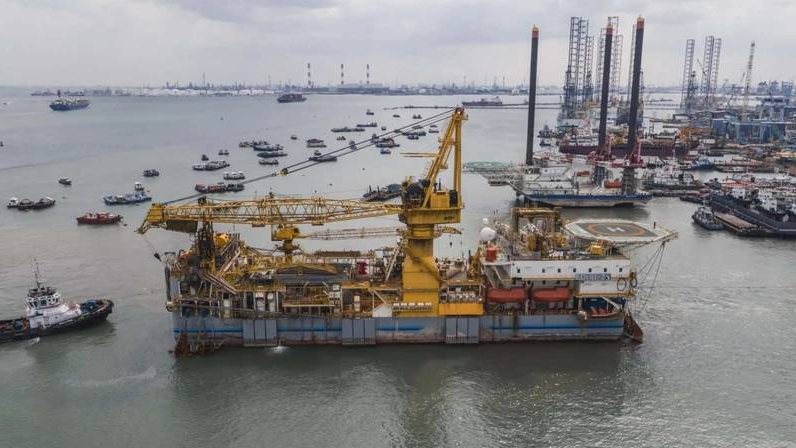
Often overshadowed by the towering jackup and ultra-deepwater floating rig fleets that dominate offshore headlines, tender-assist rigs are enjoying a resurgence in Southeast Asia. While they represent a relatively small niche of the global offshore drilling market, these versatile units have become indispensable to operators across Thailand, Malaysia and Brunei, where their efficiency and cost competitiveness continue to drive demand.
Tender-assist rigs are designed for fast, efficient platform drilling. Conventional units use a barge-like monohull and are best suited to shallow, calm waters, while larger semi-tenders can operate in deeper and more challenging environments such as offshore East Malaysia and the Andaman Sea. The key attraction is speed. Compared with jackups, tender-assist rigs require less time to mobilize, rig up and move between locations. In some cases, drilling equipment can be installed in as few as three lifts, reducing non-productive time and improving well economics.
According to Westwood's RigLogix, the global fleet comprises of just 29 tender-assist and semi tender-assist rigs (collectively referred to here as TARs). Of these, 16 are currently active, six are warm stacked, six are cold stacked and one remains under construction. Yet despite their modest numbers, the market is tightening rapidly, with Southeast Asia standing as the only region where the sector is truly thriving.
This story was originally published by MarineLink. Read the full story at MarineLink →

Conversation