
The Data Center Boom Is Exposing the Limits of Conventional Logistics Planning
Data-center growth exposes weaknesses in freight-only planning. Learn how equipment lead times, site readiness and commissioning dependencies reshape.
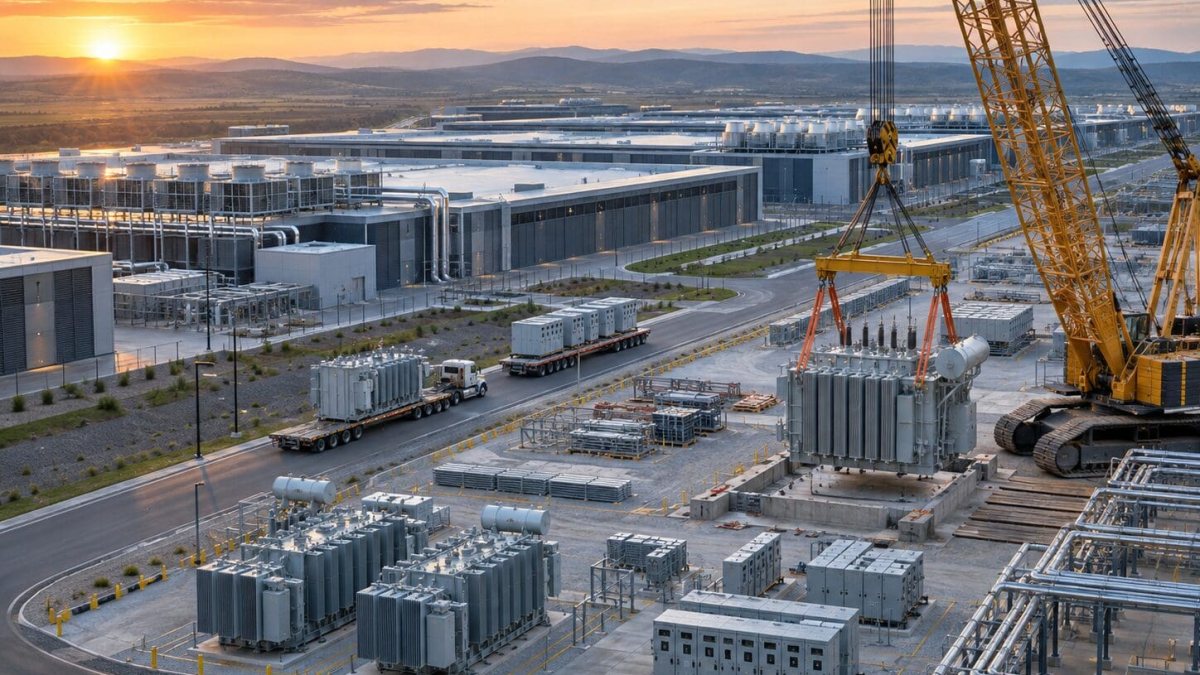
The build-out of AI infrastructure is often discussed in megawatts, capital expenditure and computational performance. But those metrics become commercially meaningful only when a completed, connected and commissioned facility can serve demand. A missing transformer, delayed cooling component or unavailable rigging crew can hold an entire project off the revenue line. This is why data-center logistics cannot be managed as a collection of freight shipments; it must be engineered into the construction and commissioning schedule.
A new facility may require power transformers, switchgear, cooling systems, backup generators, modular assemblies, servers, and extensive cabling. Some items are large and difficult to transport; others are scarce, customized, or constrained by manufacturing capacity. A delivery delay can be amplified when the equipment sits on a critical installation path. The resulting cost is not merely an extra day of trucking. It may be idle construction crews, deferred commissioning, or a missed commercial deployment. The conventional purchasing approach of buying freight independently from project schedules is poorly suited to this environment. Transport and engineering decisions must be coordinated well before equipment is ready to ship.
In its 2026 global data-center outlook, JLL reported that more than half of projects in 2025 encountered construction delays of at least three months. Grid connections, equipment lead times, skilled trades and the ability to coordinate physical execution all matter. A logistics plan should therefore identify the components and permissions that determine when equipment can be energized and tested, rather than optimize every shipment against an identical on-time-delivery target.
This story was originally published by Logistics Viewpoints. Read the full story at Logistics Viewpoints →

Conversation