
The Tanker Shortage: Why Moving Oil Remains a Challenge
Geopolitical developments will remain the main driver of tanker market conditions
The global oil market is facing a challenge that goes beyond crude supply. The new challenge is to find enough available ships to move it. Despite the recovery in Middle Eastern exports during September, geopolitical tensions and disrupted shipping patterns continue to put pressure on tanker availability. The result is an exceptionally tight freight market, where the ability to transport oil has become almost as important as the ability to produce it.
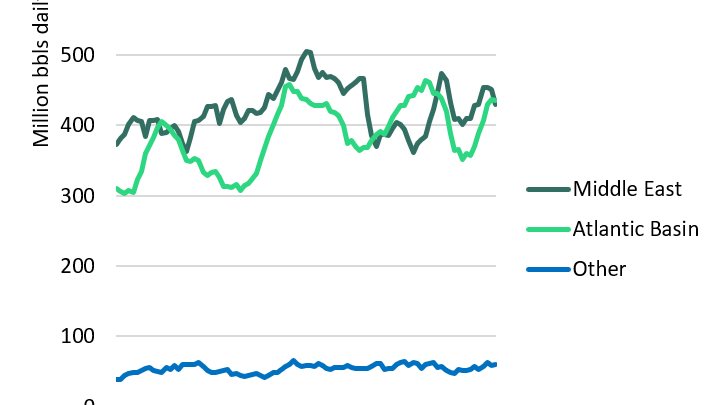
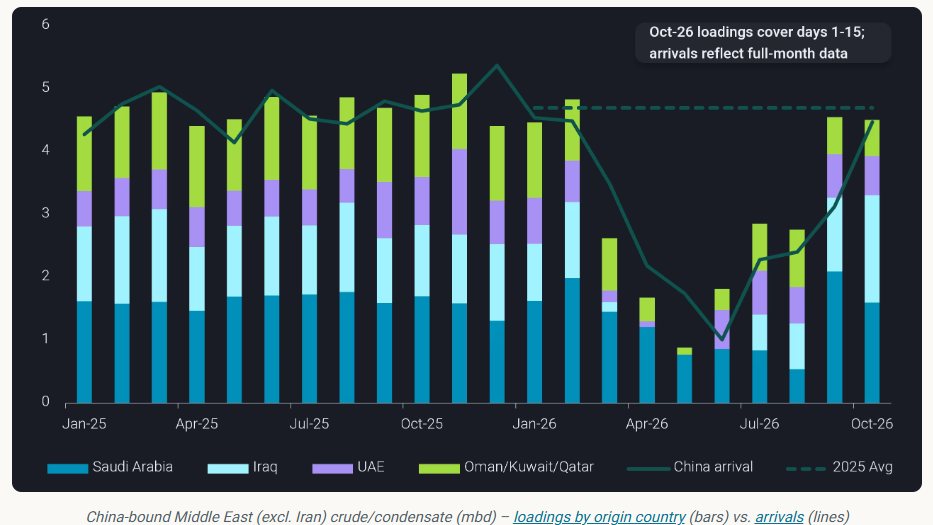
Middle Eastern crude exports averaged 18.3 million barrels per day on September 30, exceeding pre-war levels, according to provisional Kpler data. However, the recovery in exports has not translated into a return to normal shipping conditions. Increased ship-to-ship (STS) transfers outside the Strait of Hormuz, longer waiting times and security concerns continue to absorb valuable tanker capacity.
The situation has become more challenging following a renewed wave of attacks on commercial vessels. According to the Financial Times, 24 ships were attacked in the two weeks leading up to October 11, while oil exports through Hormuz fell to approximately 2.9 million barrels per day on October 11, compared with a September peak of 15.5 million barrels per day.
These developments have made owners increasingly cautious about sending vessels into the region, with several empty VLCCs and Suezmaxes reportedly turning away from the Fujairah area. Uncertainty, waiting times and inefficient trading patterns reduce the effective availability of the global fleet.
This story was originally published by Breakwave Advisors. Read the full story at Breakwave Advisors →
Conversation