
Why Owner-Operators Are Leaving The Small-Fleet Tier, And Where Their Trucks Go Next
For three and a half years the smallest tier of trucking has been quietly emptying out, with the number of tractors run by one-to-six-truck carriers sliding from a 2023 peak near 398,000 all the…
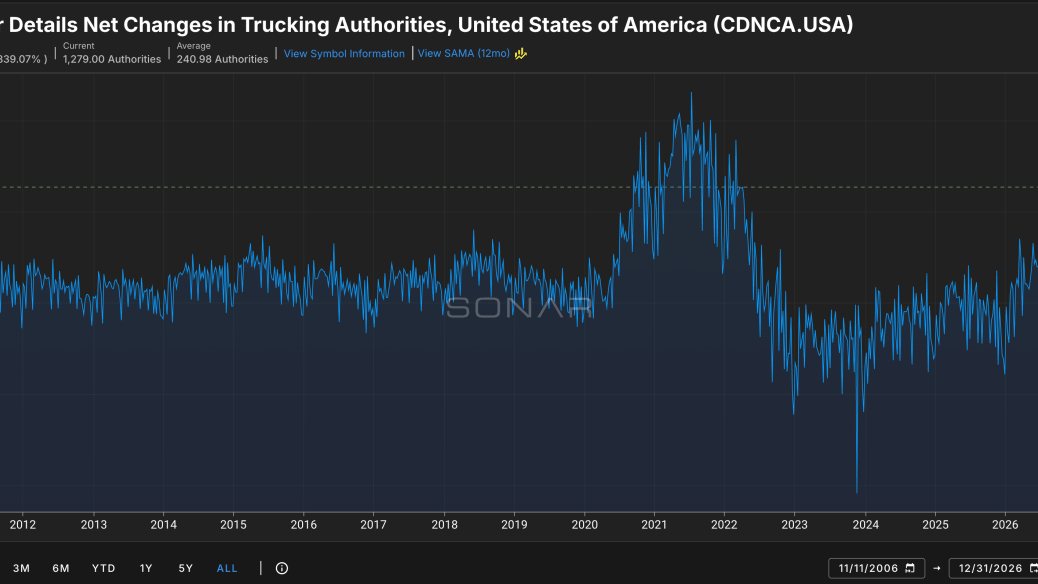
For three and a half years the smallest tier of trucking has been quietly emptying out, with the number of tractors run by one-to-six-truck carriers sliding from a 2023 peak near 398,000 all the way back to about 362,000, and the easy explanation, that owner-operators are simply going out of business, misses what the federal data actually shows, because a large share of those trucks never leave the road at all, they just change whose name is on the authority. The story of the shrinking owner-operator tier is really two stories, one about why they are getting squeezed out and one about where the equipment lands, and the second one is the more interesting of the two.
The scale of the retreat is clear in the fleet-size data. FreightWaves SONAR’s count of tractors operated by carriers with one to six power units (TCTCO.USA) sits at 362,033, below both its five-year average of about 378,800 and its 12-month average of roughly 364,960. The segment surged during the freight boom, as pandemic-era demand and easy authority pulled a wave of new entrants into the market, peaked close to 398,000 tractors in the first half of 2023, and has declined almost without interruption since. That is roughly 36,000 tractors, on the order of nine percent of the segment, pulled back out of the smallest tier over three and a half years, effectively unwinding the entire boom.
This story was originally published by FreightWaves. Read the full story at FreightWaves →


Conversation