
Why Port Cargo Clearance Gets Delayed By Paperwork, Not Cranes & How to Fix It
EDI, or Electronic Data Interchange, is the exchange of business information between stakeholders in port operations. Know more in this article.
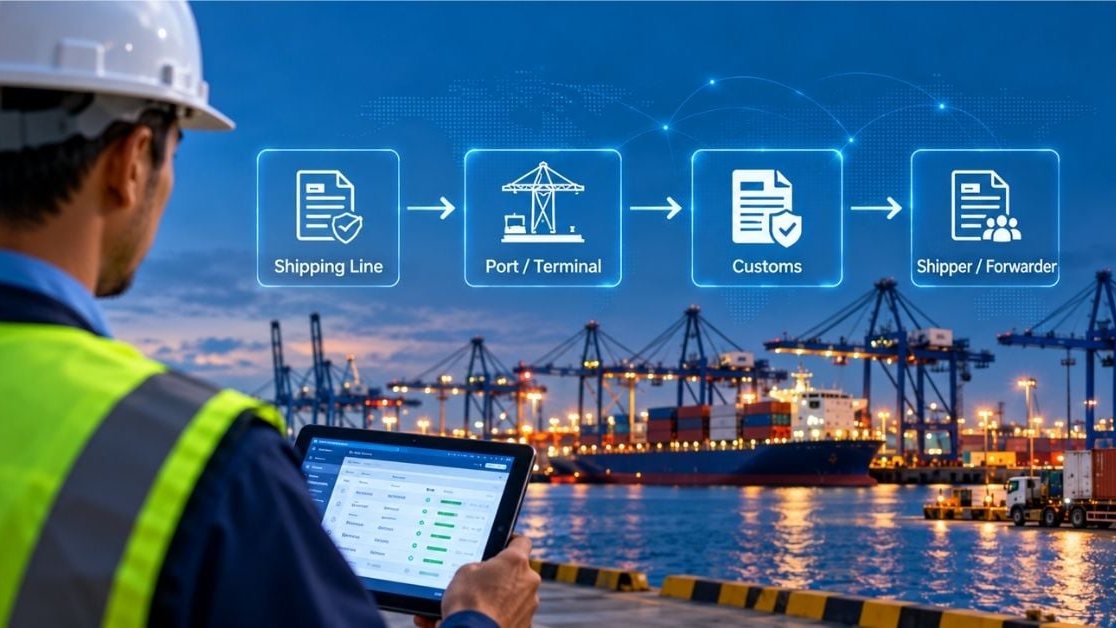
Modern ports are equipped with new tech and software that help port operators get the right data to make decisions faster and automate tasks, which increases the efficiency of cargo operations. Different sections of the port, including crane operations, cargo movement within the port, warehousing, yard areas, intermodal transport areas, etc., are automated and connected.
However, tasks such as inspections and checks that take place in yards, warehouses, weighbridges, sampling stations, and specifically customs, are usually left to human approvals and are semi-automated.
Even with EDI, or Electronic Data Interchange, the systems behind these processes take time to get validated. This means that even when the container or bulk cargo is unloaded and ready to leave the port, the paper trail behind it does not keep up and adds to the delay. This happens because this paper trail data is slow, fragmented, and manual.
EDI, or Electronic Data Interchange, is the exchange of business information between stakeholders in port operations, including shipping companies, ports, terminal operators, customs, shippers, and freight forwarders.
This story was originally published by Marine Insight. Read the full story at Marine Insight →


Conversation