
Why Truckload Rates Feel Disappointing Despite Strong Numbers
This FreightWaves SONAR update dives deep into the current freight market, analyzing peak season performance, truckload rejection rates, and their impact on spot and contract rates. Discover why carriers might feel disappointed despite seemingly…
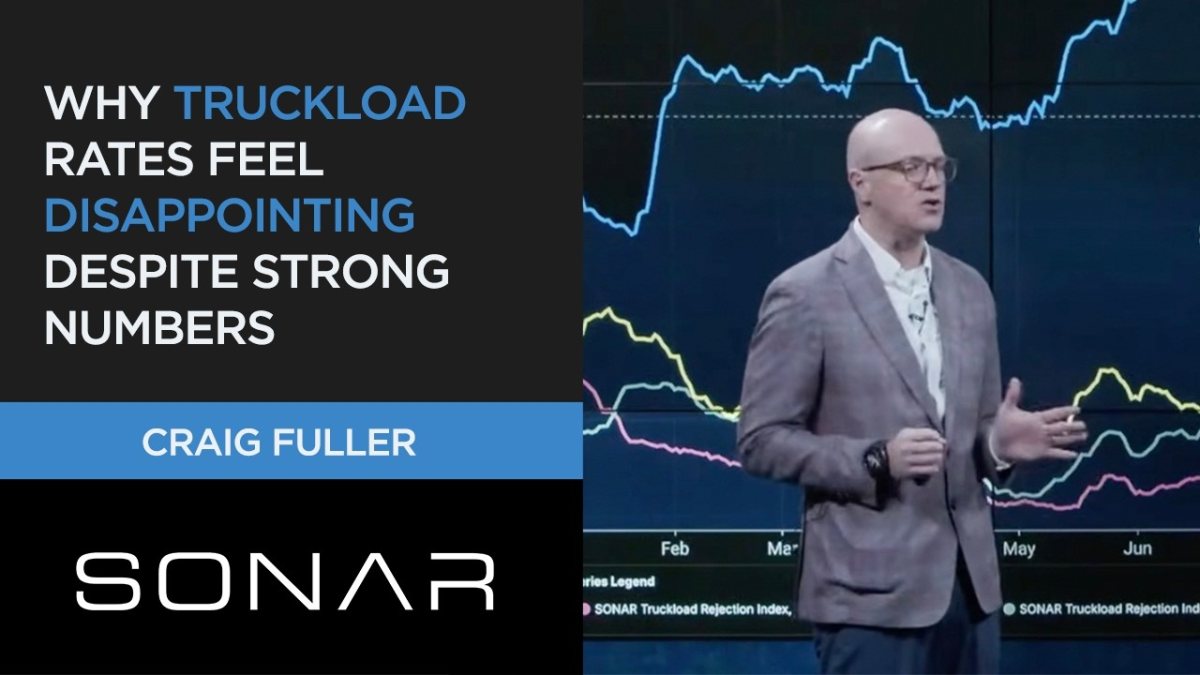
This FreightWaves SONAR update dives deep into the current freight market, analyzing peak season performance, truckload rejection rates, and their impact on spot and contract rates. Discover why carriers might feel disappointed despite seemingly strong numbers, and what this means for shippers preparing their routing guides for next year. We also break down the latest trends in diesel prices and their effect on the overall energy market.
Truckload spot rates have pulled back from recent highs to $2.58 per mile — net of fuel — after briefly surpassing $3 per mile earlier this year, according to FreightWaves SONAR data reviewed during the latest SONAR Update. The retreat mirrors a softening in the Truckload Rejection Index, which has plateaued after a strong start to 2025, signaling that relative capacity has loosened slightly against demand.
The rejection index currently sits at 12.78%, a figure that is roughly equal to the peak reached during all of December 2024. While that level reflects a healthy market by historical standards, the deceleration from earlier momentum has tempered optimism. “Is this a strong year or is it a weakening year? I would say we’ve lost some momentum, but things are actually pretty good,” said Craig Fuller.
Fuller framed the psychological dynamic facing carriers: after spot rates crested above $3 per mile, a retreat to $2.58 feels deflating even though the number would have been cause for celebration just 12 months ago. The rejection index, which measures the percentage of truckloads turned down by carriers, remains a key barometer of capacity tightness — a rising rate favors carriers, while a declining rate favors shippers.
This story was originally published by FreightWaves. Read the full story at FreightWaves →


Conversation