
World’s Largest Fleet Of Sailing Cargo Ships That Can Cut CO2 By Up To 90% Is Set To Double In Size
Alewijnse partners with Piriou to integrate hybrid electrical systems for four new sail-powered cargo vessels designed to cut CO₂ emissions by up to 90%.
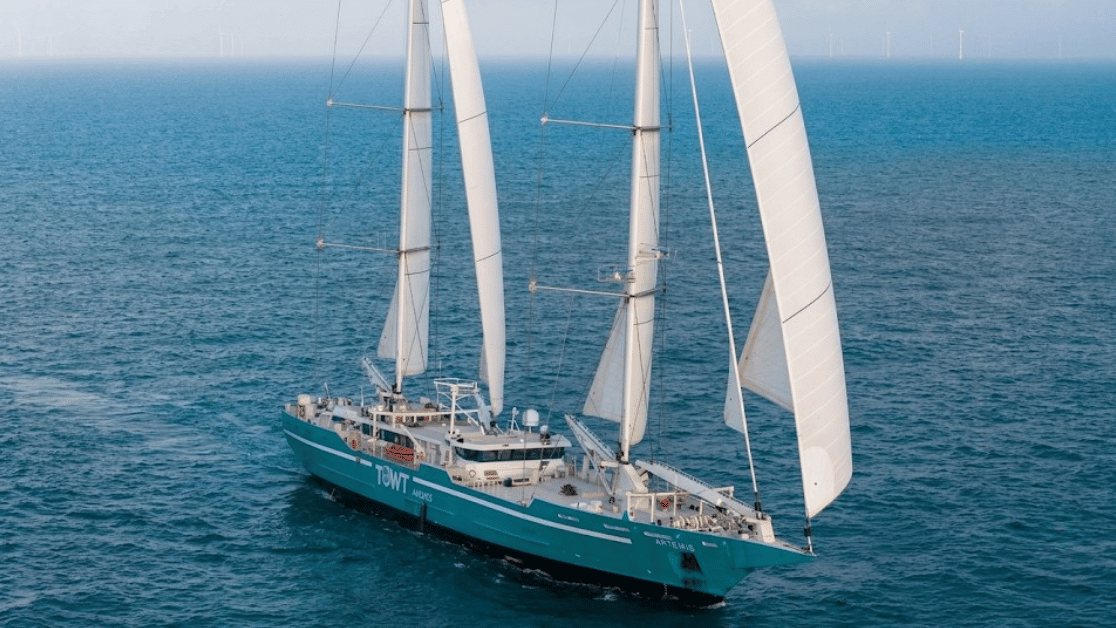
Alewijnse has signed a contract with the French shipbuilder Piriou to deliver the electrical system integration on board four new sail cargo vessels with hybrid propulsion. The Phenix class has been developed by the shipping company TransOceanic Wind Transport (NEWTOWT). Earlier, Piriou and Alewijnse completed similar projects for the first two vessels, Anemos and Artemis, which were built in Romania and France, and Vietnam, respectively. Together with the new vessels, these are currently the largest sailing cargo ships in operation that utilise automated soft-rigging sails derived directly from ocean racing technology.
Over the millennia, wind power has demonstrated its value as an energy source. It is free, almost always available at sea, doesn’t need to be stored on board, and, of course, it has no emissions. It has become especially relevant now in light of the European Commission’s goal to achieve a 90% reduction in CO₂ emissions by 2040.
The French company NEWTOWT (formerly TOWT) is one of several forward-thinking shipping companies that are revisiting the idea of sail-powered cargo vessels, supported by a French government grant. Working with Piriou, NEWTOWT has developed the Phenix-class sailing ship for freight transport across the Atlantic, and Alewijnse was selected to integrate the complex electrical systems aboard these innovative vessels.
This story was originally published by Marine Insight. Read the full story at Marine Insight →
Conversation