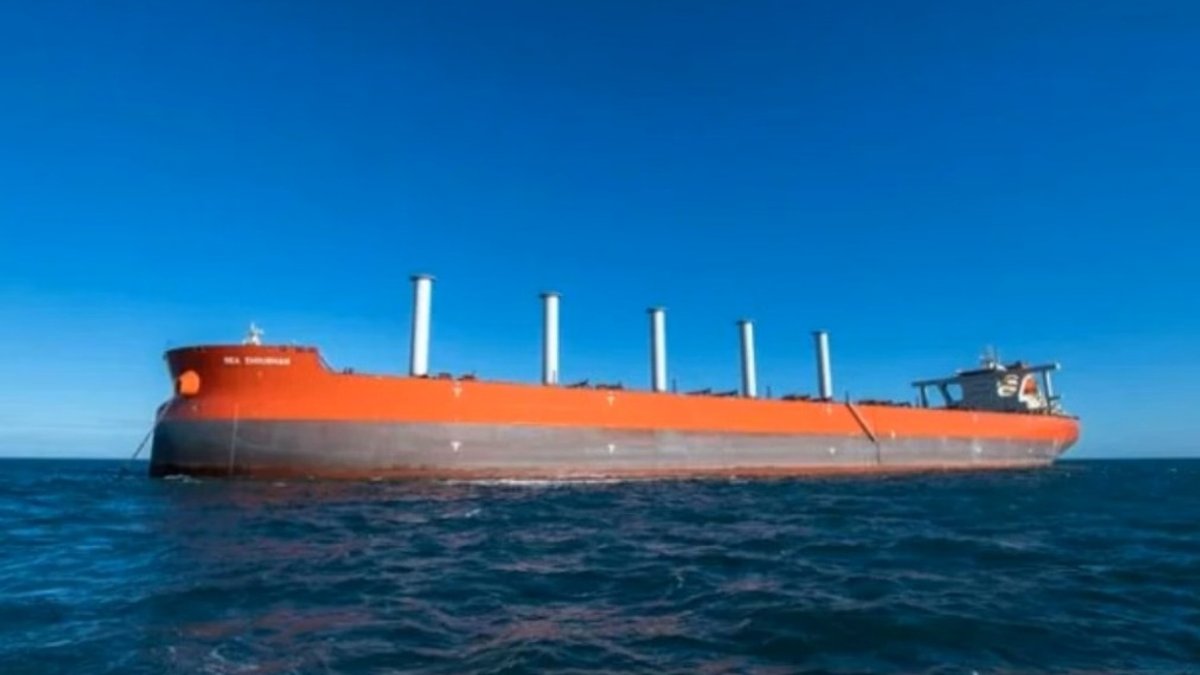
Brazil launches first transoceanic ship powered by ethanol and aims for green leadership
Image: Vale
O Brazil has just taken a strategic leap towards the decarbonization of maritime transport by launching the world’s first transoceanic ship powered by ethanol. The initiative represents a technological and environmental milestone, with the potential to reduce carbon emissions by up to 90% compared to fossil fuels traditionally used in the sector.
Super Rectangle (728×90) – Position 17
The vessel comes at a time when the global shipping industry faces increasing pressure to reduce its environmental impact. Responsible for around 3% of global greenhouse gas emissions, maritime transport seeks viable alternatives to meet international sustainability goals. In this context, ethanol appears as a promising solution, especially for countries with strong agricultural production and biofuel generation capacity.
The Brazilian project stands out not only for its technological innovation, but also for its economic viability and scalability. Ethanol, already widely produced in the country, offers a consolidated chain, which facilitates its large-scale adoption. Furthermore, renewable fuel contributes to reducing dependence on petroleum derivatives, aligning with global energy transition strategies.
Experts point out that the initiative could redefine standards in international navigation, influencing new investments and accelerating the adoption of alternative fuels. The movement also strengthens Brazil’s position as a protagonist on the environmental agenda, especially in sectors that are historically difficult to decarbonize.
With this innovation, the country not only advances in sustainability, but also paves the way for a new maritime economy, cleaner, more efficient and aligned with the demands of the future.