Everything rises and BYD capitalizes on oil crisis
Hello, this is Kenji in Tokyo presenting the #techAsia newsletter.
This week marks the seventh anniversary of our newsletter launch on April 3, 2019, when it was called “Tech Scroll Asia.” Being part of this project from the preparation stage, I would like to express my heartfelt gratitude to all our readers who have followed our weekly reporting and dearly wish that you continue to do so in the weeks, months and years to come.
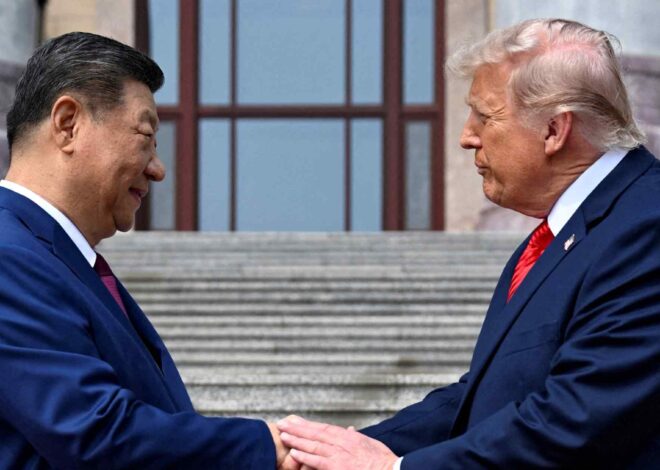
Since the start of the newsletter, the Asian tech scene has been at the mercy of shifting geopolitical realities and mounting Sino-American tensions. Then as now the key players are U.S. President Donald Trump, now in his second term, and China’s President Xi Jinping, apparently in office for life after abolishing term limits in 2018.
This edition of the newsletter would have focused on their summit in Beijing, where Trump was scheduled to visit from Tuesday to Thursday. His trip, however, was postponed until mid-May due to the war against Iran initiated by the U.S. and Israel.
While Trump pushed back his travel plans, four U.S. senators went ahead with their trip to Taiwan, Japan and South Korea this week precisely because of the Iran conflict. Democratic Senator Jeanne Shaheen, co-head of the bipartisan delegation, said the lawmakers “chose this time because of the issues that are affecting the region.”
The war has raised alarm bells across Asia from its onset, and material impacts are being felt in sectors and industries ranging from airlines to aluminum. The monthlong war has also created an energy crisis that some are comparing to those of 1973 and 1979, with repercussions for virtually all types of businesses — and the tech sector is no exception.
My top recommendation for this week is this comprehensive wrap on the war’s impact on tech industries, reported by Nikkei Asia’s tech correspondents in Taipei, Cheng Ting-Fang and Lauly Li. The wave of price hikes and potential shortages has expanded to well-known components such as chips as well as those “that most people have never heard of,” such as external modulation lasers (EML) and continuous-wave (CW) lasers used in transceivers and special types of printed circuit boards.
The problem, industry sources say, is that such supply constraints are likely to continue and perhaps worsen even after a ceasefire is reached, whenever that might be.
Jose Liao, general manager of systems business at major PC maker Asus, summed up the scale of the challenges facing the tech industry: “No one can escape.”
A rare winner?
While the world scrambles to cope with rising oil prices due to the ongoing war in the Middle East, Chinese electric vehicle maker BYD views itself as a rare beneficiary of the current crisis.
Nikkei Asia’s Cissy Zhou reports that Wang Chuanfu, the founding chairman of the Shenzhen-based top EV manufacturer, told analysts at a closed-door briefing on Monday that skyrocketing fuel prices are expected to push up the company’s overseas sales to “another level” this year. In markets such as Australia, New Zealand and the Philippines, the company has been selling two weeks’ worth of cars in a day, he said.
Wang’s remarks came after BYD last week announced a 19% year-on-year decline in annual net profit, its first fall since 2021, and revenue growth of 3%, its slowest in six years, amid cutthroat price competition in its home market.
Whether the war will accelerate the shift to renewables remains unclear. According to the Tuesday edition of GZERO Daily, published by American geopolitical analyst and Eurasia Group President Ian Bremmer, supply chain snags are affecting green energy products as well, while some countries are returning to burning coal instead. The skyrocketing price is incentivizing more oil drilling, too.
“The paradox is clear: the same shock that underscores the urgency of clean energy may also slow its adoption,” the article said, adding that “the question is whether that transition can move fast enough before the world defaults to the familiar, if volatile, fossil fuels.”
Token victory
China is gaining ground in the global AI industry’s hottest commodity: tokens, writes the Financial Times’ Zijing Wu.
Since February, Chinese AI models made by groups such as DeepSeek and MiniMax have overtaken U.S. rivals in token consumption, according to OpenRouter data, which tracks these units of text, code or data processed by large language models.
As AI agents, such as those built on the open-source platform OpenClaw, consume vastly more tokens than earlier chatbots, the ability to cheaply produce tokens is reshaping global competition — and giving China a new edge.
“If your agent is burning through millions of tokens a day, even a small per-token price difference becomes a significant line item,” said Will Liang, chief executive of Amplify AI Group, a Sydney-based technology consultancy. “That’s a structural tailwind for Chinese labs, and it only grows as agentic adoption scales.”
Chinese AI groups’ cost advantage stems from cheaper energy and more efficient models, allowing companies such as MiniMax and Moonshot to charge $2 to $3 per million output tokens, compared with about $15 for Anthropic’s Claude Sonnet 4.5 — a near sixfold gap.
Dialing it back
Capital expenditure by China’s state-owned telecom operators is expected to decline to a 15-year low this year after investment in 5G networks peaked, while their top- and bottom-line growth has stalled significantly, Nikkei Asia’s Kenji Kawase reports.
The total capex of the “big three” carriers — China Mobile, China Telecom and China Unicom — along with China Tower, a joint entity that merged the tower assets of the trio, came to 315 billion yuan ($45.6 billion) in 2025, a 10.2% drop from the previous year. Capex forecasts for 2026 add up to 289 billion yuan, close to the total in 2011.
The operators are now shifting their fund allocations toward dividend payments, benefiting government stakeholders first and foremost, while hitting equipment suppliers hard. ZTE’s net profit fell 33.3% last year, largely on declines in its carrier network business, the company’s largest contributing segment.
Meanwhile, its local rival Huawei announced Tuesday that its net profit grew 8.7% on the year, while revenue hit its highest level in five years, driven by robust demand for artificial intelligence and computing.
The Japan connection
The U.S. Justice Department’s allegations against three people at Super Micro Computer for conspiring to divert American-made servers containing graphics processing units to China had close links to Japan, according to investigative reporting by Nikkei staff writers.
Two of three — Yih-Shyan Liaw, the U.S. company’s then senior vice president of business development, and Ting-Wei Sun, a former contractor — were charged and arrested in the U.S., while Ruei-Tsang Chang remains at large. They allegedly secured orders by falsely claiming that the U.S.-assembled AI servers were bound for Southeast Asian companies.
Nikkei’s investigation found that Sun set up a company called Hashcat Japan in Tokyo in November 2024, which served as an authorized distributor for Super Micro. The reporters also documented Hashcat’s various activities in establishing commercial relationships with Japanese tech companies.
The U.S. Department of Commerce interviewed Japanese distributors dealing in semiconductors and servers last spring. Sun’s trial, due to begin as early as this month in a New York federal court, may shed light on his activities in Japan.
Suggested reads
1. Mitsubishi Materials restarts rare earth recycling as China cuts exports (Nikkei Asia)
2. Huawei comeback loses pace as cloud and phones falter (FT)
3. India smartphone export growth in doubt as Iran war hits UAE (Nikkei Asia)
4. The relentless march of the omniscalers (FT)
5. Malaysia chip association head confident on outcome of US trade probe (Nikkei Asia)
6. Apple to source US-made parts from Japan’s TDK under reshoring push (FT)
7. Self-driving will not make Nissan a commodity, says CEO (FT)
8. Huawei poaches top German scientist, as scholars blame academic system (Nikkei Asia)
9. Honda shifts power back to car engineers to reignite innovation (Nikkei Asia)
10. Iran war chokes off helium supplies in threat to chipmakers and healthcare (FT)
Podcast: Tech Latest
China’s OpenClaw craze
Welcome to the Tech Latest podcast. Hosted by our tech coverage veterans, Katey Creel and Shotaro Tani, every Tuesday we deliver the hottest trends and news from the sector.
In this episode, Shotaro speaks with Hong Kong correspondent Cissy Zhou about the surging popularity of AI agent OpenClaw in China.
Find us on Apple Podcasts | Spotify | YouTube | YouTube Music | Amazon Music | Voicy
For more great stories like this delivered to your inbox every week, sign up to our #techAsia newsletter. Current subscribers, click here to update your newsletters preferences.