New APM Terminals terminal begins operations in Suape and expands logistics capacity in the Northeast
Disclosure
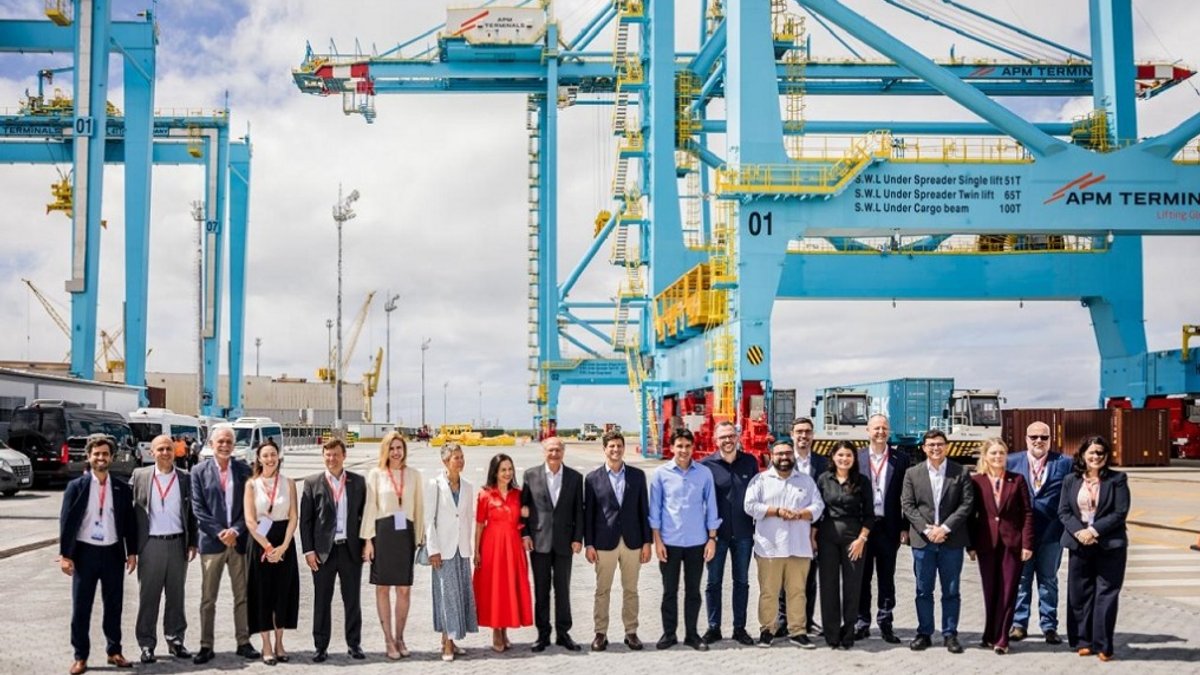
The Suape Port Industrial Complex began a new stage in its history with the inauguration of the APM Terminals container terminal, a subsidiary of the Danish group Maersk. The project received investments of more than R$2 billion and is considered the first 100% electrified container terminal in Latin America.
Built on an area of approximately 50 hectares acquired from the former Estaleiro Atlântico Sul (EAS), the terminal was developed in less than three years after acquiring the land. The new structure has the initial capacity to handle up to 400 thousand TEUs per year, increasing the Pernambuco port’s operational container capacity by around 55%.
Super Rectangle (728×90) – Position 17
The project was designed to serve Maersk’s global operations and incorporates state-of-the-art electrical equipment, as well as systems focused on sustainability, including environmental management, wastewater treatment and waste control.
The inauguration was attended by the governor of Pernambuco, Raquel Lyraand the vice-president of the Republic, Geraldo Alckmin. The project is considered one of the largest recent investments in the logistics infrastructure of the Brazilian Northeast.
New competitive landscape
Despite the positive impact on Suape’s operational capacity, the entry into operation of the new terminal creates an unprecedented competitive scenario within the port complex. Currently, the container terminal operated by the Philippine company ICTSI operates under a concession contract signed in 2001, valid until 2030.
The central point of the discussion is the differences between the operating models. While the ICTSI terminal operates in a concession area within the public port, the new APM Terminals venture operates under the Private Use Terminal (TUP) model, with different tariff rules. According to information released by JC Negócios, the current concessionaire has been seeking since 2023 to renegotiate its contract with the government of Pernambuco to adapt competitive conditions in light of the arrival of the new competitor.
Industry experts estimate that the presence of two container terminals could strengthen Suape’s competitiveness compared to other northeastern ports, especially if operational and cost gains are passed on to users of the port system.
Growth prospects
The infrastructure expansion occurs at a strategic time for Pernambuco. The expectation is that new public and private investments will be announced in the coming years, following the growth in cargo movement and industrial expansion projects in the region.
With the arrival of the new terminal, Suape reinforces its position as one of the main logistics hubs in the country, expanding its capacity to serve foreign trade and Brazilian cabotage, in addition to strengthening its participation in container movement in the Northeast.