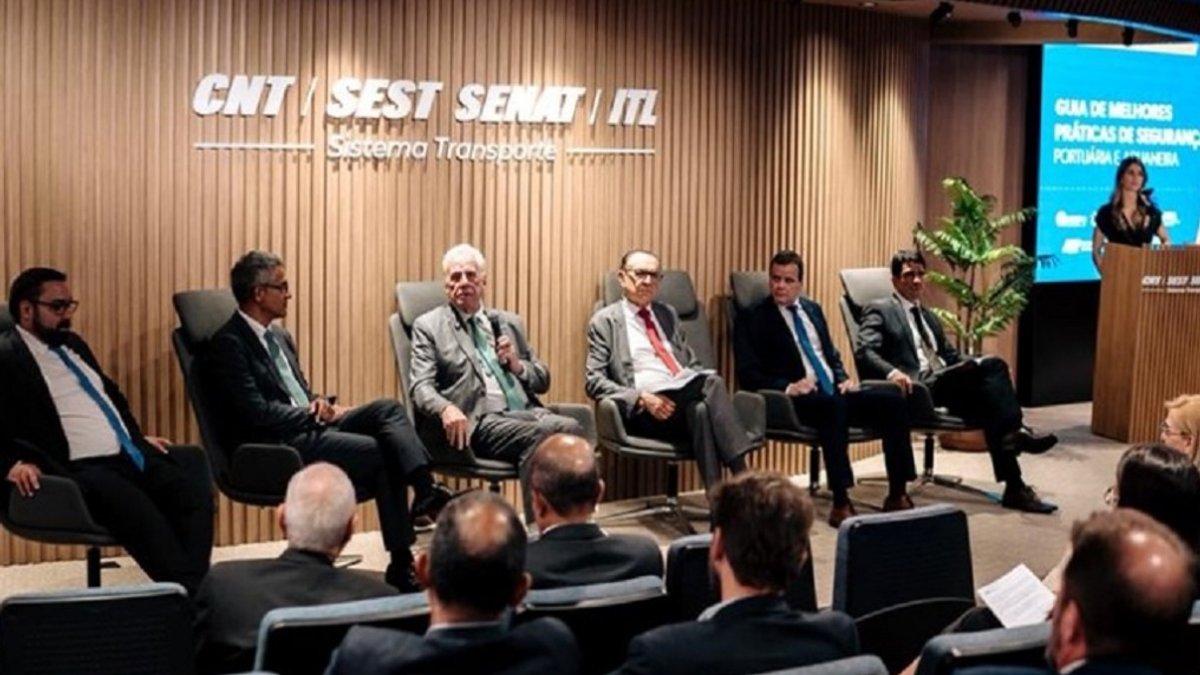
Port sector launches manual with strategies against crimes and global threats
Disclosure
The Brazilian port sector took an important step towards strengthening security with the launch of the Port and Customs Security Best Practices Guide, presented last Tuesday (7), in Brasília. The document brings together a comprehensive set of 67 recommendations aimed at protecting port infrastructures in the face of increasingly complex and diverse threats.
Super Rectangle (728×90) – Position 17
Coordinated by Association of Private Port Terminalsthe guide was developed in partnership with Federal University of Maranhão and had the collaboration of Port Coalitionin addition to the Brazilian Association of Port and Waterway Entities and experts in the field.
The publication addresses a wide range of risks, including robbery and cargo theft, trafficking and smuggling, the presence of stowaways, terrorism, sabotage, industrial espionage and cyberattacks. To face these challenges, the guide proposes the adoption of advanced technologies, such as drones, radars, thermal cameras, facial recognition and metal detectors, in addition to reinforcing the importance of continuous training and operational simulations.
According to the president of the ATP, Murillo Barbosathe document represents a strategic tool for the sector. The initiative seeks to encourage the adoption of good practices in line with national and international standards, in addition to promoting greater integration between the various agents involved in port operations.
The guide also highlights that the evolution of port security in Brazil depends directly on cooperation between institutions such as the Federal Police, Federal Revenue, port administrations and international organizations. Among the recommendations are the creation of task forces, joint operations, coordinated information networks and hybrid policing models.
Another central point of the document is the use of intelligent technologies, including video surveillance systems and artificial intelligence tools. These features enable real-time monitoring, predictive risk analysis and faster responses to incidents, raising the standard of protection for port operations.
In addition to technology, the guide reinforces the need for an organizational culture focused on security and collaborative governance between the public and private sectors. The proposal is to consolidate a safer, more efficient and reliable environment for Brazilian foreign trade.
According to ATP, the guide does not replace current legislation, but acts as a complementary instrument, guiding managers and operators in the adoption of more modern and integrated practices. The implementation of the measures, however, will depend on the joint commitment of all actors involved in the port system.