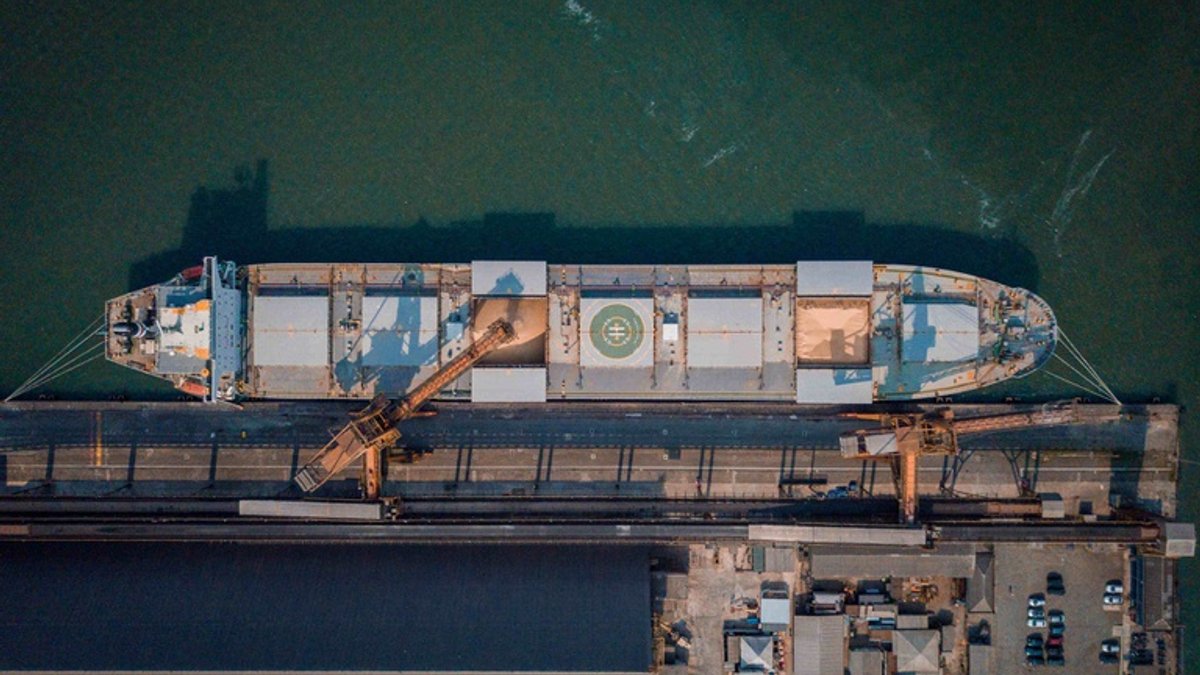
Sustainability in ports: sector advances in solutions to reduce emissions and increase efficiency
Responsible for moving the majority of global trade (and more than 95% of Brazilian foreign trade), maritime transport also faces the challenge of reducing its environmental impact, as it accounts for approximately 3% of global energy-related greenhouse gas emissions. If the current scenario is maintained, it is estimated that, by 2030, the sector’s emissions will reach between 90% and 130% of 2008 levels.
In Brazilian ports, this scenario is worsened by the combination of emissions from the ship fleet, the intense flow of trucks and trains in the port surroundings and the limitations of land infrastructure. To face these challenges, the Ministry of Ports and Airports and institutions in the sector have been expanding initiatives aimed at energy transition, logistical efficiency and the adoption of clean technologies. “Our commitment is to the democratic construction of public policies that encourage society to adhere to sustainable practices that are on the agenda of debates about the future of Brazil and our planet”, explains the minister of the portfolio, Tomé Franca.
Super Rectangle (728×90) – Position 17
Among the measures adopted in port complexes are the electrification of equipment, the supply of electricity on land to docked vessels (systems known as Onshore Power Supply or OPS), the monitoring of emissions, as well as investments in low-carbon fuels and green hydrogen.
The focus of the Ministry of Ports and Airports was the development and encouragement of the implementation of the Sustainability Policy for the mode of transport. Launched in 2025, the Policy mobilizes the country’s port, airport and waterway sectors to act within sustainability criteria, which involve environmental, social and governance issues (ESG). The initiative establishes parameters for public and private management and seeks to integrate efficiency, transparency and socio-environmental responsibility into Brazil’s logistics infrastructure.
“More than transit and commerce points, ports are strategic structures to enable new energy solutions, support the decarbonization of navigation and prepare the country for the transformations underway in the international scenario. At the National Ports Secretariat, we have sought to advance in this direction with planning, technical base and institutional articulation”, stated MPor’s national secretary of Ports, Alex Ávila.
The decarbonization of the sector is also aligned with the climate goals assumed by Brazil and international commitments to reduce climate change, such as the Paris Agreement and the UN Sustainable Development Goals (SDGs).
Examples across the country
The Port of Santos (SP) implemented the Onshore Power Supply (OPS) system for electrical supply to moored tugboats. Thus, since 2024, clean energy generated by the Itatinga hydroelectric plant, in Bertioga, reduces diesel consumption and CO₂ emissions.
In Paranaguá (PR), investments in railway logistics and solar energy generation reinforce operational efficiency and sustainability. The Moegão project, which is already in its final phase, will expand railway movement capacity, while photovoltaic systems installed in terminals will contribute to reducing emissions since 2023.
The Port of Suape (PE) will be the first 100% electrified container terminal in Latin America, with equipment powered by electricity, operational automation and integrated digital infrastructure. The expectation is that the structure will begin operating by the end of the year.
In Ceará, the Pecém Complex is advancing in the consolidation of a green hydrogen hub, supported by the region’s strong renewable energy generation. The complex also develops projects aimed at producing green ammonia and expanding port infrastructure to serve the new energy chain from 2030 onwards.
Porto do Açu, in Rio de Janeiro, is committed to creating a green corridor for the supply of low-carbon fuels and developing projects linked to hydrogen and the decarbonization of the steel industry from 2030 onwards.
Sustainable agenda
MPor has strengthened the port sector’s sustainability agenda through public policies, strategic planning and coordination with port authorities, regulatory agencies and the private sector. The ministry’s work seeks to encourage the adoption of clean technologies, increase logistical efficiency and consolidate Brazilian ports as a reference in competitiveness and energy transition.
Among the department’s initiatives is the Navigation Environmental Performance Index (IDA-Navegação), a tool developed in partnership with Infra SA to measure the environmental performance of vessels. The index brings together 39 indicators distributed across four dimensions: physical-chemical, biological-ecological, sociocultural and economic-operational. IDA-Navegação also contributes to increasing transparency, encouraging good practices and inducing the modernization of the national fleet.
MPor also coordinates the Port Decarbonization Program (PND-Portos), a strategic instrument for the progressive reduction of greenhouse gas (GHG) emissions, increasing energy efficiency and modernizing Brazilian logistics infrastructure.
Minister Tomé Franca highlighted the importance of these instruments to reduce the impacts of transport modes on the environment. “PND-Portos and PND-Navegação are instruments that will guide the energy transition of the port and waterway sectors, aligning Brazil with best global practices. We are creating incentives to reduce greenhouse gas emissions, modernize the fleet with sustainable fuels and make our ports more efficient,” he said.
In the interface with the private sector, the department consolidated the Pact for Sustainability, an initiative that brings together companies committed to environmental, social and governance (ESG) practices. In November last year, during the United Nations Climate Conference (COP30), in Belém (PA), 36 companies were recognized with seals of excellence for actions aimed at sustainability and innovation in the transport sector.
Rectangle Indoor Banner (600×250) – Position 1