Trump-Xi summit live: US president arrives in Beijing
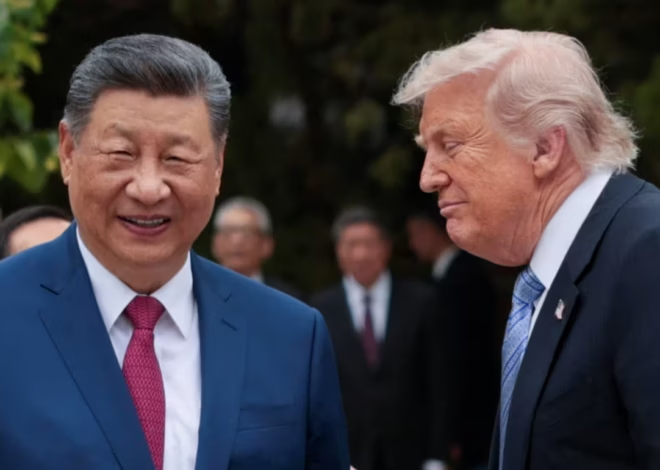
SHANGHAI/TOKYO — U.S. President Donald Trump is making his first visit to China in nearly nine years, as the rival superpowers aim to stabilize their fraught relationship.
The American president arrived Wednesday evening and is scheduled to stay until Friday. An itinerary released by the White House includes plenty of face time with Chinese President Xi Jinping, from formal bilateral talks starting Thursday morning to a state banquet, tea and a working lunch.
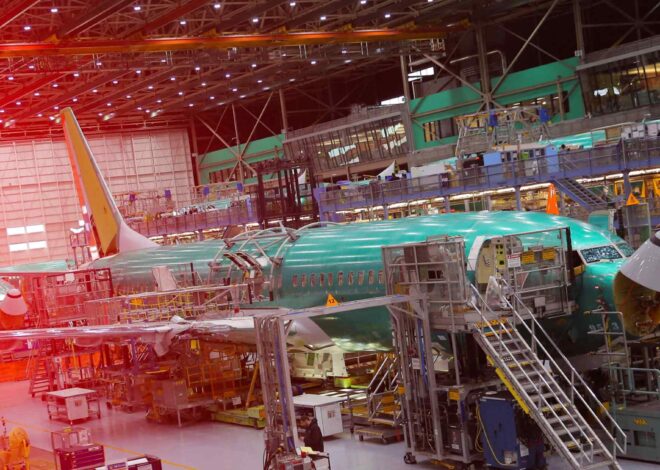
Their discussions are expected to touch on a host of hot topics, such as the Iran war, trade and export controls, tensions over Taiwan, and artificial intelligence. Trump is bringing an entourage of corporate executives including Tesla’s Elon Musk, Apple’s Tim Cook and NVIDIA’s Jensen Huang. There are high expectations that the president will help seal commercial deals for aircraft and U.S. farm goods.
Follow Trump’s stay in China with us here.
Further reading:
Set to host Trump, Xi targets stability under cloud of Iran uncertainty
China Inc.’s global growth curbs Trump tariff powers undercut by courts
Trump-Xi summit: 5 things to watch as world’s most powerful men meet
Nvidia’s Jensen Huang heads to Beijing with Trump after all
Trump-Xi meeting keeps Taiwan on edge, eyeing subtle US shifts
The AI space race: US and China bet big on orbital data centers
The latest developments (Beijing time):
Wednesday, May 13
8:00 p.m. Air Force One slowly taxis toward the waiting welcome party. A number of people disembark from the back of the blue and white jet. Meanwhile, attendants prepare a staircase and red carpet.
7:50 p.m. Trump’s plane touches down at Beijing Capital International Airport as darkness falls, a little later than expected. A U.S. president is on Chinese soil for the first time since 2017.
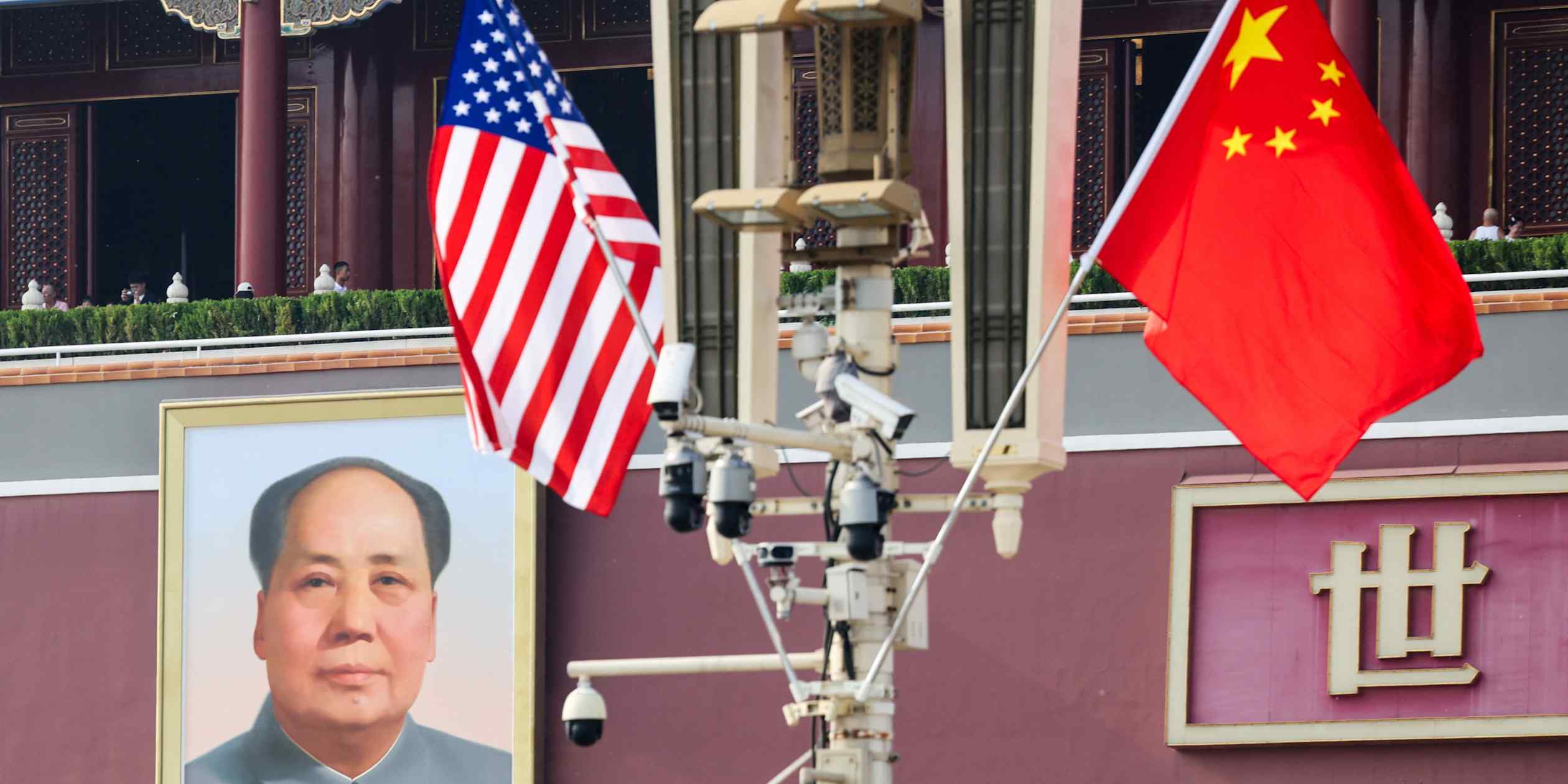
7:10 p.m. Live footage from Beijing shows a crowd of young Chinese dressed in light blue and white, waving Chinese and American flags and ready to welcome Trump. Air Force One is expected to land in around 20 minutes.
5:50 p.m. Trump appears to have picked a new venue for his stay in Beijing. His motorcade was seen arriving at the Four Seasons Hotel, according to media reports, ahead of his touchdown in the city. The hotel is located northeast of the Great Hall of the People, the venue for the scheduled bilateral meeting with Xi on Thursday. When Nikkei Asia called the hotel, a staff member said it was fully booked but did not confirm his stay.
Enhanced security protocols surrounding the area could cause disruptions for city residents. A map app showed that a car ride between the hotel and Great Hall would take more than an hour, about double the time on normal days. The Four Seasons is also notably further away than the St. Regis, the hotel for Trump’s previous visit in 2017, which sits west of the Great Hall.
4:45 p.m. Setting the stage for the summit, U.S. Treasury Secretary Scott Bessent held last-minute trade talks in South Korea with Chinese Vice Premier He Lifeng and Vice Commerce Minister Li Chenggang. China says they “conducted frank, in-depth, and constructive exchanges on resolving trade and economic issues of mutual concern and further expanding pragmatic cooperation.”
4:30 p.m. Trump can expect a warm welcome, but the currency markets underscore the scope of China’s ambitions to challenge U.S. hegemony. The Chinese yuan, or renminbi, was trading at around 6.79 per dollar on Wednesday, its highest level in more than three years.
“Most importantly, there is a tolerance from policymakers to allow the renminbi to gradually appreciate as a push for renminbi internationalization,” said Rohit Arora, head of Asia FX and rates strategy at UBS.
Reducing dependency on the dollar, which dominates global trade including in oil, has long been a key goal for Chinese policymakers, as their economy relies heavily on exports for growth.
Arora said the dollar has been the sole safe haven currency during the Middle East crisis, but the yuan is serving as a “relative safe haven” among emerging market currencies. He expects that trend to continue, because policymakers have tightened management of the currency since 2023.
Chinese companies with large dollar holdings, like exporters, tend to “chase” the trends in foreign exchange movements when converting their dollars into yuan, Arora said. “If and when these Middle East tensions unwind and the dollar again declines further at that point, I would expect that conversion to accelerate.”
4:00 p.m. The Temple of Heaven Park in Beijing is closed to the public on Wednesday and Thursday, according to a notice from its administrator, as authorities prepare for an anticipated tour by Trump. Located about 4 kilometers from Tiananmen Square, the historic site was used by emperors of the Ming and Qing dynasties to offer sacrifices to heaven and pray for abundant harvests.
Built in 1420, the complex covers 2.73 million square meters and features 92 ancient buildings, gardens and pathways. It was inscribed as a Unesco World Heritage site in 1998. When Nikkei Asia visited in March, local visitors in traditional Chinese costumes were busy taking photos and videos in front of the Hall of Prayer for Good Harvests, the most iconic building.
Details of the expected tour by Trump and Xi are not clear, but images of the two leaders at the site would underscore the relationship’s importance. “President Trump is, of course, a master of visual narrative,” Susan Thornton, a senior fellow at Yale Law School’s Paul Tsai China Center and a former diplomat, said at a forum in Beijing in March. “These kind of visits are really important symbolically.”
3:40 p.m. China’s foreign ministry spokesperson tells reporters that the country is ready to work with the U.S. on a basis of equality and respect to pursue mutual benefits, expand cooperation and manage differences.
3:25 p.m. Beijing’s Taiwan Affairs Office had some strong words earlier today, drawing lines before Trump and Xi discuss issue. “Our resolve to oppose Taiwan independence is as firm as a rock, and our capability to crush Taiwan independence is unbreakable,” the office said, as quoted by Reuters.
The U.S. is Taiwan’s most important security partner, even through they lack official diplomatic relations. Late last year, the Trump administration signed off on a roughly $11 billion arms package for Taipei.
Trump has said he will talk about additional planned sales with Xi. Experts have said this breaks from a decades-old assurance that Washington had not agreed to consult with China about such deals.
3:15 p.m. En route, Trump said that he will be asking Xi to “open up” China so that the American business leaders accompanying him “can work their magic, and help bring the People’s Republic to an even higher level!” He referred to names including NVIDIA’s Jensen Huang, Tesla’s Elon Musk, Apple’s Tim Cook, Boeing’s Kelly Ortberg and several others.
3:00 p.m. Ahead of Trump’s arrival, the Chinese Communist Party’s mouthpiece newspaper, the People’s Daily, said in a commentary on Wednesday that bilateral relations have become “more equal” after years of volatility. Beijing’s willingness to “talk and dare to fight” in response to Washington’s trade war has demonstrated its strength, the paper argued, opening the door to resolving differences through dialogue.
The commentary is one of several signals China’s government and official media have been sending in the run-up to the visit.
The People’s Daily described the summit as a chance to “recalibrate goals and ways of interacting.” The paper emphasized China’s economic scale and said that the two countries can achieve mutual gains by expanding the “pie” of cooperation.
The same commentary, however, warned that Taiwan remains the “most important and sensitive core issue” in U.S. ties. Beijing claims the island democracy for itself, and is expected to press Trump on American arms sales to Taipei.
The Taiwan question was also one of “four red lines” listed by the Chinese Embassy in the U.S. The others “that must not be challenged”: democracy and human rights; paths and political systems; and China’s development right.
A commentary published by state news agency Xinhua said: “China is willing to meet the U.S. halfway, but will absolutely not trade away its principles, and even less will it compromise in the slightest on major issues involving national sovereignty, security or development interests.”
On Monday, when China formally announced the visit for the first time, its foreign ministry shared a video titled “Peaceful Coexistence.”