
Supply chain operators have spent years investing in better visibility. For many, the result is a clearer view of inbound loads, outbound shipments, yard activity and carrier performance.
But at the dock and yard, seeing the problem is not the same as solving it. A late truck still has to be worked around. A trailer in the wrong position still needs to be moved. A slipping appointment still affects labour, door planning, outbound schedules and customer commitments.
That is why the next stage of dock and yard improvement is less about visibility alone and more about what visibility connects to.
Visibility is now the starting point
The first article in this series looked at the manual work tax inside dock and yard operations. When plans change, many facilities still rely on supervisors, spreadsheets, phone calls, overtime and temporary labour to keep freight moving.
Visibility helps because it gives teams a better picture of what is happening. It can show which trailers have arrived, which doors are occupied, which appointments are slipping and where exceptions are building.
The limitation is what happens after that. If a late arrival is visible in one system, but the dock schedule, carrier update, warehouse labour plan and transportation change all have to be handled separately, the facility is still carrying much of the same manual burden. It simply sees the problem earlier.
Buyers are moving beyond the dashboard
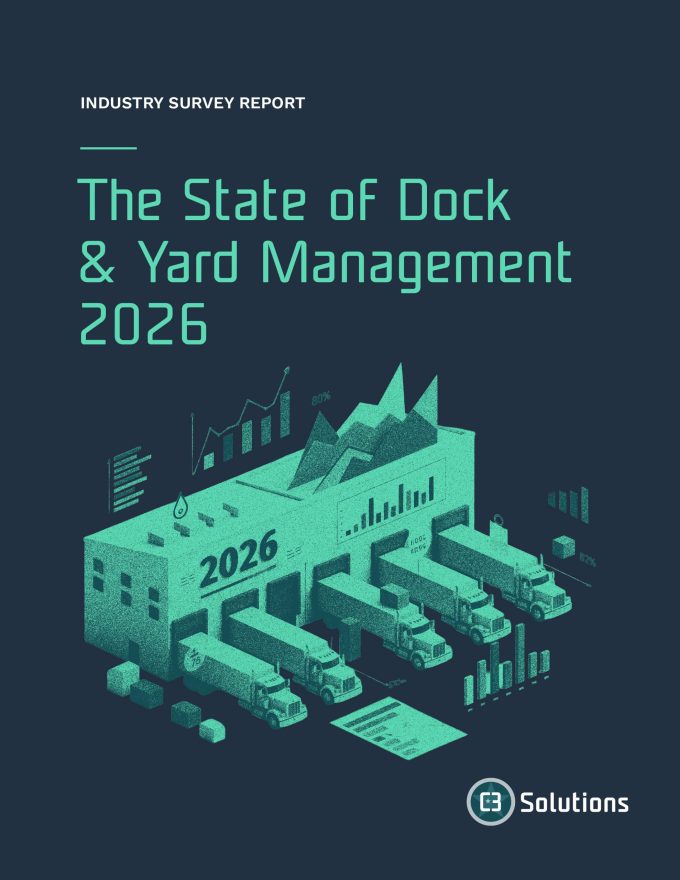
According to C3 Solutions’ 2026 State of Dock & Yard Management survey, real-time yard visibility remains the top feature priority, selected by 59.1% of respondents. That is expected. Operators cannot manage a yard effectively if they do not trust the information they are working from.
The more interesting signal is what follows. Integration with existing systems rose to 43.0%, while scalability and customisation climbed to 23.5%, nearly double the 2025 level. Automated dock scheduling also remains a priority, selected by 30.9% of respondents.
Those numbers suggest buyers are asking a more practical question. They are not just asking whether a system can show them the yard. They are asking whether it can fit into how the facility actually runs.
The facility already has too many handoffs
Most dock and yard operations sit between several systems and teams. The warehouse may work from a WMS. Transportation may use a TMS. Finance and procurement may sit closer to the ERP. The gate may rely on appointment data, carrier communication, yard checks and whatever changed during the shift.
The C3 survey reflects that mixed environment. WMS usage sits at 62.4%, while TMS usage is 41.6%. CRM, ERP and yard management systems each sit in the low-to-mid 30% range. Dock scheduling systems, however, are used by only 18.8% of respondents, despite stronger demand for automated scheduling.
That gap is where manual work returns. A planner checks one system. A supervisor updates another. A carrier is contacted separately. A spreadsheet becomes the temporary source of truth. By the time the issue is resolved, several people may have touched the same exception.
Integration is now the operating issue
The value of integration moves beyond technical neatness, and into reducing the number of times the same problem has to be noticed, explained, rekeyed and chased.
If an inbound truck is delayed, the effect should not stop at a status update. The dock plan may need to change. Labour may need to be shifted. The carrier may need new instructions. Transportation and warehouse teams may both need to see the same update before the delay creates another problem.
That does not mean every decision should be automated. Dock and yard operations still require judgement, especially at facilities with constrained space, changing volume and local operating quirks. But systems can remove much of the repetitive coordination work that sits between teams.
What comes after visibility
Visibility still matters. Without it, teams are guessing. But the market is moving past the idea that a clearer view of the yard is enough.
The more important question is whether that visibility changes the response. Can appointments be adjusted faster? Can carrier updates be shared without extra calls? Can the warehouse and transportation teams stay aligned when the dock plan changes? Can a network run with less dependence on a handful of experienced people holding the process together?
For C3 Solutions and the wider dock and yard technology market, this is where the conversation is moving. Operators are not just looking for a better view of the yard. They are looking for a more connected way to run it.
The next article in this series will look at the gap between interest and implementation. Many companies now recognise the need to modernise dock and yard operations. Fewer have turned that recognition into a clear plan across the sites, systems and teams that have to use it every day.
This article was sponsored by C3 Solutions
This article is © The Loadstar. Reproduction, rewriting, or derivative use requires a license. Contact [email protected] for licensing enquiries.