
Treasury targets financier tied to Iran’s leadership and exchange houses after renewed attacks on commercial shipping in the Strait of Hormuz
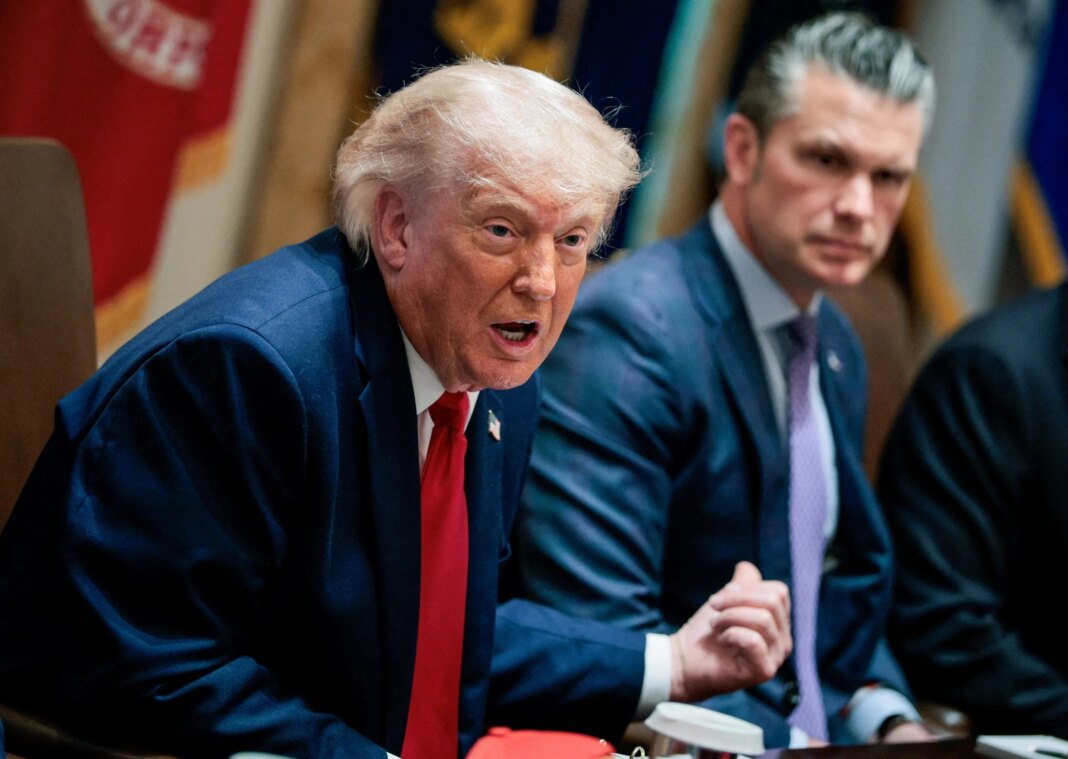
President Donald Trump declared the June ceasefire with Iran “OVER” on Friday as the United States intensified its pressure campaign with a fresh round of sanctions targeting a financier tied to Iran’s leadership and a network of exchange houses accused of moving billions of dollars for sanctioned Iranian banks.
“The Islamic Republic of Iran has asked us to continue ‘talks.’ We have agreed to do so, but the United States has stated to them, in no uncertain terms, that the Cease Fire is OVER!” Trump wrote on social media.
Trump’s comments came hours before the Treasury Department’s Office of Foreign Assets Control (OFAC) announced sanctions against Dubai-based Iranian businessman Ali Ansari, several Iranian exchange houses, their executives, and two alleged front companies, citing Iran’s renewed attacks on international shipping in the Strait of Hormuz.
Treasury alleged that Ansari managed a global network of assets benefiting Mojtaba Khamenei and other senior Iranian regime figures while enriching himself through a sprawling overseas portfolio of real estate and commercial holdings.
According to OFAC, Ansari used shell companies and financial accounts across multiple jurisdictions to build investments in Germany, Luxembourg, Spain, the United Kingdom, Cyprus, the United Arab Emirates and elsewhere through Saint Kitts and Nevis-based Smart Global Limited. Treasury designated both Ansari and the company under authorities targeting Iran’s leadership and the Islamic Revolutionary Guard Corps.
“The so-called Supreme Leader is hiding in seclusion while his regime crumbles,” Treasury Secretary Scott Bessent said in a statement. “Treasury will continue using every tool at its disposal to isolate him and other regime elites from the global financial system.”
The sanctions also target three Iranian currency exchange houses that Treasury said move and maintain the equivalent of billions of dollars annually on behalf of sanctioned Iranian banks through networks of shell companies. The department additionally designated Hong Kong-based CDM Trading Limited and UAE-based Naba Alzaki Raw Materials Trading LLC, which it identified as front companies used to facilitate the transactions.
The latest sanctions add an economic dimension to Washington’s escalating response after Iran resumed attacks on merchant shipping in the Strait of Hormuz earlier this week.
U.S. Central Command has carried out two consecutive days of strikes against Iranian military targets, saying it hit approximately 80 targets on July 7—including more than 60 IRGC small boats—followed by another 90 targets on July 8, including air defense systems, coastal surveillance assets, missile and drone storage sites, naval capabilities and military logistics infrastructure.
The renewed fighting marks a sharp reversal from the memorandum of understanding reached in June, which had temporarily halted hostilities, reopened the Strait of Hormuz to commercial shipping and prompted limited U.S. sanctions relief for Iranian oil exports. Since attacks on three commercial vessels shattered the ceasefire, Washington has revoked that sanctions relief, resumed military operations and expanded financial pressure on Tehran, while both sides accuse the other of violating the agreement.
Despite declaring the ceasefire over, Trump’s comments suggest diplomatic channels remain open, with the president saying the United States had agreed to continue talks after Iran requested further negotiations.
Subscribe for Daily Maritime Insights
Sign up for gCaptain’s newsletter and never miss an update