
Photo: Disclosure / MRS
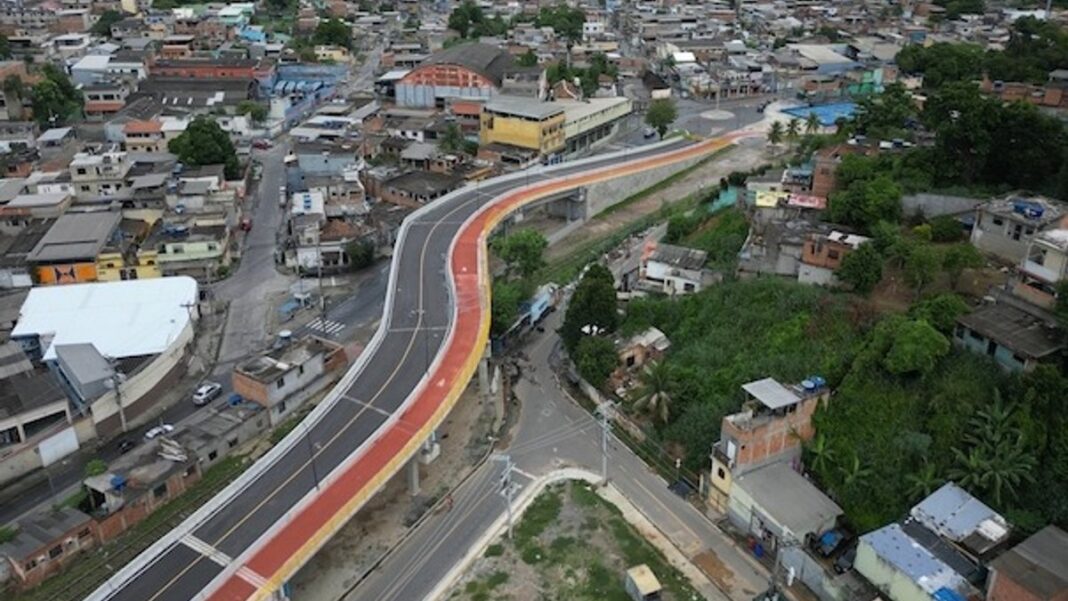
The advancement of rail freight transport in the Southeast has required new investments to reduce historical conflicts between the operation of trains and the growth of cities around the tracks. One example is the Roberto Mattos Costa Viaduct, known as Betão de Madureira, which will be officially opened tomorrow (18/06) by MRS Logística in São João de Meriti (RJ). With an investment of R$62 million, the structure eliminates a level crossing, improves the connection between Via Dutra and Via Light and increases the safety of drivers and pedestrians.
Approximately 355 meters long, the viaduct has two roundabouts to access Avenida Tancredo Neves, towards São Paulo, and Avenida Ana Brito da Silva, towards Rio de Janeiro.
Super Rectangle (728×90) – Position 17
The new structure enables the continuous flow of vehicles, without the need for interruptions caused by the passage of railway trains, reducing waiting time and increasing fluidity in a region with high urban circulation.
Coexistence between railway and city
The intervention is part of the set of investments undertaken by MRS in the process of early renewal of its railway concession. The objective is to reduce the impacts of the railway on urban centers by eliminating level crossings, improving access and implementing structures that increase the safety of the population.
The work also includes improvements to the surrounding area, with landscaping, green areas, requalification of access and the implementation of a cycle path integrated into the Baixada Fluminense Cycleway project.
According to Verônica Mageste, MRS Institutional Relations Manager in the State of Rio de Janeiro, the project goes beyond road infrastructure by promoting the requalification of the region and facilitating population movement and access to commerce and local services.
Growth in railway demand.
The investment is part of a broader cycle of modernization of the concessionaire’s network. As shown by Agência Transporte Moderno in a report published in May, MRS invested R$753.6 million in the first quarter of 2026 in projects aimed at expanding capacity, modernizing infrastructure and increasing operational efficiency. In the same period, the company transported 46.3 million tons of cargo, growth of 2.5% compared to the first three months of 2025.
The increase in railway movement reinforces the need for works that allow expanding railway capacity without increasing impacts on cities. MRS operates a network of around 1,600 kilometers in the states of Minas Gerais, Rio de Janeiro and São Paulo, connecting industrial and mining hubs to the main ports in the Southeast, such as Santos, Itaguaí and Rio de Janeiro.
Stay up to date with all the news from the Brazilian port sector
Follow the Jornal Portuário channel on WhatsApp