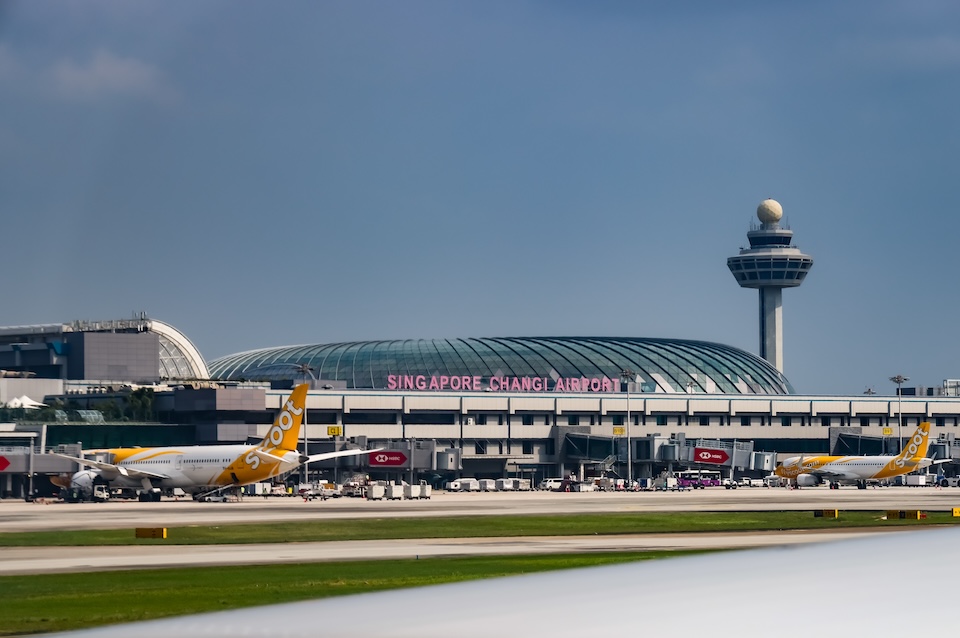

AI-related semiconductor and electronics shipments helped Singapore Changi Airport grow its airfreight volumes by nearly 10% year on year in the second quarter.
Changi handled 567,000 tonnes of airfreight throughput in the second quarter, 9.8% higher than the same period last year.
“The strong performance was led by growth across all cargo flows, at the back of strong AI-related semiconductor and electronics shipments,” said the airport.
Changi’s top five air cargo markets for the quarter were China, Hong Kong, Australia, India and the US.
Tianjin Air Cargo became Changi’s newest freighter operator on 15 June when it commenced services between Singapore and Haikou, China.
A few months earlier, it was announced that Chinese express giant SF had selected Changi Airport to be its first overseas hub as it looked to capitalise on growth in Southeast Asia and South Asia.
The airport saw air cargo demand in 2025 increase by 4.5% year on year to 2.1m tonnes. This was due to growth across exports, imports and transhipments.
Changi is currently on a mission to grow its cargo capacity to 5.4m tonnes and partly hopes to achieve this by developing its Changi East Industrial Zone (CEIZ) for airfreight, air express and Maintenance, Repair and Operations (MRO) activities.
The CEIZ will be operational from the mid-2030s and will support the growth of cargo volumes currently handled at the Changi Airfreight Centre, part of the current Changi West development.
Following the opening of CEIZ, the Changi Airfreight Centre will be remodelled too.