

The UK’s Railway Industry Association (RIA) has published a report calling for freight-focused railway electrification. Such a strategic programme should help maximise the potential for electric haulage and make better use of the existing wires.
The report “Growing rail freight: the need for targeted electrification” was published on 8 July by RIA in conjunction with the Rail Freight Group and the Railway Engineering Institution, drawing on research undertaken by the University of Birmingham.
The report says electrification is a proven technology for both freight and high-volume passenger transport. It enables freight trains to haul heavier loads and operate at speeds that minimise conflicts with passenger services, as well as lowering whole-life costs.
Recommendations
The report recommends that the future Great British Railways should:
- Incentivise the use of electric haulage and support the costs of new locomotives to ensure electric haulage is competitively priced relative to diesel.
- Improve existing power supplies to enable freight to operate wherever electrification is available.
- Undertake short infill electrification projects to create more end-to-end electrified routes.
- Ensure that the specification for new passenger-focused electrification schemes supports freight on any route where it is likely to operate.
- Consider the needs of freight when locating gaps in discontinuous electrification and discrete charging facilities, with consideration of gradients and the long-term potential of battery hybrid operation.
- Work collaboratively to identify incremental additions to passenger electrification schemes which would fill gaps in freight electrification.
The report does not call for electrifying the entire network, as a previous RIA report found that electrifying a further third of the network for passenger traffic would also electrify 95% of freight traffic.
Electric locomotives for the long-term
The report says electric locomotives are the best long-term option for future freight operations, with electro-diesel locomotives offering a practical interim solution. Research from the University of Birmingham concludes that battery-only locomotives have a role in shunting and very short trips, but are not a substitute for main line electrification.
Electric-battery locomotives are not a direct replacement for a ‘go-anywhere’ diesel, but they could be viable on multimodal routes with short unelectrified sections. The report says their role is likely to grow as battery technology improves and more of the network is electrified.
“Research and modelling conclusively endorses the case for further electrification of freight routes”, said RailEI CEO Stephen Barber. “The report identifies viable solutions for replacing diesel powered locomotives on a range of haulage duties. It dispels the myth that battery-powered locomotives will remove the need for future electrification.”
‘Immediate opportunities’ for infill electrification
Barber said there were “immediate opportunities” for infill electrification, and this should exploit RIA’s Electrification Cost Challenge 2.0 which found that a rolling programme of electrification is likely to reduce costs by a third. RIA Senior Technical Advisor David Clarke said “by maximising the use of electric freight, we can unlock additional capacity, improve reliability, reduce costs and deliver great economic benefits across the country”.
He said “the government has set an ambitious target to grow rail freight by 75% by 2050. Achieving that target will require a strategic approach to freight electrification, focused on the key routes where electric traction can deliver the greatest benefits.”
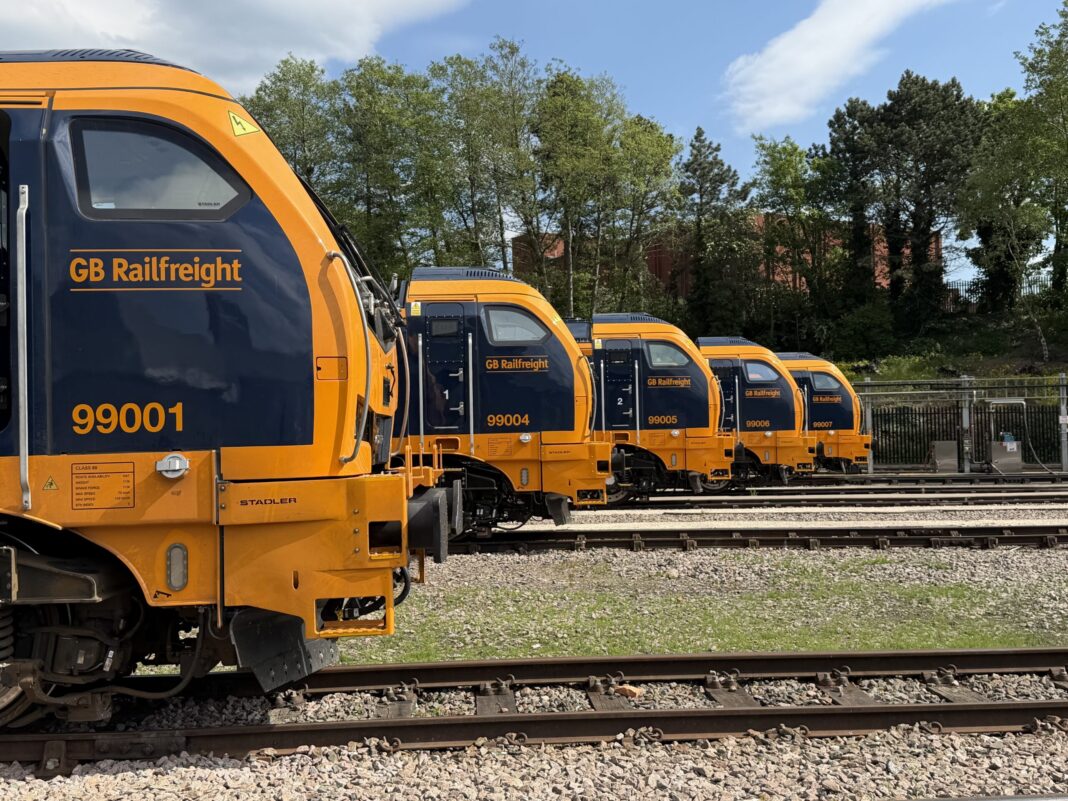
Rail Freight Group Director General Maggie Simpson said “electric rail freight offers many advantages for customers, and we need to use it wherever possible. The private sector freight operators are investing in new bi-mode locomotives which represent a step change in capability, and with the right frameworks can help maximise rail’s environmental advantages. This report provides a pragmatic framework to help achieve this.”
This article was originally published by our sister publication Rail Business UK.