
(The views expressed here are solely those of the author and do not necessarily represent the views of FreightWaves or its affiliates.)
Owner-operators and motor carriers are facing a fast-growing scam in the trucking world. While cargo theft and ghost trucks remain the top mind for many logistics professionals, fraudsters are using fake trailer rental deals to steal money and even trick drivers into taking trailers that belong to someone else. Unfortunately, fraud is nothing new in the trucking industry. These scams have jumped sharply in the last year, and they often start with a simple ad on Facebook.
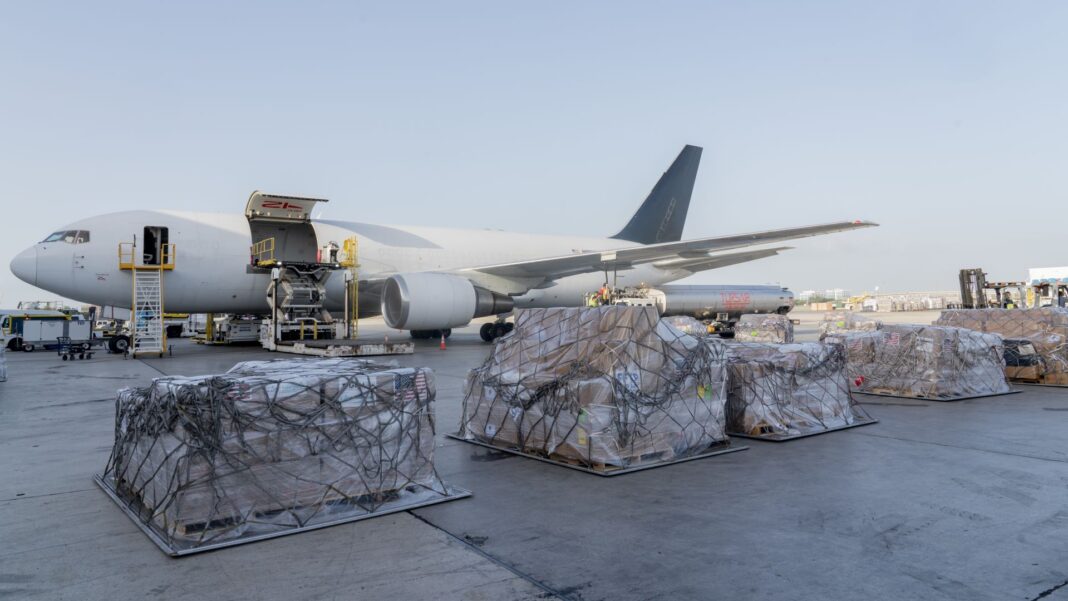
Cargo theft is a massive, multi-billion-dollar crisis in the US. While reported, direct-loss incidents cost the industry nearly $725 million annually, supply chain disruptions and economy-wide impacts push the true annual cost of stolen freight to as high as $35 billion. That’s “billion” with a “B”. Strategic cargo theft, a fraud-based scheme where criminals impersonate legitimate carriers to divert shipments, has surged by 1,500% since 2021. It now accounts for about one-third of all supply chain thefts nationwide.
These thefts are consistently making headlines too. In a now famous incident, thieves paid a visit to Flavortown when $1 million worth Guy Fieri’s Santo Tequila was stolen in an elaborate, high-tech cargo heist. Thieves intercepted two semi-trucks transporting 24,000 bottles of Fieri and Sammy Hagar’s tequila en route from Laredo, Texas, to a warehouse in Pennsylvania. But it’s not just alcohol that’s being stolen.
Thieves also targeted 378,000 tins of Tucker Carlson’s “ALP Drifter” nicotine pouches, valued at nearly $7 million. In that case, a thief presented fake credentials at a logistics facility and drove away with the entire shipment. The truck drove as far as Kentucky before its tracking device went dark. The Los Angeles County Sheriff’s Department later raided a warehouse in Vernon, California, recovering Carlson’s pouches alongside other stolen goods.
Now thieves are targeting trailers; I can no longer sit idly by.
Here’s how the scam usually works
A scammer posts an ad offering trailer leases at what looks like a good price. They reply only by text or apps like WhatsApp or Facebook Messenger. After a few quick messages about when and where you need the trailer, they send a short rental agreement with a leasing company logo on it. The nefarious actor may ask for your MC Authority letter and a copy of your CDL. Then they demand payment, usually through Zelle or Cash App. No credit check. No insurance proof. No real paperwork from the company.
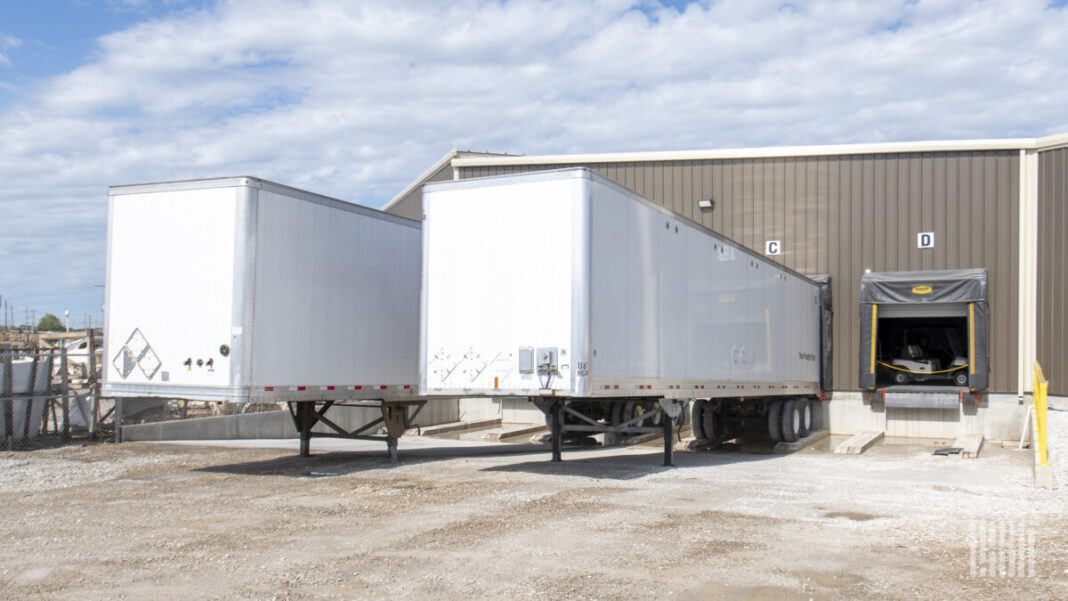
The scammer tells the victim exactly where to pick up the trailer, usually from an open yard or parking lot with no fence or security. What the trucker doesn’t know is that the trailer is already on lease to a real customer. By taking it, our victim is unknowingly stealing equipment. When the real owner finds the trailer missing, they report it stolen. The trucker loses their money and could may face serious trouble for having a stolen trailer.
The trucking industry reacts
The fallout from this fraudulent scheme is clearly being felt across the industry. “An occasional inconvenience has become a recurring logistical challenge, requiring police reports and repossession efforts that further strain our customers’ resources,” said Sarah Bradbury, Vice President and General Counsel of Premier Trailer Leasing, which manages a national fleet of over 70,000 trailers across 42 secured branches.
“Trailer rental fraud has multiple failure points,” according to Greg Akselrod, Chief Product and Technology Officer of Outpost, a national network of secured truck terminals and drop yards. “An unsecured yard creates the opportunity, but a fence and barrier arm only control access. They don’t validate whether a driver is authorized to leave with a specific trailer. That’s why every outgate should be treated as an asset transaction: before any trailer leaves the yard, the facility needs to verify the driver’s identity, the tractor-trailer pairing, and the expected movement against its YMS or TMS.”
“As an industry, for both cargo and trailer fraud, we have to keep educating the professional carrier base that Zelle/CashApp/Venmo/etc. are not and will not be acceptable forms of payment,” said Shannon Breen, CEO and Founder of FreightVana, a Top100 3PL that operates over 700 trailers. “There’s not a single brokerage I’m aware of in the Top100 that pays carriers in this way, and yet a high portion of the fraud that occurs goes through these payment portals.”
Ryan Joyce, CEO of GenLogs sees it too. He shared that GenLogs has seen an uptick in investigation requests in recent months with victimized carriers reporting their leased or owned trailers being taken. Joyce noted that a combination of common sense and automated gate systems can help combat this emerging scheme. If this isn’t a case for smart, connected trailers and automated gates, I don’t know what is. Ultimately though, it’s up to carriers to remain vigilant.
Watch for these red flags
While trailer rental and leasing companies vary, the rental process is remarkably similar between them all. Here are some major red flags to watch out for.
· The only contact is through text or messaging apps, no phone calls or an official company email.
· The person wants payment by Zelle or Cash App instead of a check or bank transfer.
· The rental agreement has typos or looks homemade.
· The fraudster tells you to pick up the trailer from an unsecured lot instead of a company yard.
If you see any of these red flags, do not pass go, do not collect $200.
Legitimate trailer leasing companies do things differently
So, what do legitimate rental and leasing companies require? Legitimate equipment leasing companies require a full credit application and proof of insurance. They talk to you by phone and email. They have you pick up the equipment from a secure yard that has the company name on signs. Legitimate leasing companies do an in-person inspection before you leave with the trailer. And they never ask for payment through Zelle or Cash App.
What should fleets look for in an equipment leasing partner? According to Dean Vicha, President of NationaLease, one of the largest full-service truck leasing organizations in North America, “you want somebody with the newest, well spec’d and maintained fleet of vehicles with a network that supports you wherever and whenever your drivers are delivering to your customer.” For NationaLease, that network includes a combined customer fleet of over 184,000 tractors, trucks, and trailers and 100 independently owned businesses with over 1,000 service locations throughout the United States and Canada.
If you own or manage a fleet, you can also take steps to protect your trailers
An ounce of prevention beats a gallon of cure. Teach every driver and owner-operator about these scams. Use tracking devices and check trailer locations every day. Keep idle trailers in secure, fenced yards. Report any missing trailer as stolen right away. Work closely with your trailer leasing partners as they can often help recover equipment and spot problems faster. Even with the best technology partners and processes, fraud will still occur.
As Shannon Hamilton, Senior Vice President and General Manager of BlackBerry Radar, an end-to-end asset tracking solution for trucking companies and fleet operators to monitor trailers, shipping containers, and chassis, makes abundantly clear: “You can’t always stop theft, but you can leverage location, time of day, door events, and outside of geofence alerts to identify concerning behaviors and trends.” It’s about working preemptively to reduce the risk of theft through proactive insights.
When something feels too easy, no credit check, quick text-only deal, payment by app, pickup from an open lot, stop and check it out. Call the real leasing company using a phone number you find on their official website, not one the scammer gave you. Scams like this hurt everyone: owner-operators lose money, fleets lose equipment, and trust in the industry takes a hit. Stay alert, ask questions, and stick with real companies that follow proper steps.
Matthew Leffler is a transportation attorney, adjunct professor of law at Michigan State University College of Law, and the host of the Armchair Attorney® Podcast. He can be reached at [email protected]