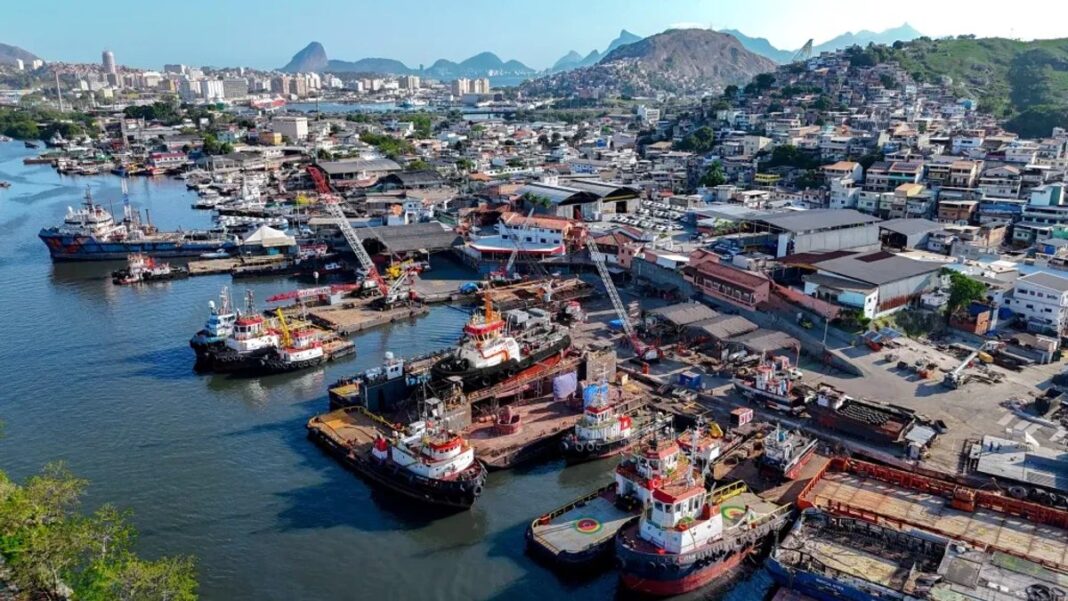

Niterói Shipyard / Photo: Reproduction
Niterói will once again gain prominence in the naval industry with the construction of four Handy class tankers at the Mac Laren shipyard, located in Ponta d’Areia. The contract, estimated at around US$280 million (approximately R$1.5 billion), has the potential to generate up to 1,500 direct and indirect jobs, strengthening the local economy and the naval production chain.
The ships are part of the national fleet renewal program designed to transport petroleum products, driven by orders from Petrobras and Transpetro. The initiative seeks to expand the country’s logistics capacity, reduce dependence on foreign vessels in cabotage and river transport operations and stimulate the recovery of the Brazilian naval industry.
Super Rectangle (728×90) – Position 17
The vessels were designed by a Norwegian engineering office and went through a process of adaptation to the characteristics of Brazilian navigation. In addition to operating on the national coast, the ships will be able to sail through regions such as the mouth of the Amazon River, taking into account the limitations of the country’s ports. Each ship will have the capacity to transport around ten thousand tons of petroleum products.
Although the manufacturing of the structural blocks will begin at a shipyard in Rio Grande do Sul, the main stage of construction will be carried out in Niterói. At the Mac Laren shipyard, the final assembly of the vessels will take place, the installation of propulsion systems, electrical equipment, automation systems and all necessary technological integration before the sea testing phase.
According to the director of Infrastructure at the Mac Laren shipyard, retired Navy Admiral José Luiz Rangel, this program represents much more than the construction of four ships. “It symbolizes the resumption of the naval industry, with job creation, technology transfer, strengthening of the national supply chain and recovery of production capacity”, he declares.
The expectation is that the first vessel will be delivered in May 2028. The others should be completed at intervals of approximately four months, with the program expected to end in 2029.
In addition to creating jobs, the project foresees investments in the training of specialized labor. The shipyard has already established partnerships with Senai, the Navy Technical School and equipment suppliers with the aim of training new professionals in onboard technologies, seeking to meet the demand for qualified workers and strengthen the national supply chain.