
This audio is auto-generated. Please let us know if you have feedback.
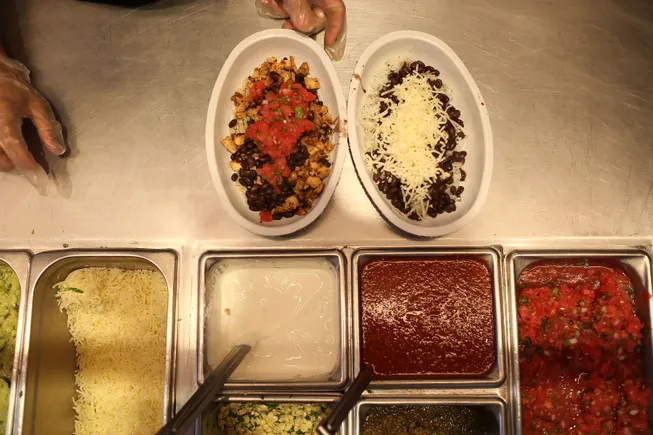
In 2023, the Wall Street Journal investigated customer complaints that the spiciness of Chipotle’s Tomatillo-Red Chili Salsa was unpredictable.
The Journal sent salsa samples from three Chipotle locations to an independent lab to test their spiciness using the Scoville scale, which measures pepper heat in Scoville Heat Units, ranging from 0 to more than 2 million.
It turned out that customers were right. The spiciness of the brand’s hot salsa ranged from about 2,700 to just over 3,200 Scoville Heat Units.
Chipotle says this variability is due to the brand’s reliance on fresh peppers for its salsas.
“Natural variation is part of what comes with serving food made from real, fresh ingredients. Produce is influenced by seasonality, growing conditions and geography, which means no two harvests are exactly alike,” Nevielle Panthaky, Chipotle’s senior vice president of culinary, wrote in an email.
That can make it challenging to deliver a consistent guest experience, as customers often notice the difference in flavor or spice level, even if they can’t “pinpoint” it, said Brad Bergaus, corporate chef and director of menu innovation at Taco John’s.
Handling those inconsistencies effectively is essential for limiting customer complaints and managing related costs, including food waste and labor expenses.
“But the largest cost is losing trust,” Bergaus said.
Optional Caption
Getty Images
Inconsistency is natural
Heat is the most visible example of the natural variations in produce, experts say.
Peppers are the only plants that produce capsaicin — the chemical compound that creates a spicy, burning sensation. How hot they get depends on the variety and the conditions they grow in, said Stephanie Walker, an associate professor, extension vegetable specialist and co-director of the Chili Pepper Institute at New Mexico State University.
“Stressful conditions — if they’re experiencing drought or heat stress, as well as wind, pests or diseases — tend to make the peppers hotter,” Walker said.
Growers can narrow the heat range by sticking to one variety and one growing region, but they’re still affected by weather and other environmental differences.
Understanding those differences can help brands plan for the inevitable.
“You’re going to have a hotter sauce come August and September,” Bergaus said. “Come February and March, the sauce isn’t going to be as hot.”
But chili peppers aren’t the only ingredients that pose challenges.
At Qdoba, for instance, restaurant staff make pico de gallo fresh every day, and the tomatoes don’t always cooperate — they’re sweet and flavorful some weeks, watery and bland others, depending on the time of year, said Katy Velazquez, the brand’s vice president of culinary innovation.
Lettuce can cause headaches, too, because it’s grown in different places throughout the year.
“There are two transitions throughout the year from Salinas [California] to Yuma [Arizona] that affect the overall quality,” Bergaus said.
Optional Caption
Getty Images
A backup potato
Brands manage variability using several approaches, including product specifications, close communication with suppliers and constant tasting.
“At Chipotle, our culinary, food safety and quality assurance, and supply chain teams work closely with trusted supplier partners to source high-quality ingredients year-round,” Panthaky said. “In our restaurants, crew members sample menu items before service to ensure they are delicious and meet our culinary standards.”
Detailed product specifications ensure that ingredients meet customer expectations, while allowing restaurant brands to hold their suppliers accountable. When something arrives off-spec at Taco John’s, such as lettuce that’s wilted or browning, crews file a claim to flag the problem, indicate whether it’s isolated to one store or is a systemwide issue, and send feedback to suppliers.
Those specifications can also help brands identify fallback options. When a bad potato crop hit a couple of years ago, for example,Taco John’s had to change varieties.
“We had to be nimble enough to utilize a different style of potato that’s going to fit within our specifications,” Bergaus said. The brand switched to one of several approved varieties that still deliver “the gold standard that our guests know and love.”
Taco John’s also plans how often it manufactures its house-blended sauces with input from its quality assurance, supply chain and supplier partners. When it comes to peppers, that can mean scheduling production away from the peak-heat months of late summer, pushing it toward the end of the year or the start of the following year.
Training, however, is crucial for in-store food preparation. Qdoba, for instance, gives its crews a recipe and explains the rationale behind it.
“It empowers them to make decisions when there is ingredient variability,” Velazquez said.
Qdoba also emphasizes the importance of tasting.
“It’s the number one most important thing that our cooks can be doing,” Velazquez said.
So, the brand provides cooks with tasting notes, such as “it should have a touch of heat that hits you in the back of your throat and a bright pop of lime juice,” Velazquez said. “It’s a target.”
Those standards help Qdoba manage ingredient inconsistencies while delivering the freshly prepared items that customers crave.
“If the tomatoes have more water in them today, they might need more salt,” Velazquez said.
The number one mistake brands make is assuming they can create and mindlessly follow a recipe.
“It’s not a one-time thing. The ingredients are going to change,” Velazquez said.
But brands shouldn’t try to eliminate those inconsistencies completely, especially if they’ve built their reputation on the promise of fresh food.
“Those struggles are actually proof of the amount of cooking you’re doing,” Velazquez said. “When your food is highly processed, you can control a lot more. When you are preparing and serving food made with real ingredients, you’re going to see those differences.”