
From Material Flow to Machine Judgment: How Physical AI Connects Production Logistics to Autonomous Operations
From Material Flow to Machine Judgment: How Physical AI Connects Production Logistics to Autonomous Operations Walk any modern plant floor and you’ll see two different worlds. On one side are the production assets: CNC…
From Material Flow to Machine Judgment: How Physical AI Connects Production Logistics to Autonomous Operations
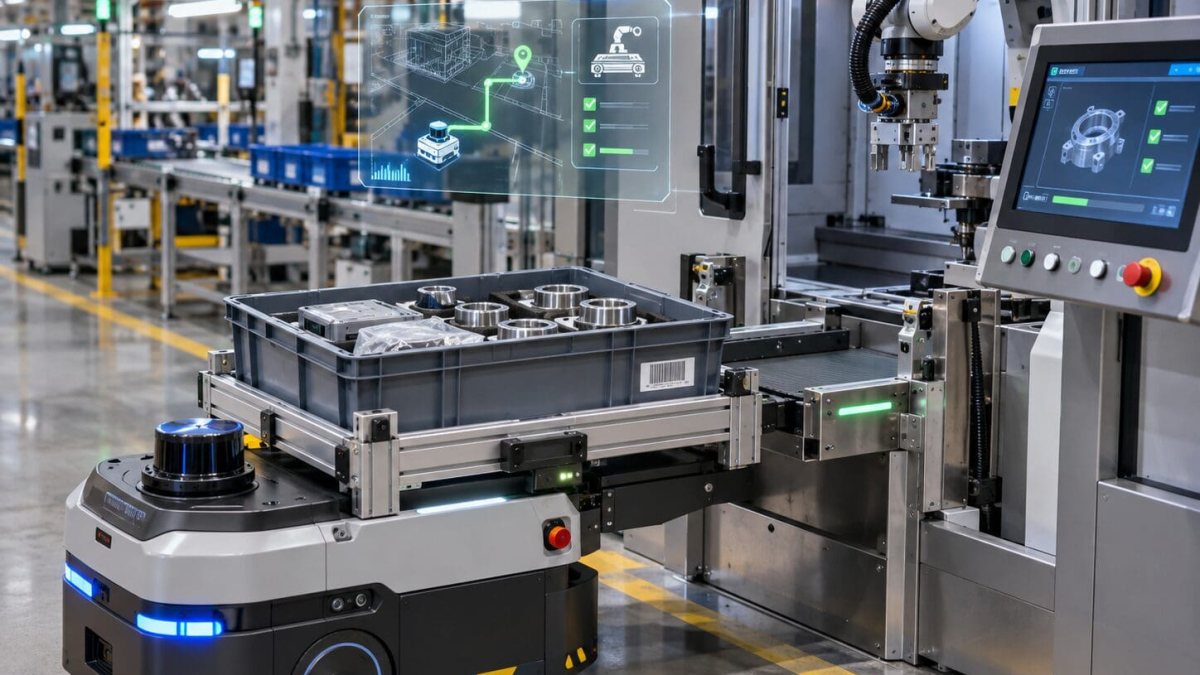
Walk any modern plant floor and you’ll see two different worlds. On one side are the production assets: CNC cells, assembly lines, test stations and packaging lines. Each one is heavily instrumented and tuned to the second. On the other side is everything that moves material between them: tuggers, forklifts, AMRs, conveyors, kitting stations and line-side supermarkets.
For decades these two worlds have been planned separately and run separately. They’ve been joined by a fragile layer of schedules, kanban cards, radio calls and heroic shift supervisors. The result is familiar. A line starves because a kit arrived 12 minutes late. A buffer overflows because upstream ran ahead of plan. A changeover stalls because the right fixtures are still on the far side of the building.
Here is the central argument of this column: manufacturers won’t reach true autonomous operations by automating the machines alone. They’ll get there when production logistics becomes as intelligent, perceptive and adaptive as the production process it feeds. Physical AI is the technology that finally makes that possible.
This story was originally published by Logistics Viewpoints. Read the full story at Logistics Viewpoints →



Conversation